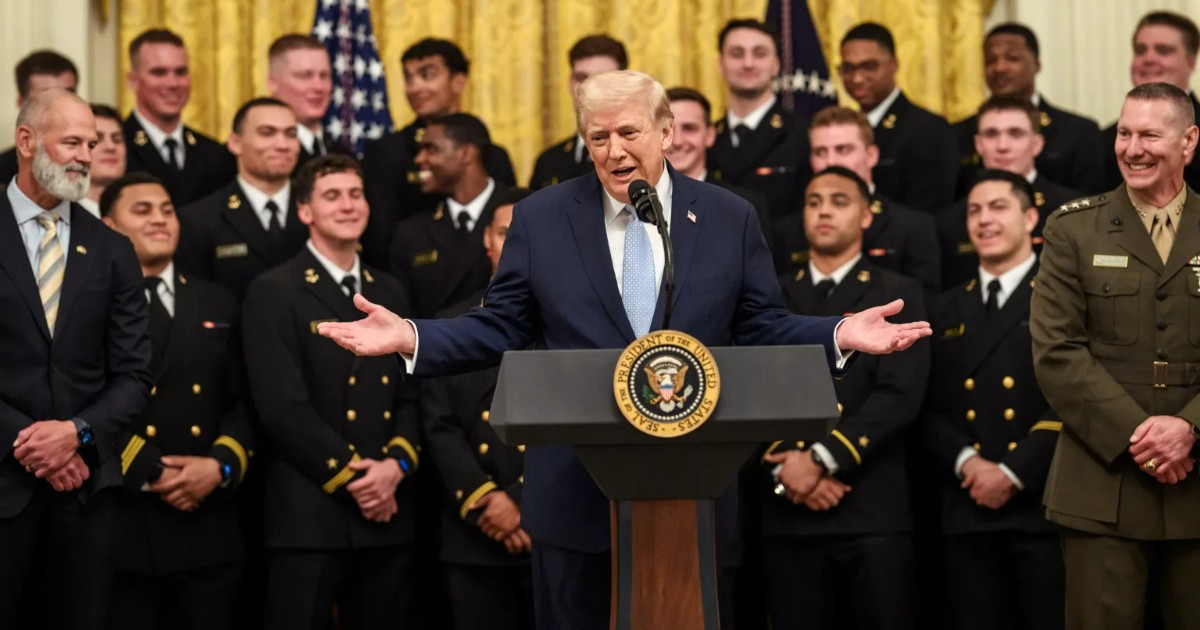
The White House announced on Wednesday that President Donald Trump would discuss the potential withdrawal of the United States from the North Atlantic Treaty Organization (NATO) during a meeting with Dutch Prime Minister Mark Rutte in the Oval Office later that day.
Karoline Leavitt, the presidential spokesperson, informed the press about the meeting and mentioned that Trump might make public remarks later in the afternoon.
"The idea of the U.S. pulling out of NATO is something the president has considered, and I believe he will discuss it in a couple of hours with Rutte," Leavitt stated.
Rising Tensions with European Allies
Rutte's visit to Washington, scheduled from April 8 to 12, occurs amid significant tensions between Trump and European allies, following weeks of unprecedented rhetoric from the White House.
The crisis originated on February 28, when the U.S. and Israel initiated Operation Epic Fury against Iranian nuclear and military facilities without prior consultation with NATO allies.
Iran retaliated by closing the Strait of Hormuz, through which 20% of the world's oil supply flows, causing Brent crude prices to soar above $110 per barrel.
Trump's Frustration with NATO Allies
Trump demanded his allies take active roles in operations to reopen the strait, but 22 NATO countries, including the United Kingdom, France, and Germany, merely signed a diplomatic declaration without committing naval forces. This inaction was perceived by the U.S. president as a betrayal.
Since then, Trump's criticism of the alliance has been relentless. On March 20, he labeled the member countries as cowards on Truth Social and asserted that "without the U.S., NATO is a paper tiger." He reiterated this sentiment in an April 1 interview with The Telegraph, suggesting he might pull the U.S. out of the alliance.
Ongoing Diplomatic Challenges
On April 6, Trump disclosed that the UK chose to wait for the conflict's resolution before making any military commitments, despite having two aircraft carriers on high alert.
Leavitt summed up the White House's official stance with a direct quote from the president: "They were tested and they failed."
She further commented, "It's quite unfortunate that NATO has turned its back on the American people over the past six weeks, especially when it's the American people who have been funding their defense."
The meeting on Wednesday aligns with the first day of a two-week ceasefire agreed upon by the U.S. and Iran, which includes the reopening of the Strait of Hormuz, though tensions with the Atlantic alliance remain high.
The Kremlin has described NATO as a hostile alliance towards Russia, and analysts suggest that a potential U.S. exit from the organization could strategically benefit Moscow, particularly in Eastern Europe.
Secretary of State Marco Rubio met with Rutte prior to the Oval Office meeting, and Leavitt hinted that Trump might address the public after the meeting: "You might have the chance to hear directly from the president following that meeting, later this afternoon."
Understanding the Implications of a U.S. Exit from NATO
What are the potential consequences of the U.S. leaving NATO?
A U.S. exit from NATO could weaken the alliance's military capabilities and embolden adversaries like Russia, potentially destabilizing Eastern Europe.
How has NATO responded to Trump's criticisms?
NATO has generally emphasized the importance of unity and collective defense, while some member countries have expressed a willingness to increase their defense spending.
Why is the Strait of Hormuz significant?
The Strait of Hormuz is a strategic chokepoint through which about 20% of the world's oil supply passes, making it crucial for global energy markets.