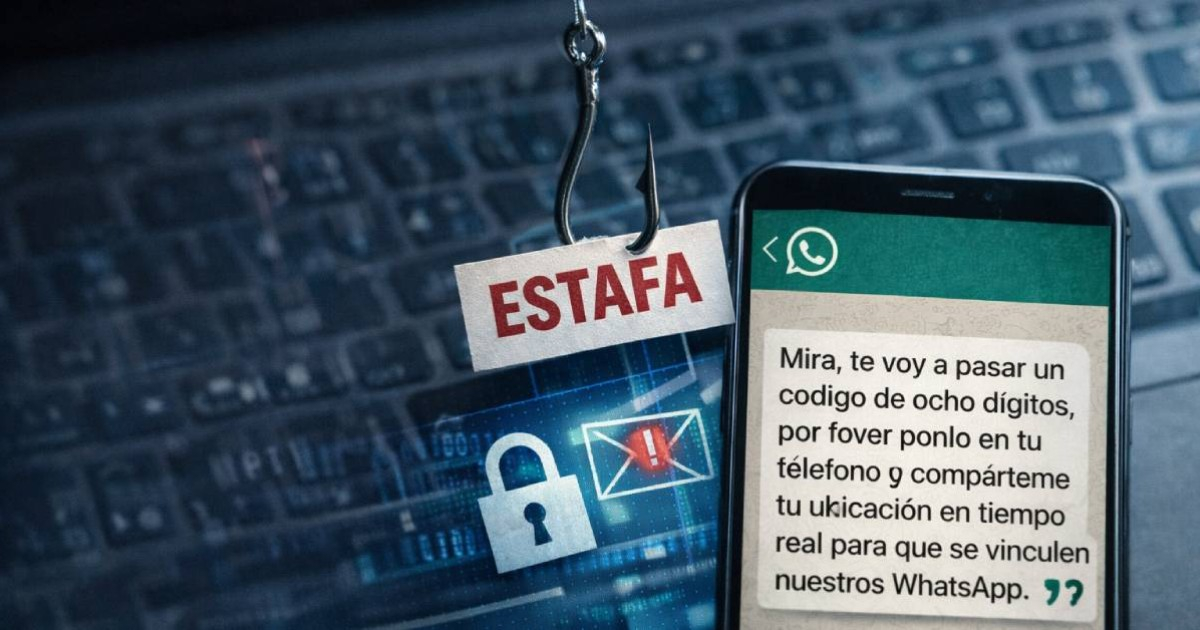
The Banco de Crédito y Comercio (Bandec) in Matanzas has issued a public alert on social media regarding a surge in digital scams conducted through WhatsApp, highlighting two specific strategies that have led to an increase in reports over recent weeks.
Developed in collaboration with banking security experts and the National Revolutionary Police (PNR), the warning explains the fraudulent methods used by criminals, enabling the Cuban population to recognize and prevent these scams that threaten both account privacy and financial assets.
Manipulating Trust: The First Scam Strategy
The initial scam technique utilizes social engineering. In these scenarios, the scammer impersonates a family member, friend, or coworker, using their real photo and name, and claims to need to "synchronize agendas" or "link phones."
Under this guise, the impersonator requests that the victim enter a supposed eight-digit code on their phone with statements like: "Look, I'm going to send you an eight-digit code, please enter it on your phone and share your real-time location so our WhatsApp accounts can be linked."
This code is not for linking devices. Instead, it is the verification code WhatsApp sends to register an account on a new phone, allowing the criminal to lock the victim out and impersonate them to request urgent transfers from their entire contact list.
This fraudulent account linking through verification codes has been documented in numerous recent cases across Cuba. Bandec succinctly states: "By sharing that code, the victim hands over the keys to their digital home."
Direct Targeting of Finances: The Second Scam Method
The second prevalent WhatsApp scam in Cuba employs a more sophisticated approach, directly targeting the victim's finances.
Here, the fraudster gains control of a WhatsApp account, blocks the legitimate owner from alerting anyone, and posts a status message such as: "I need to make an urgent transfer. Cash in hand at 1x1. Interested parties, message me privately."
Contacts, recognizing the profile of their acquaintance, trust the offer, make the bank transfer, and the scammer vanishes with the money.
Specific instances have been reported in Camagüey where a Cuban woman fell victim to a similar scheme through WhatsApp groups.
Bandec warns that individuals should be inherently suspicious "of any currency exchange offers '1x1' or 'below rate' that are exclusively advertised via social media."
Understanding and Preventing WhatsApp Scams in Cuba
What is the most common type of WhatsApp scam in Cuba?
The most frequent type of WhatsApp scam involves social engineering, where scammers impersonate trusted individuals to extract verification codes, allowing them to hijack the victim's account and request money from their contacts.
How can I protect myself from WhatsApp scams?
To safeguard against WhatsApp scams, never share verification codes and be cautious of unexpected requests from known contacts. Always verify requests for money or information through a different communication channel.
Why should offers for currency exchange on social media be treated with suspicion?
Offers for currency exchange at attractive rates on social media are often scams designed to exploit the trust of individuals, leading to financial loss without any actual exchange of currency.