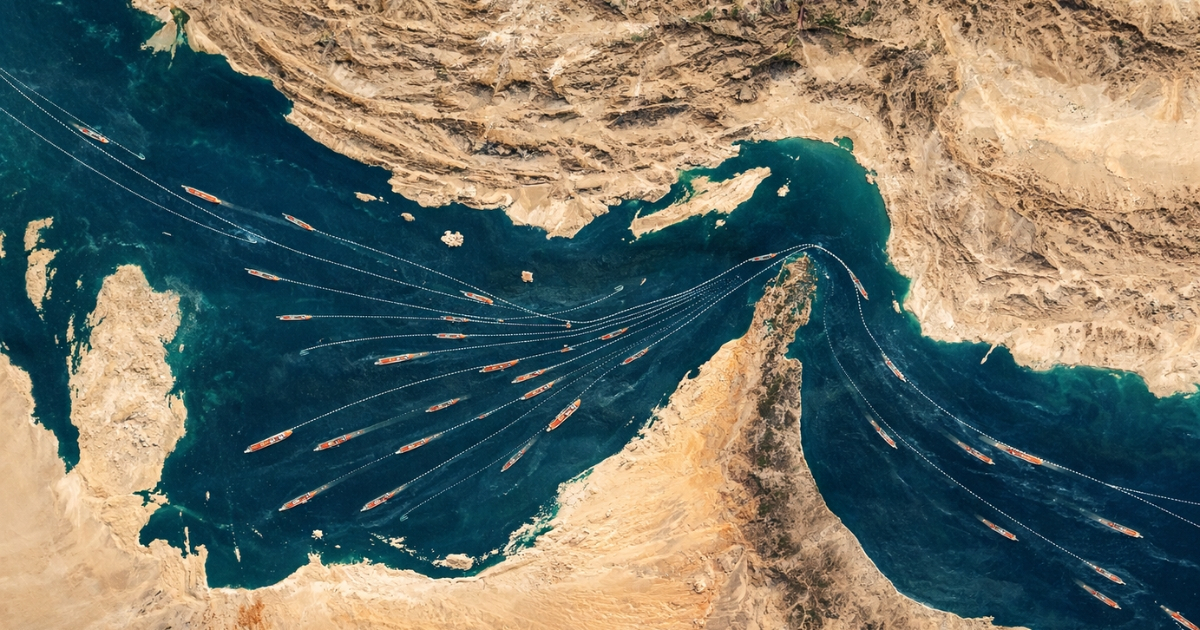
In a surprising development amid a crisis that nearly escalated into a global conflict, Iran has announced the reopening of the strategically crucial Strait of Hormuz for a period of two weeks. This decision comes as part of a ceasefire agreement reached with the United States.
The move, confirmed by Iran's Foreign Minister, Abbas Araghchi, represents a temporary shift in the ongoing conflict, largely attributed to Pakistan's mediation and Washington's willingness to accept Tehran's basic principles for initiating talks.
The significance of reopening this passage cannot be understated. The Strait of Hormuz is a vital corridor for global oil supply, and any disruption or tension in this region has immediate repercussions on international markets, fuel prices, and the daily lives of millions worldwide.
According to Araghchi, Iran will also halt its military operations during this period, contingent upon a critical condition: a complete cessation of attacks on Iranian territory. "Our armed forces will suspend defensive operations if the aggression stops," the foreign minister declared, highlighting the fragile nature of the agreement.
Diplomatic Efforts and Global Implications
The announcement follows intense diplomatic efforts spearheaded by Pakistan. Tehran publicly thanked Prime Minister Shehbaz Sharif and Army Chief Asim Munir for their roles in facilitating dialogue between the conflicting parties and averting an immediate escalation.
Meanwhile, it's been confirmed that President Donald Trump has agreed to a ten-point plan proposed by Iran as a basis for negotiations. Tehran is also open to discussing a broader U.S. proposal, indicating a potential meeting point that seemed unattainable just days ago.
Conditions and Historical Context
Despite the reopening, Iran has warned that the safe passage will be under strict coordination with its military forces and subject to the limitations inherent in a wartime scenario.
This reopening follows more than five weeks of armed conflict that began on February 28, 2026, with Operation Epic Fury launched by the United States and Israel. The operation resulted in the destruction of 90% of Iran's missile arsenal and 95% of its drones, and the elimination of 49 senior military leaders, including Supreme Leader Ali Khamenei.
In retaliation, Iran closed the Strait of Hormuz on March 4 using mines, drones, and missiles, stranding 2,000 ships with 20,000 sailors and sending Brent crude oil prices soaring above $126 per barrel, up from $67 before the conflict.
Formal negotiations between Iran and the United States are set to commence in Islamabad on Thursday, April 10, with Pakistan, Egypt, and Turkey serving as key mediators in the diplomatic process.
Key Questions on the Iran-U.S. Truce and Strait of Hormuz
What is the significance of the Strait of Hormuz?
The Strait of Hormuz is a critical maritime corridor for global oil transportation. Any disruption in this route can significantly affect global oil markets and prices.
What led to the current Iran-U.S. truce?
The truce was reached following intense diplomatic efforts by Pakistan and a willingness from both Iran and the U.S. to negotiate based on mutual proposals.
How long will the Strait of Hormuz remain open?
Iran has announced that the Strait of Hormuz will be reopened temporarily for two weeks as part of the ceasefire agreement.