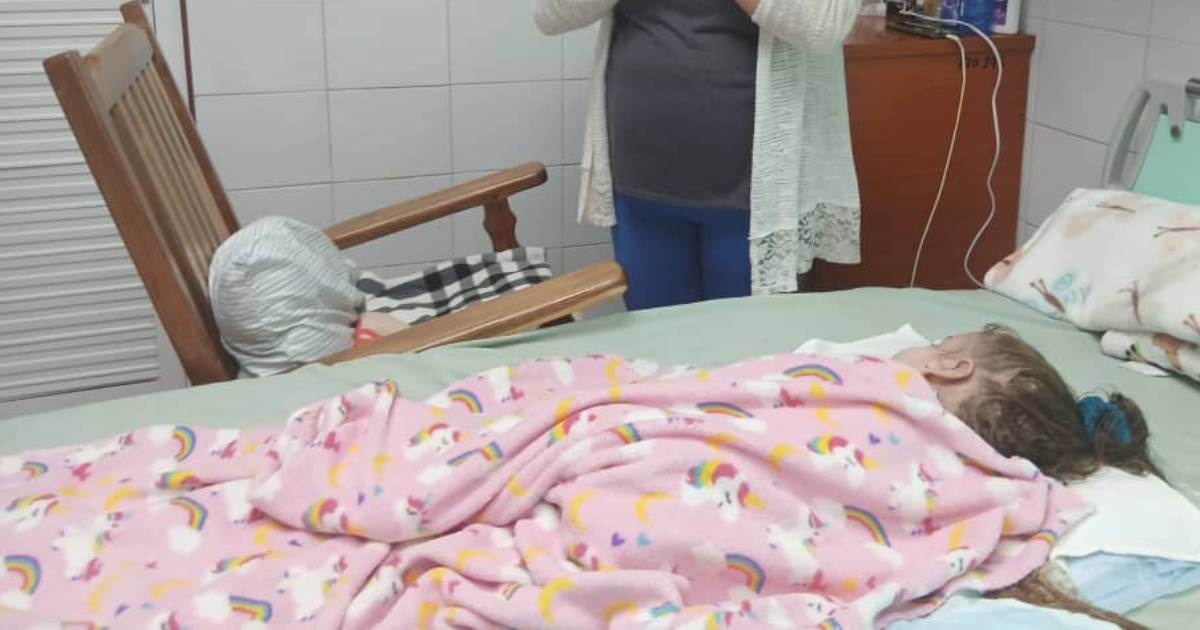
The story of Valentina, a Cuban girl who spent two years hospitalized in a pediatric facility, has once again captured social media attention. This time, however, the focus isn't her illness but the controversy surrounding who truly made her return home possible.
While official media like Radio Guamá credited her discharge to government-approved equipment, a different narrative has emerged from those closely involved in her daily struggle.
According to Verónica C. Barrios, who spoke out on social platforms, Valentina's homecoming wasn't facilitated by state intervention. Instead, it was the outpouring of support from countless individuals inside and outside Cuba that ensured her survival.
A key element was a GoFundMe campaign spearheaded by journalist Mónica Baró Sánchez. The effort gained international attention through an article in the Spanish newspaper El País by journalist Carla Gloria Colomé Santiago. This collective effort raised the funds needed to purchase a photovoltaic system, providing the stable electricity crucial for Valentina's treatment.
This system—which includes solar panels and the necessary infrastructure—was acquired and installed through the dedication of numerous people who either directly or indirectly supported the cause.
"Valentina is going home tomorrow thanks to everyone involved in the campaign, not because of some government-approved equipment that the family doesn't even have," Barrios stated with evident frustration.
The criticism extends beyond omission; it addresses what many see as a distortion of reality: overshadowing the role of civil society in a country where survival increasingly relies on collective assistance.
For two years, Valentina's story has been marked by campaigns, urgent calls, and gestures of support, illustrating a Cuba where people unite to address systemic deficiencies. Her return home is not just a happy event but a testament to the power of solidarity against the limitations of the system.
Today, the celebration is not merely about a medical discharge but something more profound: the ability of a community to rally together to save a child. Amid scarcity and challenges, stories like Valentina's don't belong to any official narrative but to the people who chose not to look away.
Understanding Valentina's Story and the Power of Community Support in Cuba
How did Valentina finally return home?
Valentina returned home thanks to a successful GoFundMe campaign that raised funds for a photovoltaic system, ensuring stable electricity for her treatment. This effort was supported by many people both in Cuba and internationally.
What role did the Cuban government play in Valentina's discharge?
Official sources claimed the government's role was crucial, but those closely involved clarified that the government's equipment was not provided to the family. Instead, it was the support from the community that made her return possible.
Who were some key figures in the campaign for Valentina?
Journalists Mónica Baró Sánchez and Carla Gloria Colomé Santiago played pivotal roles in raising awareness and funds for Valentina's situation through media outreach and international articles.