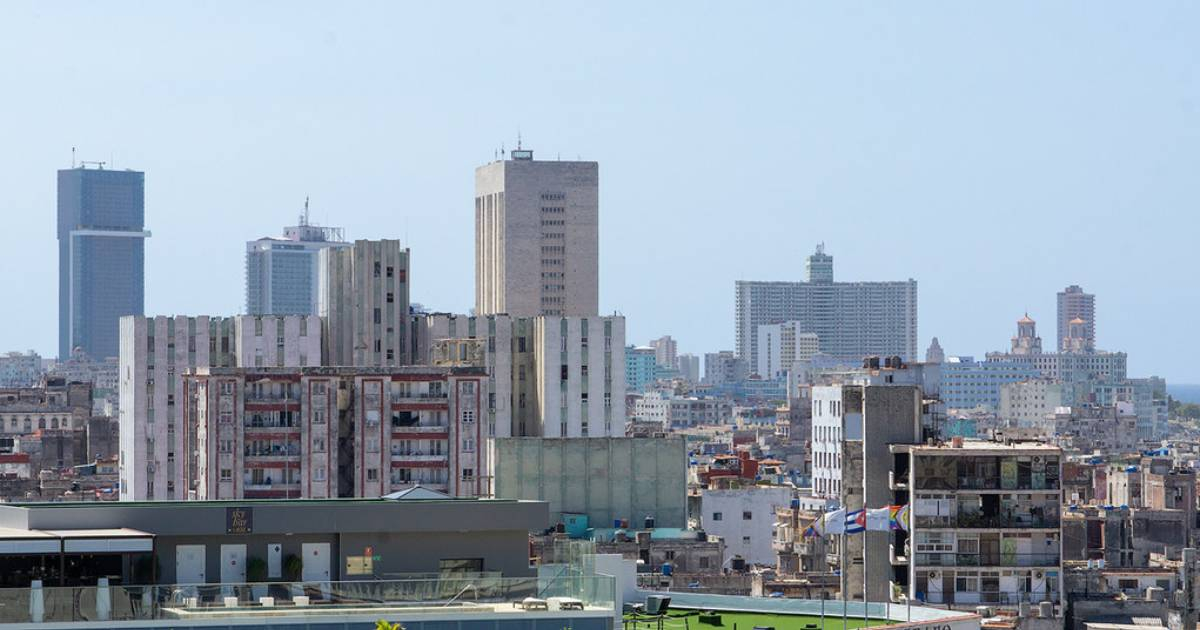
An opinion piece published on Tuesday in the Washington Examiner suggests that Cuba holds the potential to become the "Hong Kong of the Americas." However, this transformation is contingent upon significant democratic and economic reforms that are currently nonexistent on the island.
The article, co-authored by César Conda — a founding partner of Navigators Global and former chief of staff for U.S. Senator Marco Rubio — and Sevastian Horton — director of Legislative Affairs at the same firm and of Cuban-American descent — is neither a prediction nor a promise. Rather, it serves as an analytical exploration of Cuba's future should a political regime change occur.
"If Cuba achieves independence, it would inherit one of the most enticing economic opportunities in the Western Hemisphere. With timely and correct decisions, there is no reason it cannot become the Hong Kong of the Americas," the authors assert.
Untapped Structural Advantages
The argument is built upon real yet underutilized structural advantages. Located just 90 miles from Florida, Cuba sits at a crossroads of trade routes connecting North America, South America, and Europe. The island boasts a near 100% literacy rate, approximately 9.5 doctors per 1,000 residents — compared to 2.6 in the United States — and over 70% of its workforce has education beyond secondary school. "This skilled workforce is not just a talking point but a competitive edge," Conda and Horton emphasize.
Challenges and Economic Decline
Despite these strengths, Cuba's potential is squandered. By 2024, the country's industrial output plummeted to a 40-year low. The sugar harvest fell below 150,000 tons — the worst in a century — and daily blackouts exceeded 20 hours. The informal exchange rate hit 500 Cuban pesos to the dollar, with over a million Cubans leaving the island between 2021 and 2024. The stark contrast between Cuba’s potential and its grim reality is undeniable.
Legal and Political Prerequisites
The authors stress that the path to transformation involves unyielding legal conditions. The Helms-Burton Act outlines three prerequisites for lifting the embargo: the release of all political prisoners, legalization of parties, unions, and a free press, and the holding of free, multiparty elections.
As of March 2026, only 19 confirmed political prisoners had been released from the over 760 documented by the organization Justicia 11J. "A free-market economy must be accompanied by a genuinely free populace. Economic openness without true political freedom leads not to prosperity, but to a new class of regime-linked oligarchs," they caution.
Inspiration from Hong Kong
The proposed model draws inspiration from Hong Kong, whose per capita GDP soared from $400 in 1950 to over $50,000 in 2023, driven by investor confidence, rule of law, and free capital movement. For Cuba, Conda and Horton suggest minimal or no tariffs, a flat tax rate between 15% and 17%, a stable currency, and a streamlined regulatory environment. They also highlight the full reopening of the remittance system as an immediate catalyst, channeling capital directly to Cuban families and entrepreneurs without reliance on institutions or public funds.
The analysis warns of the dangers of a poorly managed transition leading to oligarchy, as seen in other post-communist nations. "Privatization must be transparent, widespread, and immune to cronyism," demand the authors, urging Washington to be a demanding partner, not a passive observer.
The article emerges amid unprecedented negotiations. The Trump administration confirmed talks with Cuban officials led by Secretary of State Marco Rubio, who demanded a "total regime change, political system overhaul, and economic model shift."
For the Cuban diaspora, the proposal carries a deeply emotional weight. "Many would return, but only to a truly free Cuba," Conda and Horton conclude, issuing a final warning: "The window is open, but it won't stay open forever."
Cuba's Potential as the "Hong Kong of the Americas"
What are the necessary reforms for Cuba to become like Hong Kong?
Cuba would need to undergo significant democratic and economic reforms, including the release of all political prisoners, legalization of political parties, and conducting free and fair elections.
Why is Cuba's geographical location advantageous?
Cuba is strategically positioned just 90 miles from Florida, at the intersection of trade routes linking North America, South America, and Europe, making it an ideal hub for commerce.
What economic measures are proposed to stimulate growth in Cuba?
The authors suggest implementing low or zero tariffs, a flat tax rate of 15% to 17%, a stable currency, and a flexible regulatory environment to attract investment and stimulate economic growth.