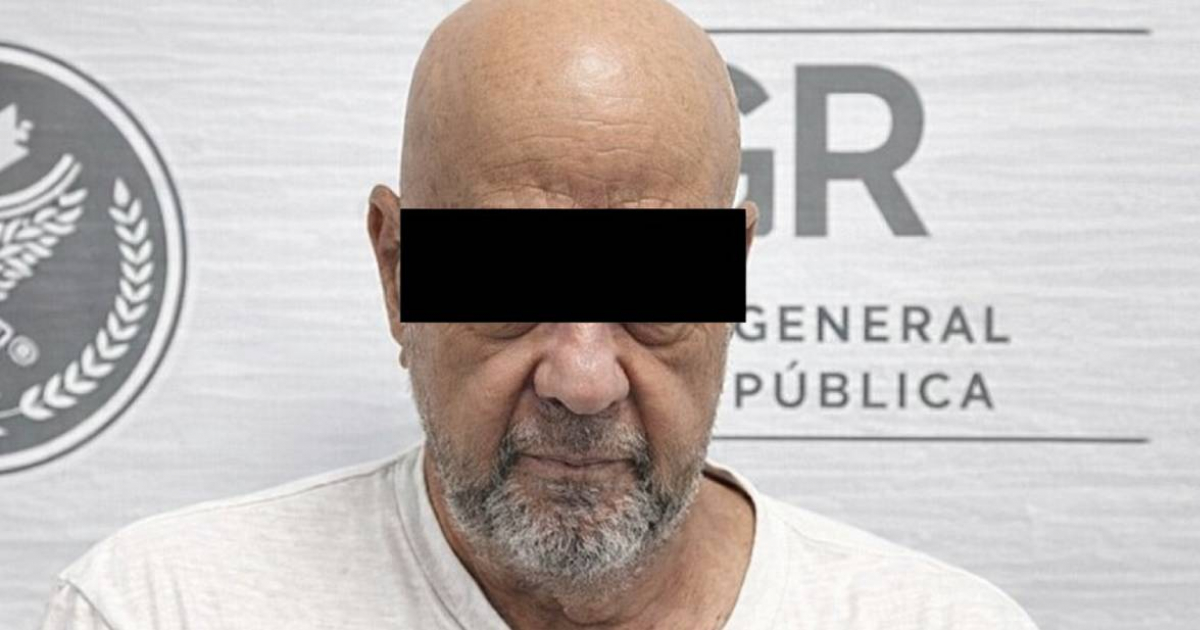
The arrest of Cuban national Remigio Valdez Lao, also known as "El Milo," in Cancún marks a pivotal development in the investigation of the transnational criminal organization dubbed the Cuban-American Mafia.
Beyond the operation itself, attention has shifted to understanding the identity of the man identified by authorities in both Mexico and the United States as the financial and operational mastermind of a network that turned Cuban migration into a business of kidnappings, extortion, and violence.
Valdez Lao was no minor player. Mexico's Security Cabinet asserts that this individual orchestrated the logistics and financial flow of the Cuban-American Mafia, a criminal network that operated in Cuba, Mexico, Spain, and South Florida.
Operation and Arrest
His apprehension, carried out by Mexican federal forces in the Residencial Arbolada neighborhood in Benito Juárez, followed an extradition order issued by the Southern District of Florida Court for human trafficking, drug trafficking, and international smuggling.
A Long History of Crime
The history of "El Milo" reveals a far-reaching criminal career. The network has been active since at least 2009, with its base of operations in Cancún, Isla Mujeres, and Cozumel. Its primary business involved identifying Cuban migrants who arrived illegally on the shores of Quintana Roo, kidnapping them, and demanding ransoms of up to $10,000 per person from their families in the United States.
In 2015, El Milo was arrested in Cancún for possession of cocaine and marijuana but was released after posting bail. Years earlier, Florida media had linked him to store robberies in Sarasota.
Brutality and Extradition
Over time, his name resurfaced in intelligence reports describing the network's evolution towards alliances with branches of the Sinaloa Cartel to strengthen human trafficking routes.
U.S. court documents outline a brutal scheme: Cuban migrants were detained, threatened with torture, starvation, and death if their families did not pay ransoms of up to $10,000. Those unable to meet these demands were beaten and subjected to electric shocks.
With his transfer to Mexico City to begin extradition proceedings, "El Milo" now faces the most challenging phase of his criminal career. While his fall does not entirely dismantle the network, it deals a significant blow to its financial command center.
Impact and Implications
Alongside "El Milo," Joseline García Biscaino, an alleged member of the criminal group, was also arrested. The operation resulted in the seizure of 38 doses of marijuana and a gray SUV.
Judicial documents from the U.S. Department of Justice indicate that members of the network threatened to "torture, starve, and murder the victims" if their families refused to pay.
In October 2023, a Miami jury found Javier Hernández, a fifty-year-old Cuban resident of Miami Beach, guilty and sentenced him to 95 months in federal prison for boat theft and money laundering. Six other Cuban citizens residing in Mexico pled guilty to conspiracy and migrant smuggling.
Mexico's Security Cabinet stated that the capture "represents a direct impact on the operational capacity of the criminal group and is the result of international cooperation mechanisms based on respect for sovereignty."
Understanding the Cuban-American Mafia's Operations
Who is "El Milo"?
"El Milo" is the alias of Remigio Valdez Lao, a Cuban national identified as the financial and operational mastermind behind a criminal network exploiting Cuban migrants.
What crimes was "El Milo" involved in?
"El Milo" was involved in human trafficking, drug trafficking, and international smuggling. His network kidnapped Cuban migrants and extorted their families for ransom.
Where did the Cuban-American Mafia operate?
The Cuban-American Mafia operated in Cuba, Mexico, Spain, and South Florida, with its base of operations in Cancún, Isla Mujeres, and Cozumel.