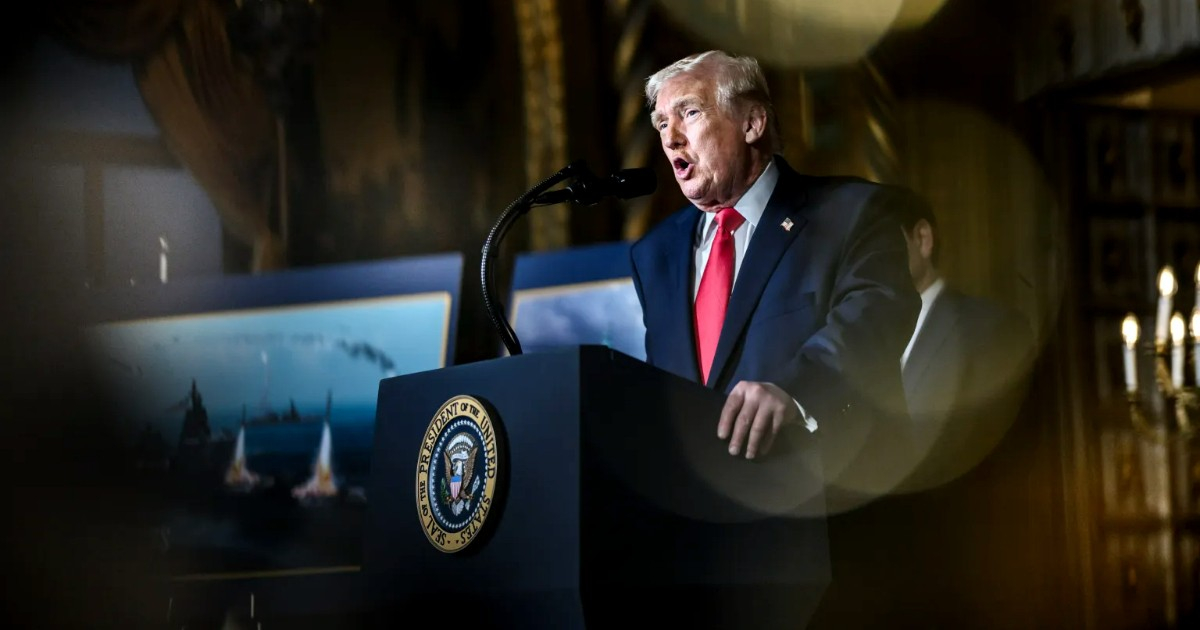
Former President Donald Trump took to Truth Social on Tuesday with a chilling message regarding Iran, cautioning that "an entire civilization might vanish tonight, never to exist again."
This ominous statement comes just hours before the deadline for his fourth ultimatum to Iran since March 21, 2026.
Trump's post, made at 8:06 AM Eastern Time, highlights the urgency of the situation: Iran has until 8:00 PM ET on this day to reopen the Strait of Hormuz or face devastating strikes on its civil and energy infrastructure.
"I don't want this to happen, but it probably will," Trump stated, while also offering a glimmer of hope: "Now that we have a Complete and Total Regime Change with new, smarter, and less radicalized minds in place, perhaps something revolutionary and wonderful could occur. Who knows?"
He concluded his post with a direct reference to Iran's theocratic regime: "47 years of extortion, corruption, and death will finally end. God bless the great people of Iran," alluding to the Islamic Republic established in 1979 following the Islamic Revolution.
The Strait of Hormuz Crisis
All the ultimatums are tied to the demand for reopening the Strait of Hormuz, which Iran closed on March 4 using mines, drones, and missiles, impacting around 2,000 ships and 20,000 sailors.
The military context is dire for Iran. The joint U.S.-Israeli offensive, dubbed Operation Epic Fury, launched on February 28, 2026, has obliterated over 5,000 Iranian targets, severely diminished their missile capabilities by 90%, and reduced their drone capacity by 95%, leaving their navy and air force in tatters, according to the Pentagon.
The Supreme Leader Ali Khamenei was eliminated during this operation, with his death officially confirmed on March 1, 2026.
Uncertain Political Landscape
It remains unclear whether the "regime change" Trump mentions refers to the appointment of Mojtaba Khamenei, Ali's son, as the new supreme leader, though his whereabouts and health status are uncertain.
Diplomatic Efforts Amidst Tensions
Amid the warlike rhetoric, diplomatic negotiations are ongoing. Envoy Steve Witkoff and Jared Kushner are in direct communication with Iranian Foreign Minister Abbas Araghchi regarding a potential 45-day ceasefire in two stages, with mediation by Pakistan, Egypt, and Turkey.
However, on Monday, Iran rejected Washington's 15-point peace plan, describing it as "extremely ambitious and illogical," and proposed a 10-point counterplan that includes halting targeted killings, compensation for damages, and recognition of their authority over the Strait of Hormuz.
Iran's Foreign Ministry spokesperson, Ismail Bagaei, was firm on Monday: "Negotiation is not compatible with ultimatums or threats."
Trump, meanwhile, told Israeli Channel 12 on Monday that he was in "deep negotiations" and hopeful for an agreement, but also warned that "all of Iran could be razed in a single night" if no understanding is reached.
The world watches in suspense as Trump described this as "one of the most significant moments in the long and complex history of the world."
Key Questions About the Iran Crisis
What is the Strait of Hormuz and why is it important?
The Strait of Hormuz is a narrow waterway connecting the Persian Gulf with the Gulf of Oman and the Arabian Sea. It is a vital shipping route for oil and gas exports from the Middle East, making it a strategic point for global energy markets.
What are the implications of a "Complete and Total Regime Change" in Iran?
A "Complete and Total Regime Change" in Iran implies significant political shifts, potentially affecting the country's leadership, policies, and relations with the international community. This could lead to changes in domestic governance and foreign diplomacy.
How does Operation Epic Fury impact Iran?
Operation Epic Fury has significantly weakened Iran's military capabilities by destroying key targets, reducing missile and drone capacity, and crippling their naval and air forces, thereby diminishing their defense and strategic power.