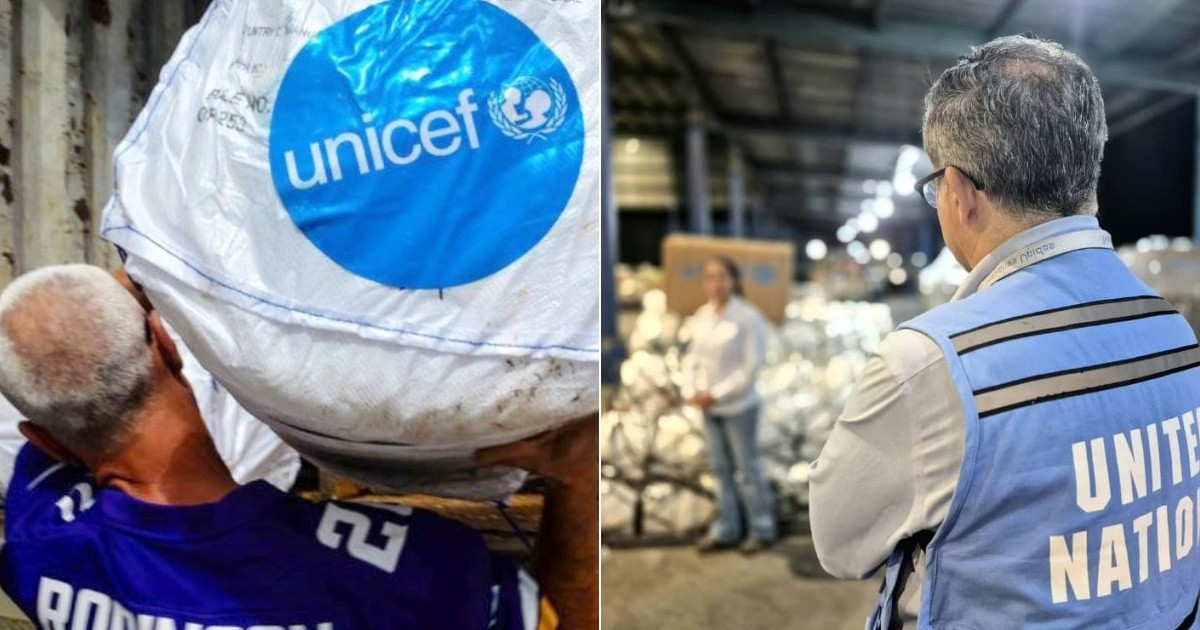
Cuba's ongoing energy crisis is severely hampering the distribution of humanitarian aid, preventing crucial supplies worth millions of dollars from reaching those in need.
The United Nations (UN) has raised alarms about the worsening scenario on the island, where a lack of fuel is stalling even international assistance efforts.
UN Resident Coordinator in Cuba, Francisco Pichón, reported that "around 170 containers of essential humanitarian goods, valued at approximately $6.3 million, are stuck and not reaching their intended recipients due to the fuel shortage."
This predicament is not due to a lack of resources but rather the logistical impossibility of distributing them in a country that has been grappling with an energy shortage for months.
Exploring Unconventional Solutions
Faced with this blockade, the UN is considering unorthodox methods to circumvent the issue. "We are exploring all possible avenues, including partnerships with the non-state or private sectors in Cuba," Pichón stated, adding that there are "ongoing discussions" with U.S. representatives to facilitate fuel deliveries to support the humanitarian plan.
A Systemic and Escalating Crisis
Beyond the aid impasse, the United Nations has highlighted a general deterioration in living conditions across Cuba. A recent statement from the organization detailed how the energy crisis is impacting nearly every facet of daily life.
"The energy crisis is having a systemic and increasingly severe humanitarian impact, affecting health, water and sanitation, food systems, education, transportation, and telecommunications," Pichón emphasized.
He further pointed out that the country has been without adequate fuel supplies for over three months, worsening the situation progressively.
Extended Plan Faces Significant Funding Gap
In response to these challenges, the United Nations has expanded its action plan for Cuba, aiming to assist two million people across 63 municipalities in eight provinces—double the original target.
The strategy focuses on energy access as a core component of the humanitarian response, proposing solutions like solar-powered irrigation systems, solar panel installations in hospitals and schools, and enhancing water infrastructure through renewable sources.
However, these initiatives face a critical hurdle: insufficient funding. The UN estimates that $94 million is needed to implement the plan, but there is currently a shortfall of about $60 million.
Impact on Vulnerable Sectors
While these plans are developed, Cubans are finding ways to cope with the crisis. From using charcoal as a makeshift fuel alternative to improvising household solutions during blackouts, people are striving to endure amidst deepening hardships.
UN data paints a particularly dire picture in vulnerable sectors. More than 96,000 surgeries have been postponed, including those for about 11,000 children. Additionally, 32,000 pregnant women are at risk due to unstable prenatal services, and nearly 3,000 children face delays in their vaccination schedules.
The education system is also affected, with nearly half a million children and teenagers attending shortened school days due to power outages and a lack of basic resources.
Simultaneously, about a million people are dependent on water delivered by tanker trucks, a result of failing electric pumping systems. The elderly population, notably large in Cuba, is among the most impacted.
"These are individuals who rely on functioning systems and need healthcare providers to reach medical centers," Pichón warned.
Oil Supply at the Heart of the Issue
The exacerbation of the energy crisis is directly linked to dwindling oil supplies. According to the UN, the situation worsened after Washington blocked crude shipments to the island in late January.
Pichón explained that Cuba recently received a shipment from Russia, estimated at 100,000 tons—equivalent to about 700,000 barrels—enough for roughly "12 or 13 days."
Moreover, supplies from Venezuela have not materialized, while other countries, such as Mexico, have attempted to mediate to ensure access to oil for humanitarian purposes.
In this context, the White House has chosen to evaluate oil shipments to Cuba on a "case-by-case" basis, adding further uncertainty to the nation's already precarious energy situation.
Understanding the Humanitarian Challenges in Cuba
What is causing the humanitarian aid distribution issues in Cuba?
The distribution of humanitarian aid in Cuba is being hindered primarily by a severe fuel shortage, which is obstructing the logistics needed to deliver essential supplies to the population.
How is the UN responding to the fuel shortage in Cuba?
The UN is exploring unconventional solutions, such as partnering with non-state or private sectors in Cuba, and is engaged in discussions with U.S. representatives to facilitate fuel deliveries to support humanitarian efforts.
What sectors in Cuba are most impacted by the energy crisis?
The energy crisis in Cuba has heavily impacted health services, education, water and sanitation, transportation, and telecommunications, with significant disruptions reported in these areas.