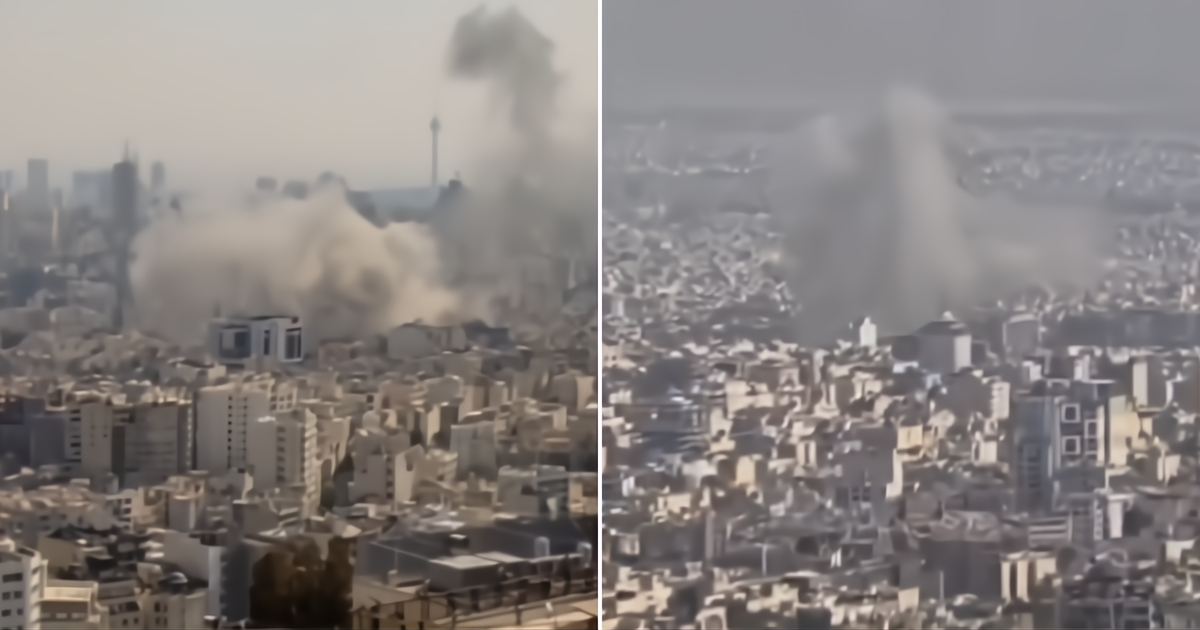
Admiral Brad Cooper, commander of the United States Central Command (CENTCOM), authorized a strike on Monday involving B-2 Spirit bombers against the Iranian Revolutionary Guard Corps (IRGC) headquarters, located within a subterranean facility near Tehran, according to high-level sources cited by Fox News.
The operation unfolded concurrently with rescue missions for the two crew members of an F-15E Strike Eagle fighter jet, which Iran had shot down the previous Thursday.
Sensitive, time-critical intelligence about the presence of numerous IRGC commanders inside the underground bunker prompted CENTCOM’s swift decision to launch the attack, as per the sources.
The B-2 bombers embarked on a round trip from Whiteman Air Force Base in Missouri, deploying GBU-57 Massive Ordnance Penetrator bunker-busting bombs. These are the same munitions used during last year’s Operation Midnight Hammer against Iranian nuclear facilities.
A senior military source informed Fox News, "We hit the IRGC where it hurts the most." The sources revealed that the headquarters was "completely obliterated."
Simultaneously with the B-2 attack, B-1 bombers dropped around 100 bombs weighing 2,000 pounds each to keep Iranian forces at bay during the recovery operations for the downed jet crew members, according to a senior U.S. defense official.
The strike on the bunker occurred between the two rescues: after the first and before the second. The first crew member was extracted last Thursday during a daylight operation that spanned seven hours over Iranian territory. The second crew member, a colonel serving as a weapons systems officer, remained concealed in mountainous terrain for over 36 hours before his rescue on Saturday.
Following the rescues, President Donald Trump declared on Truth Social, "We have recovered the severely injured and truly brave F-15 crew member from deep within Iran's mountains. The Iranian military was searching intensely, in large numbers, and was closing in. He is a very respected colonel. Such a raid is rarely attempted due to the danger to personnel and equipment. It just doesn’t happen!"
CENTCOM confirmed in a press release the successful rescue of both F-15E crew members.
The GBU-57 MOP bombs weigh 30,000 pounds (13,600 kg) and are capable of penetrating at least 200 feet of earth or 60 feet of reinforced concrete before detonating. Only the B-2 Spirit is capable of carrying them in combat scenarios.
The assault on the IRGC headquarters is part of Operation Epic Fury, a joint U.S.-Israeli military campaign against Iran initiated on February 28, 2026, which has successfully neutralized over 5,000 Iranian targets and diminished 90% of the country's missile capabilities.
On the same day, Trump issued a 24-hour ultimatum to Iran, demanding negotiations or facing devastating attacks, warning that the entire nation could be devastated in a single night.
Key Details of the U.S. Strike on Iranian Bunker
What prompted CENTCOM to strike the IRGC headquarters?
CENTCOM received sensitive and time-critical intelligence indicating the presence of a significant number of IRGC commanders inside the underground bunker, prompting an immediate decision to strike.
What type of bombs were used in the attack?
The attack employed GBU-57 Massive Ordnance Penetrator bombs, which are capable of penetrating substantial depths before detonation, specifically designed for bunker-busting missions.
How did the U.S. manage to rescue the F-15E crew members?
The first crew member was rescued during a seven-hour daylight operation, while the second, a colonel, remained hidden in mountainous terrain for over 36 hours before being safely extracted.