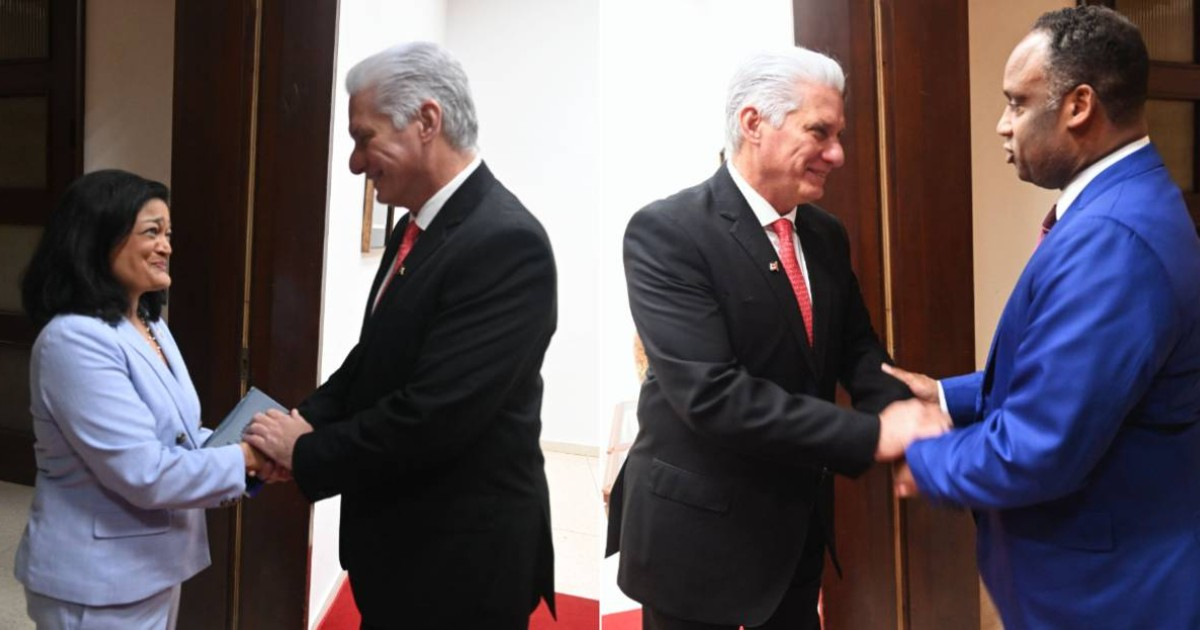
Two Democratic members of the U.S. Congress recently traveled to Cuba to assess the humanitarian conditions on the island. They reported ongoing communication between the two governments, though a formal negotiation process has not yet commenced.
Representatives Pramila Jayapal from Washington and Jonathan Jackson from Illinois met with Cuban leader Miguel Díaz-Canel, Foreign Minister Bruno Rodríguez, and members of the Cuban Parliament during their five-day visit. This trip marked the first documented visit by U.S. legislators in 2026.
In an interview with the YouTube channel Belly of the Beast from Havana, the lawmakers noted that while there is contact between Cuba and the U.S., the challenge lies in moving towards a more organized dialogue.
"We can communicate with Russia, we can engage with China. Naturally, we should be able to talk with the Cubans. This process needs to be expedited," they emphasized, advocating for replacing confrontation with direct government-to-government discussions.
Potential for Cooperation
They highlighted the potential for improved relations, suggesting that "a genuine government-to-government dialogue could replace conflict, sanctions, and embargoes," and pointed to specific opportunities for collaboration in health, agriculture, and trade.
When asked about the nature of these communications, Jayapal clarified, as reported by the Mexican newspaper La Jornada, that the dialogues are still in their early stages.
"There has been dialogue or at least the beginnings of one," she stated. "I don't think we've reached the negotiation phase that was mentioned, but there is a desire to ensure that real discussions and negotiations take place."
Shifting Perspectives in U.S. Policy
The lawmakers also noted that the Cuban government has repeatedly expressed its willingness to engage in talks with the U.S., and they observed a growing openness within the U.S. Congress to reconsider its policy towards the island.
On social media platform X, Díaz-Canel shared photos of the meeting with the U.S. representatives, discussing the impact of American sanctions and the looming threat of more aggressive measures from the Trump administration.
He reiterated his government's readiness to conduct "serious and responsible" bilateral dialogues, aiming to address unresolved issues and potentially redefine the bilateral relationship.
Upon returning to Washington, the legislators plan to draft a report detailing their visit and will continue advocating within the House of Representatives for initiatives to lift sanctions against Cuba.
Understanding U.S.-Cuba Relations
What was the main purpose of the U.S. lawmakers' visit to Cuba?
The primary goal was to assess the humanitarian situation in Cuba and to explore the potential for initiating formal negotiations between the two governments.
Who did the U.S. lawmakers meet with during their visit to Cuba?
Representatives Pramila Jayapal and Jonathan Jackson met with Cuban leader Miguel Díaz-Canel, Foreign Minister Bruno Rodríguez, and members of the Cuban Parliament.
What issues did the lawmakers discuss in Cuba?
They discussed the impact of U.S. sanctions and the potential for collaboration in areas like health, agriculture, and trade.
What actions are the lawmakers planning after their trip?
They intend to compile a report on their findings and continue efforts within the House of Representatives to lift sanctions against Cuba.