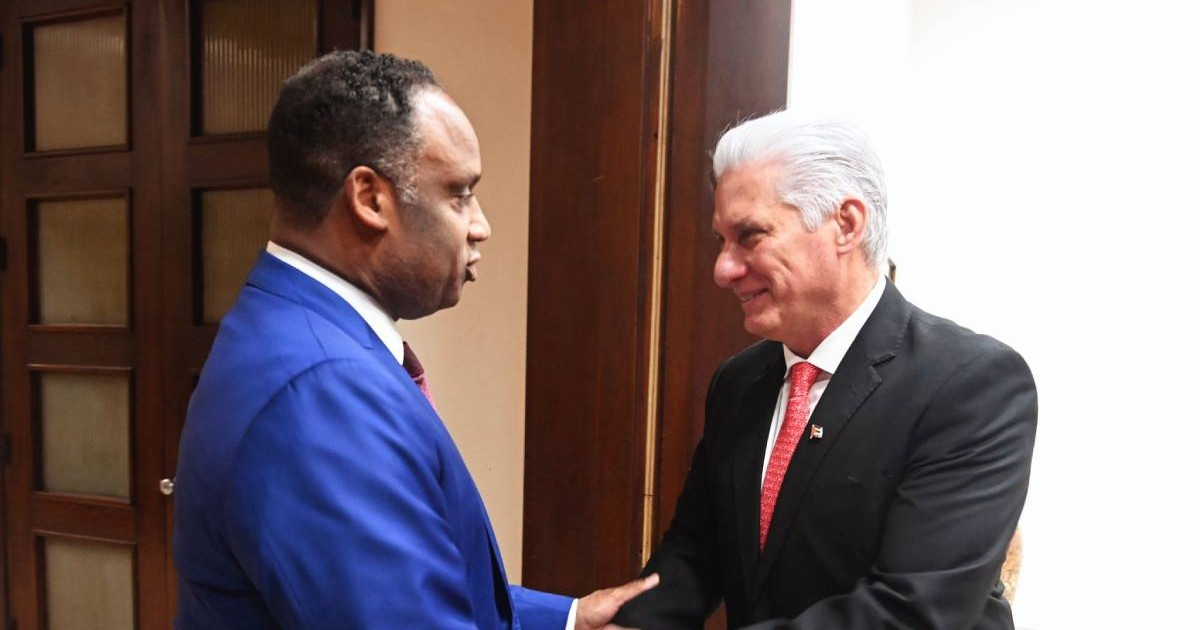
Cuban leader Miguel Díaz-Canel welcomed U.S. Congress members Pramila Jayapal and Jonathan Jackson, marking the first documented visit of American lawmakers to Cuba in 2026.
On Monday, Díaz-Canel announced the meeting via his account on X, using the opportunity to condemn what he described as the "criminal harm" caused by the embargo, with particular emphasis on the energy blockade enforced by the Trump administration.
"In greeting U.S. Congress members Jayapal and Jackson, I denounced the criminal damage inflicted by the blockade, particularly the consequences of the energy siege imposed by the current U.S. government and its threats of even more aggressive actions," the Cuban leader wrote.
Calls for Dialogue Amidst Tensions
Díaz-Canel reiterated his government's "willingness to engage in serious and responsible bilateral dialogue" with the United States to "find solutions to existing differences."
The Democratic legislators, Pramila Jayapal from Washington and Jonathan Jackson from Illinois, met with Díaz-Canel, Foreign Minister Bruno Rodríguez, and members of the Cuban parliament.
Extensive Meetings with Diverse Groups
Their visit spanned five days, taking advantage of the House of Representatives' recess. The Congress members also met with Cuban families, religious leaders, entrepreneurs, civil society organizations, Latin American and African ambassadors, and Cuban dissidents.
In a joint statement issued Sunday, Jayapal and Jackson noted that the U.S. had prevented any oil from reaching Cuba for over three months, calling it "cruel collective punishment," and urged both nations to "immediately enter real negotiations" and abandon "outdated Cold War policies."
Impact of Trump's Executive Actions
This meeting takes place amid the most significant escalation of bilateral tensions in decades. On January 29, Trump signed Executive Order 14380, designating the Cuban regime as an "unusual and extraordinary threat" and imposed tariffs on those supplying oil to the island, cutting 80% to 90% of crude imports and causing blackouts lasting up to 25 hours daily.
On March 30, Trump temporarily lifted the oil blockade for humanitarian reasons, allowing a Russian tanker carrying approximately 730,000 barrels of crude to reach Matanzas, though he declared that Cuba was "finished" and that the oil "wouldn't matter" to the regime's collapse.
Signs of Cuban Openness
According to the Congress members' statement, during their visit, Díaz-Canel released over 2,000 prisoners, a gesture seen as a sign of openness toward dialogue with Washington. The Cuban government also invited the FBI to investigate a deadly speedboat shooting.
On March 27, Jayapal and Representative Gregory Meeks introduced the Preventing an Unconstitutional War in Cuba Act, which blocks the use of federal funds for military actions against the island without Congressional authorization, supported by 14 Democratic co-sponsors.
Implications of U.S.-Cuba Relations
What was the main purpose of the U.S. Congress members' visit to Cuba?
The visit aimed to engage in discussions with Cuban officials and various groups to address the ongoing tensions and promote dialogue between the United States and Cuba.
How has the U.S. embargo affected Cuba according to Díaz-Canel?
Díaz-Canel claims the embargo, particularly the energy blockade, has caused significant harm to Cuba's economy and infrastructure, leading to severe blackouts and other challenges.
What actions did Trump take that impacted Cuba's oil imports?
Trump signed an executive order imposing tariffs on oil suppliers to Cuba, drastically reducing the island's crude imports by up to 90%, causing significant blackouts.