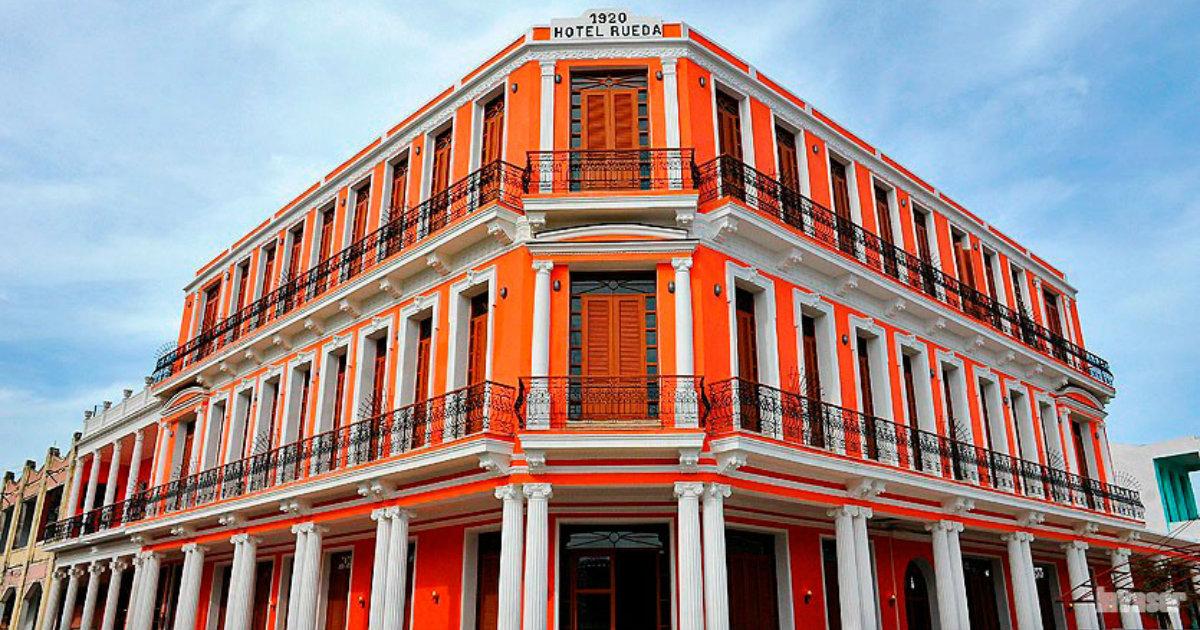
The café at the Hotel Rueda, a state-operated four-star establishment under the Cubanacán Group located on the boulevard of Ciego de Ávila's historical center, has ceased operations due to a lack of staff, according to a report published last Friday in the "Sin rodeos" section of the official newspaper Invasor.
The Hotel Rueda stands as a symbol of Cuba's state-run tourism in the province. It was reopened in October 2018, with Miguel Díaz-Canel in attendance, marking it as the first Encanto brand hotel of the Cubanacán Group in Ciego de Ávila after more than 25 years of disuse.
The complaint, authored by M.P.M., highlights the closure's impact: "Previously, anyone wishing to enjoy a delicious coffee on the boulevard could do so at the renowned Hotel Rueda café, located in the historical center of the City of Portals. Now, they are left wanting, as the establishment is closed due to staffing shortages, losing customers and missing out on necessary revenue to continue offering services."
This situation is particularly telling as the Hotel Rueda, inaugurated by Díaz-Canel as a showcase for the state tourism model, now struggles to keep its café open.
The building, originally founded in 1920 by the Rueda brothers and holding a Grade II Protection status from the National Monuments Commission, was rebuilt thanks to investments by the Tourism Real Estate Company and the Tourism Services Company.
The 2018 reopening also saw the presence of then-Minister of Tourism Manuel Marrero Cruz and was touted as a success of the state management model, featuring 35 workers chosen for their multifaceted abilities, as reported by the state-run CubaDebate.
The closure of the café starkly illustrates the structural crisis plaguing Cuba's tourism sector, battered by the mass emigration of skilled workers, prolonged power outages, and shortages of essential supplies.
In 2025, Cuba reported a hotel occupancy rate of just 18.9%, the lowest in recent history, and welcomed only 1.81 million international visitors against a target of 2.6 million.
The exodus of personnel is impacting hotels across the island: Havana’s Hotel Parque Central lost 30% of its workforce to emigration, prompting the hiring of hospitality students to fill the gaps.
The private sector fares no better: in Havana, the restaurant Nel Paradiso saw its staff shrink from 60 to just 10 over 14 months as workers left the country.
In 2025 and 2026, several hotels like the Iberostar Torre K in Havana, Sol Cayo Santa María, and Gran Muthu Imperial have temporarily closed, while the military conglomerate Gaviota shut down 20 facilities in Cayo Santa María, affecting over 7,000 workers.
The fact that the official Invasor newspaper is reporting on the café's closure underscores the severity of a collapse the regime can no longer conceal, even from its own media.
Understanding the Tourism Crisis in Cuba
What led to the closure of the Hotel Rueda café?
The café was closed due to a shortage of staff, a problem prevalent across the Cuban tourism sector.
How is the Cuban tourism sector affected by the current crisis?
Cuban tourism is experiencing structural issues such as emigration of skilled workers, power outages, and supply shortages, leading to low occupancy rates and temporary closures.
What is the significance of the Hotel Rueda in Ciego de Ávila?
Hotel Rueda is a symbol of state-run tourism in Ciego de Ávila, reopened as a showcase for the Cubanacán Group's Encanto brand after years of disuse.