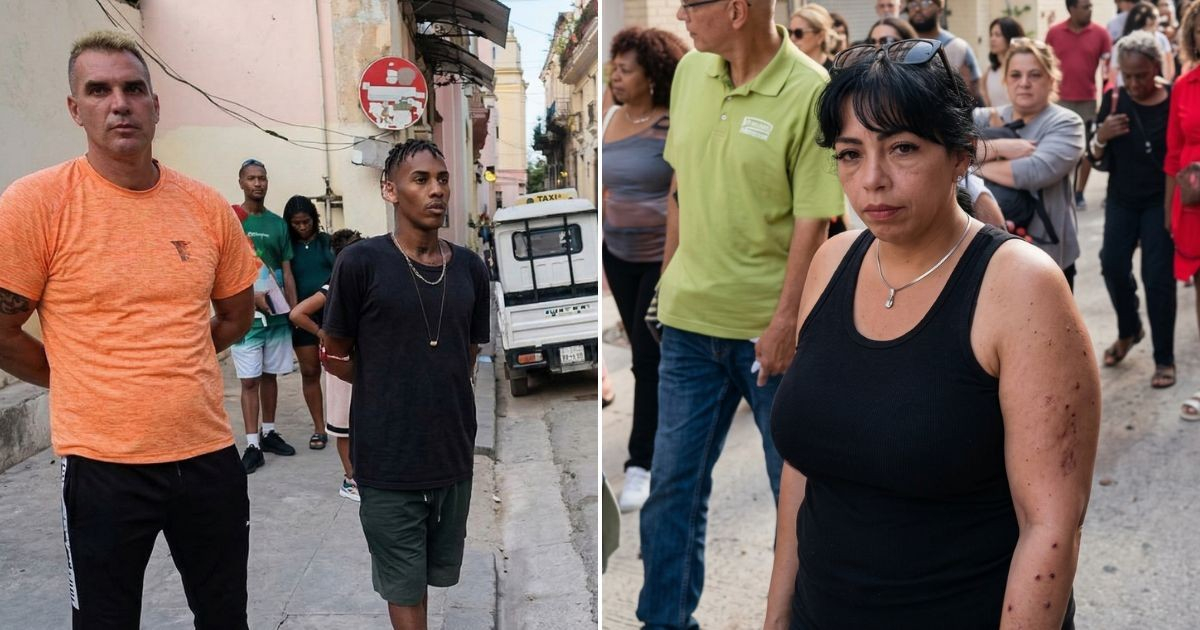
The Good Friday pilgrimage in Havana took on a tense atmosphere with reports of undercover State Security agents blending into the crowd, aiming to monitor and curb any public demonstrations.
Journalist Camila Acosta took to Facebook to expose that several plainclothes officers, both men and women, infiltrated the religious procession. Their mission was to prevent anyone from displaying signs or chanting slogans advocating for freedom in Cuba.
According to Acosta's account, some of these operatives surrounded her at times and kept a close watch on activist Leonardo Romero Negrín, even hemming him in within the crowd.
State Security's Infiltration Tactics
Acosta witnessed how swiftly these officers could identify and detain individuals who took on prominent roles in public gatherings, likening this to the events of the July 11, 2021 protests.
She described one supposed leader of the operation as wearing a gray shirt, identified as Héctor, while another agent in an orange shirt was noted for his active presence and movements within the group.
Public Display of Authority
Photographs and videos shared by the journalist captured the moment when a man was removed from the crowd for his conduct, even though he was merely vocalizing religious chants.
Acosta indicated that the order to remove him came from the alleged operation leader.
Heightened Tensions Amidst Pilgrimage
The journalist estimated that around a thousand people participated in the pilgrimage, describing the environment as one of heightened tension due to social unrest and international pressure.
She concluded that the authorities' actions underscored their determination to prevent any public expression that could escalate into a protest, even during a religious event.
At the end of the pilgrimage, a woman and her son approached Acosta at the Church of the Angel, sharing their hope for change in the country, believing that "Christ will soon bring salvation."
Understanding Cuba's Current Social Climate
Why were undercover agents present at the pilgrimage?
The agents were reportedly there to prevent any public demonstrations or protests from occurring during the religious event.
What was the reaction of the public to the agents' presence?
The presence of agents created a tense atmosphere, with actions taken against individuals who expressed religious sentiments, highlighting the government's intent to control public expression.
How does this event reflect on Cuba's current social and political climate?
The event underscores the heightened social unrest and the government's efforts to suppress public dissent, even in religious settings, reflecting the broader political tension in Cuba.