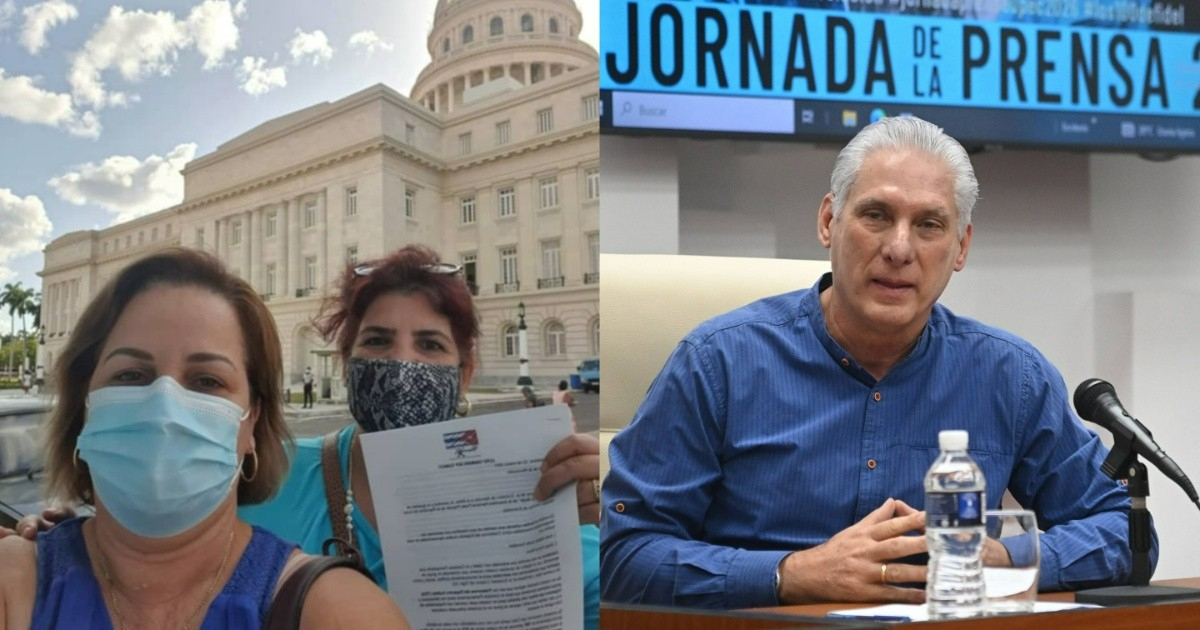
On World Autism Awareness Day, Arelys Ferrer Pérez, the mother of a 20-year-old with Autism Spectrum Disorder (ASD), took to Facebook to share an open letter addressed to President Miguel Díaz-Canel. Her message calls for the Cuban government to acknowledge and listen to the needs of families affected by autism.
Residing in Guanabacoa, Havana, Ferrer Pérez signed the letter on behalf of her son, Owen Francisco Quintana Ferrer, as well as numerous other families who have been seeking attention from the authorities for years without any response.
"We have reached out respectfully to our country's authorities, but we have NEVER received a reply, nor have our demands been addressed," she stated.
The letter explains, "For several years, many families have contacted various institutions within our country, including ministries and, more recently, the National Assembly. We did so on March 22, 2021, during the COVID pandemic, and again three years later. These letters were supported by families and backed by a group of cultural intellectuals part of the project 'The Sea and Us,' which aims to support and raise awareness of this disorder."
Challenges Faced by Autistic Adults in Cuba
Ferrer Pérez expressed her sorrow over the "discrimination and lack of visibility" faced by autistic adults in Cuba.
"Our children, even those with severe autism, have been summoned to the FAR Medical Commission because they lack a disability card or any institution to support and represent them. I experienced this with my son...while other young people at the Commission were talking and using their phones, my son held a toy, struggling because he was unprepared for the situation. The doctors felt COMPASSION...it was clear my son should not have been there," she lamented.
Isolation and Limited Opportunities
Ferrer Pérez also highlighted that many autistic individuals are confined to their homes from ages 16 to 18 because they cannot participate in available projects due to their specific needs.
"I decided to write this letter because I'm not afraid to speak about my experiences...and I know many others live them too, more than I would wish to know...as a Cuban, I urge you to retrieve the hope stored away in a drawer, hope from many parents who contribute to this country's development, from those who had to abandon their careers, their white coats, to live a secluded life with their sons and daughters," she implored.
She concluded, "President Miguel Diaz-Canel Bermúdez, today is another April 2nd, but it's also another day where our love for those who did not ask to be vulnerable compels us to be their voice... This will be the advance testament I leave my son, and I ask everyone I know to read it."
Last September, six-year-old Félix Berto, who has been diagnosed with moderate autism and intellectual disability, was denied school enrollment after the Ministry of Education refused his admission to a specialized center, according to his mother, Dr. Yislainet Lara.
Understanding Autism Challenges in Cuba
What are the main concerns of families with autistic members in Cuba?
Families are concerned about the lack of governmental response to their needs, the absence of support and representation for autistic individuals, and the discrimination and invisibility faced by adults with autism.
How are autistic individuals affected by the Cuban system?
Autistic individuals often lack the necessary disability documentation and support, facing challenges like being summoned to inappropriate medical evaluations and being confined to their homes due to limited participation opportunities.