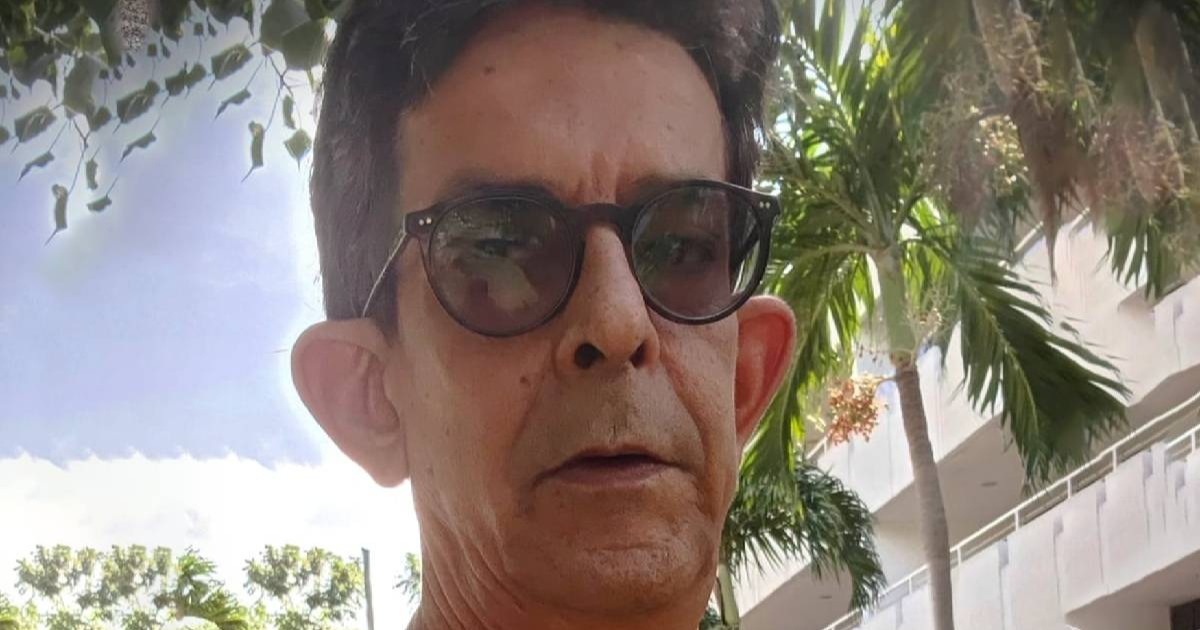
Cuban comedian and public figure Ulises Toirac took to Facebook on Friday to address the government's announcement of pardoning 2,010 prisoners. He cautioned that the exclusion of those convicted of offenses against authority suggests that the release of political prisoners would be "highly selective."
The regime revealed on Thursday that the pardon was a humanitarian gesture for Easter, based on Article 90, Section II of the Constitution. However, it explicitly excluded individuals charged with crimes against authority, a legal category often used to prosecute the July 11, 2021 protesters and government critics under charges of sedition, public disorder, and disrespect.
"The caveat of excluding 'offenses against authority' leads me to suspect that any hypothetical pardons for political prisoners will be very selective. Yet, this is the very reason why protesters and government critics have been prosecuted," Toirac wrote.
Toirac identified two driving forces behind the pardon: Easter and ongoing diplomatic talks with the United States, distinguishing this instance from previous pardons linked to papal visits.
"While Easter is the framework, there is no papal visit as in past cases. Given the ongoing talks with the U.S., which is the other catalyst for such a decision, I want to believe there will be something for this," he noted.
Toirac included a historical table of mass pardons in Cuba, highlighting that the 2026 pardon, with 2,010 recipients, is the smallest since 1998, when Pope John Paul II visited the island, resulting in the release of about 300 prisoners, including 101 political dissidents.
Initial releases confirmed by CNN journalist Patrick Oppmann at La Lima prison in Havana showed that those freed had committed non-political offenses such as armed robbery and fraud.
As of the end of February 2026, Prisoners Defenders reported 1,214 political prisoners in Cuba, with 218 specifically convicted of sedition, facing average sentences of ten years.
This marks the second pardon of the year, with the first occurring on March 12, when Vatican mediation led to the release of 51 people, only five of whom were confirmed as political prisoners by Prisoners Defenders.
Toirac urged caution amidst speculation, advising that concrete results must be awaited before making a definitive judgment on the regime's intentions.
"We must wait for the lists. In any case, the exception in the statement alone is a denial of even minimal change in this regard. Speculation changes nothing. We must wait. The outcome will determine the intention," he concluded.
FAQs on Cuba's Recent Pardon and Political Prisoners
Why were political prisoners excluded from the recent pardon in Cuba?
The Cuban government explicitly excluded individuals convicted of crimes against authority, a category often used to charge political protesters and critics, from the recent pardon.
How does the 2026 pardon compare to previous ones in Cuba?
The 2026 pardon is the smallest since 1998, with 2,010 recipients. In 1998, around 300 prisoners were released during Pope John Paul II's visit, including 101 political dissidents.
What are some reasons behind the recent pardon in Cuba?
The pardon was presented as a humanitarian gesture for Easter and may also be influenced by ongoing diplomatic discussions with the United States.