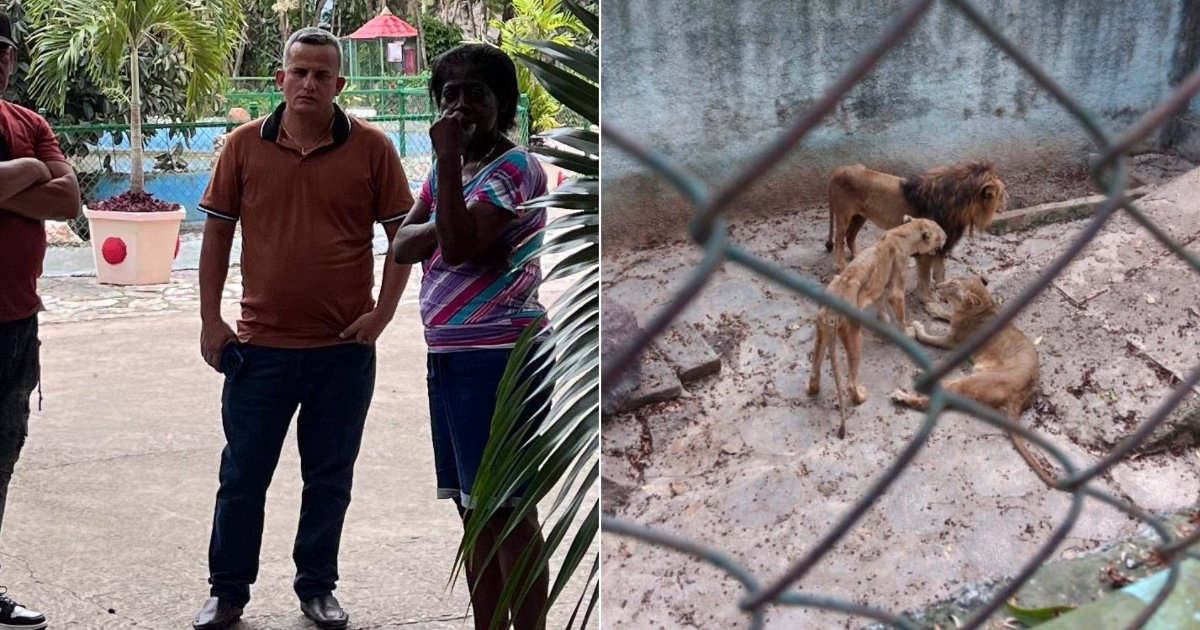
The head of the Camagüey Casino Campestre Zoo recently barred a group of concerned citizens from feeding the animals, despite their visibly emaciated state, and called the police when confronted by the visitors.
According to Pedro González, who shared his account on the Facebook group Revolico Camagüey, he and other locals used their own money to purchase items like meat, guava, bananas, and corn to feed the animals, whose dire conditions had been highlighted on social media days before.
As they began distributing the food, a zoo employee informed them of a prohibition on such actions and summoned the director. González described the director's response as "utterly indifferent" when he confirmed the ban.
The director stated, "The animals have a diet and are not hungry," a claim González immediately challenged: "Where is that diet when the animals are starving? Where is the care when the water is filthy and the environment is unsanitary?"
The group offered to provide their personal information and assume full responsibility for feeding the animals directly, yet the director refused their offer.
Ironically, the official suggested that they could donate the food to the zoo staff to distribute, an option the citizens declined. González explained their reasoning: "We all know what happens with donations: they don't always reach those who truly need them."
Facing criticism, the director contacted the police. According to González, the officers "understood the situation and there was no mistreatment," but they stated they could not intervene.
Accompanying images show large blocks of frozen meat stored in garbage bags alongside tropical fruits, all gathered by the group for the animals.
This incident follows just two days after Cuban Yanaris Álvarez shared Facebook photos of severely undernourished lions at the same zoo, with ribs and bones clearly visible.
The Casino Campestre Zoo, the largest in Cuba, hosts over 900 animals from 72 species as of 2023, managed by the Cuban National Zoo and Aquarium Enterprise.
This episode is part of a documented pattern of animal neglect in zoos across the island. In December 2025, a lion at the Florida municipal zoo in Camagüey went eight days without food.
In February 2026, the Animal Welfare Organization of Cuba (BAC) reported neglect and starvation at the Puerto Padre Zoo in Las Tunas.
In January 2026, the Santiago de Cuba Zoo's big cats were reportedly being fed scraps and were sleeping on their own waste.
Cuban authorities have remained silent, offering no public statements in response to these reports. Although Cuba enacted an Animal Welfare Decree-Law in 2021, with fines ranging from 500 to 4,000 Cuban pesos, enforcement by institutions is rare.
González captured the frustration of those trying to help with a poignant remark: "Feeding the animals is forbidden, yet letting them starve isn't; offering help is prohibited, but neglect isn't; taking action is banned, but turning a blind eye isn't."
Understanding the Zoo Controversy in Camagüey
Why were citizens stopped from feeding the animals at Camagüey Zoo?
The zoo director enforced a prohibition against feeding animals, claiming they have a regulated diet and are not starving, despite visible signs of malnourishment.
What was the response of the authorities to the situation?
The director called the police, but the officers, understanding the citizens' concerns, did not take any action as they stated they were unable to intervene.
Has there been any official response from Cuban authorities?
Cuban authorities have not issued any public statements addressing the allegations of animal neglect in Camagüey or other zoos across the country.
What does the Cuban Animal Welfare Decree-Law entail?
The Decree-Law, approved in 2021, imposes fines ranging from 500 to 4,000 Cuban pesos for violations; however, enforcement by relevant institutions is infrequent.