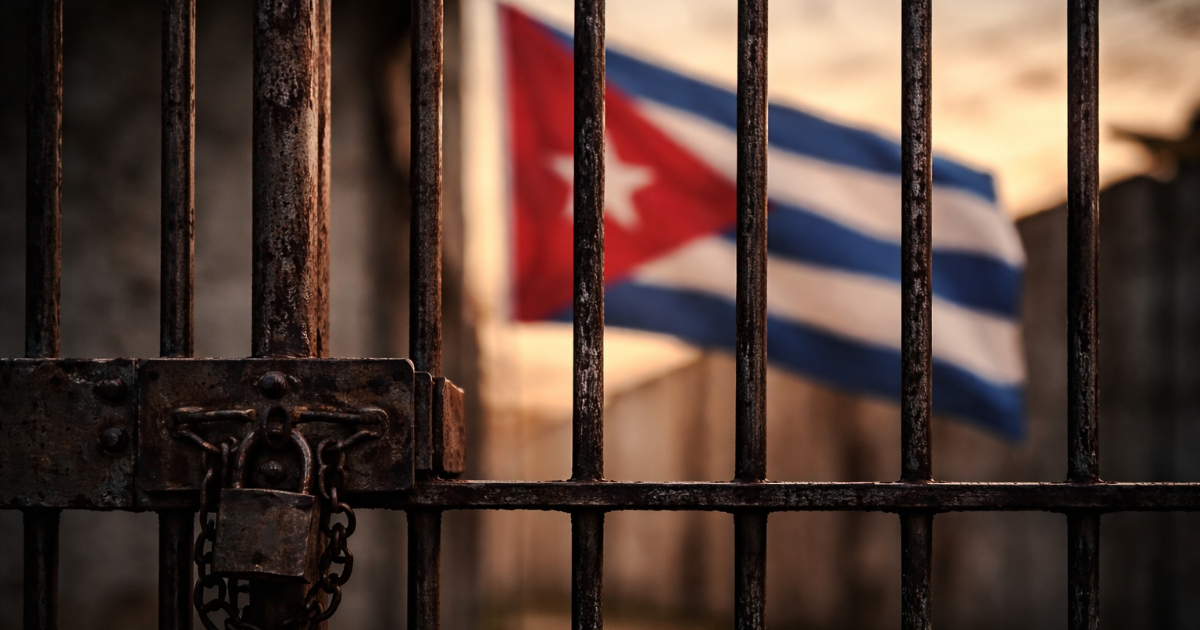
The legal advocacy group Cubalex has raised concerns about the ongoing lack of transparency in the recent mass release of over two thousand prisoners announced by the Cuban government last Thursday during the Easter period.
The regime portrayed this initiative as an act of humanitarian sovereignty, citing criteria such as "good conduct, partial completion of the sentence, and health status." The beneficiaries reportedly include young people, women, individuals over 60, foreigners, and Cuban expatriates.
Nevertheless, Cubalex pointed out that the authorities have not published an official list of the released individuals nor clarified whether the pardon applies to those detained for political reasons. "This lack of transparency not only obscures the true extent of the measure but also potentially hides arbitrary exclusions and underscores the discretionary nature of these decisions," the organization stated.
Information received by Cubalex from five prisons reveals that the majority of those released were individuals serving time for common crimes who were already eligible for parole, rather than political prisoners.
Exclusion Criteria and Political Implications
A significant aspect of the exclusion involves "crimes against authority," which the regime excluded from the pardon. This category is frequently used against protesters, dissidents, and activists, especially those detained following the July 11, 2021 protests. Prisoners Defenders expressed skepticism, stating, "We do not hold much hope that many political prisoners will be released."
Cubalex also highlighted the legal limitations of the pardon: under article 93 of the Cuban Penal Code, a pardon only extinguishes the main sentence and not accessory penalties, nor does it expunge criminal records or civil liabilities unless explicitly stated.
Historical Context of Pardons in Cuba
According to Cubalex, this is part of a historical and deliberate pattern. The organization has documented a timeline of pardons since 1978, including during the visits of Pope John Paul II in 1998, Benedict XVI in 2011, and Pope Francis in 2015, as well as during the approval of the new Constitution in 2019 and the Covid-19 pandemic in 2020, when 10,000 common criminals were released without benefiting any political prisoners. "Historically, the use of pardons in Cuba has served more as a tool for political bargaining and propaganda than as an act of justice," the organization asserted.
"Without public, verifiable, and accessible information, these measures lack genuine guarantees and cater more to strategic interests than a true commitment to human rights," Cubalex concluded, demanding the release of all individuals imprisoned for political reasons in Cuba.
This marks the second prisoner release in 2026. The first occurred on March 12, when the government announced the release of 51 individuals as a gesture of "goodwill" towards the Vatican, with Cubalex confirming 26 were political prisoners. Earlier, in January 2025, Cuba released 553 individuals following negotiations with the United States and the Vatican; Cubalex verified that 205 had political sanctions, with at least seven re-incarcerated and one forced into exile.
Understanding Cuba's Mass Pardon Controversy
What criteria did the Cuban regime use for the recent mass pardon?
The Cuban government cited criteria such as good conduct, partial sentence completion, and health status for the recent mass pardon.
Did the mass pardon include political prisoners?
According to Cubalex, the majority of those released were serving sentences for common crimes, and the pardon did not significantly include political prisoners.
How does Cubalex view the historical use of pardons in Cuba?
Cubalex considers the use of pardons in Cuba as a political tool and propaganda device, rather than a true act of justice.