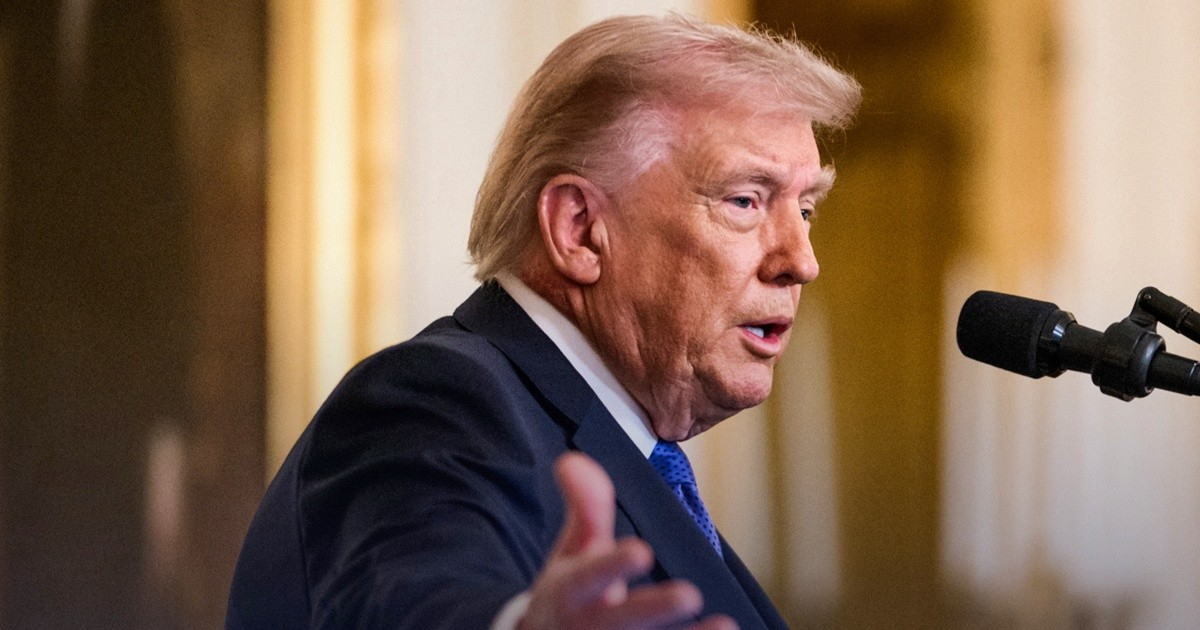
President Donald Trump of the United States enacted two executive orders on Thursday, intensifying his trade agenda. One order introduces tariffs of up to 100% on imported patented drugs, while the other revises existing duties on steel, aluminum, and copper, as revealed by the White House.
These actions were announced precisely one year after "Liberation Day," marking the anniversary of Trump's major tariff initiative in 2025. This represents a further step in a protectionist strategy aimed at relocating pharmaceutical and metallurgical production back to U.S. soil.
The 100% tariff targets patented drug imports and their active ingredients from nations lacking trade agreements with Washington. CNN disclosed that the order includes a tiered system of exemptions and reductions.
Pharmaceutical firms that participate in the "Most Favored Nation" pricing initiative and commit to building plants in the U.S. will be exempt from tariffs for three years. In contrast, companies that simply relocate production without joining the pricing agreement will face a reduced 20% tariff.
Nations with existing trade agreements with Washington — such as the European Union, Japan, South Korea, and Switzerland — will only encounter a 15% tariff, whereas the United Kingdom will incur a 10% tariff under its bilateral agreement terms.
Generic drugs are initially exempt from these tariffs, though the administration plans to revisit this decision within a year. Pharmaceutical giants have a 120-day window to comply or negotiate agreements before the tariff becomes effective, while smaller firms have 180 days.
A senior administration official commented, "We anticipate that a significant portion of the world's patented drugs will be produced in the United States by then. They've had ample notice, and we're moving forward with this."
The government has already secured at least 16 agreements with major pharmaceutical companies to sell drugs directly to consumers under the "Most Favored Nation" initiative, which includes the TrumpRx platform launched in February this year. Pfizer, AstraZeneca, Eli Lilly, Novo Nordisk, and EMD Serono are among the companies committed to boosting their U.S. manufacturing investments in exchange for reduced tariffs.
Changes to Metal Tariffs
Simultaneously, Trump signed a second order altering the calculation method for tariffs on steel, aluminum, and copper. The 50% levy on these metals will now be based on the total price paid by U.S. customers rather than the declared value by foreign sellers, a shift intended to combat deliberate undervaluation of exports identified by the government in recent months.
Additionally, finished products comprising 50% or more of steel, aluminum, or copper will incur a 25% tariff on their total value, while those with less than 15% metal content will be exempt. These metal tariff revisions will take effect next Monday, April 6.
The White House Trade Representative, Jamieson Greer, described the changes as "merely a matter of simplification and fairness" and dismissed concerns about their impact on consumer prices.
Both measures are being implemented as part of Trump's tariff policy overhaul following the Supreme Court's February 20 ruling. The Court deemed reciprocal tariffs under the International Emergency Economic Powers Act unconstitutional by a six-to-three vote. The new sector-specific drug tariffs and metal review rely on different legal grounds — Section 232 and national security powers — unaffected by the ruling.
These measures are causing unease within the Republican Party, as lawmakers worry that Trump's aggressive trade strategy may further inflate prices for Americans already concerned about the cost of living and inflation.
Understanding Trump's New Tariffs on Drugs and Metals
What is the purpose of the new tariffs on patented drugs?
The new tariffs aim to encourage pharmaceutical production within the United States by imposing a 100% tariff on imported patented drugs from countries without trade agreements with the U.S.
How will the changes to metal tariffs affect U.S. companies?
The revised tariffs will be calculated based on the total price paid by U.S. customers, aiming to prevent undervaluation of exports. Products with significant metal content will face a 25% tariff, while those with minimal metal content will be exempt.
Which pharmaceutical companies are involved in the "Most Favored Nation" initiative?
Companies such as Pfizer, AstraZeneca, Eli Lilly, Novo Nordisk, and EMD Serono are part of this initiative, committing to increase U.S. manufacturing investments in return for reduced tariffs.