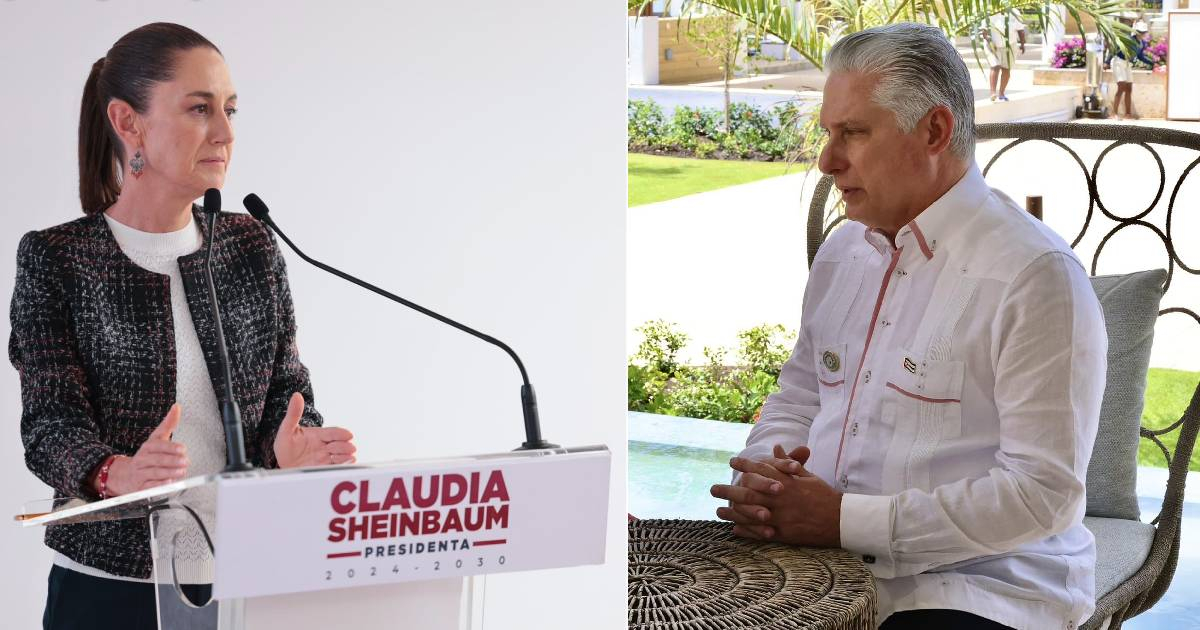
The Mexican government is set to allocate 588 million pesos (approximately $35 million) through a donation agreement to boost food self-sufficiency in Cuba and create jobs in rural areas.
According to Quadratín, AMEXCID (the Mexican Agency for International Development Cooperation) has approved these funds as part of the second phase of the "Sembrando Vida" program in Cuba. This initiative was formalized in document ECI / 0472 / 2026, dated March 31.
The project's aim is to "apply the Mexican agricultural model on Cuban soil to enhance food self-sufficiency and generate employment in the island's rural regions," amid a backdrop of food shortages and a production collapse that have become fundamental issues.
“Sembrando Vida” in Cuba: Strategic Investment or Political Gamble?
The program now supported in Cuba is part of a broader Mexican strategy in the region. "Sembrando Vida" has already been rolled out in countries like El Salvador, Honduras, Guatemala, and Belize, with the stated goal of curbing migration through rural development.
In Cuba's case, the resources will be managed via the Mexico Fund trust, overseen by institutions like BANCOMEXT, the Ministry of Foreign Affairs, and Banco del Bienestar. The Mexican government maintains that the fund management adheres to "transparency and auditing protocols," with oversight by the Federal Audit Office and internal controls by the Ministry of Foreign Affairs.
The official documentation even specifies payments, such as a transfer of 1,479,600 pesos to Dragon Charge, S.A. de C.V., linked to the program's administrative operations.
AMEXCID argues that these projects are not mere donations but "strategic investments for regional stability." However, implementing this model in Cuba raises challenging questions.
Economic System Challenges in Cuba
Unlike other beneficiary nations, Cuba maintains a highly centralized economic system, where private land ownership and free trade remain heavily restricted. Within this framework, the promise of "food self-sufficiency" clashes with a reality marked by state controls, structural inefficiencies, and lack of productive incentives.
Growing Aid Amid Intensifying Support
This new funding does not occur in isolation. Recently, Mexico has visibly increased its backing of Havana across various fronts. In recent days, Claudia Sheinbaum's government sent a fourth shipment of humanitarian aid, delivering over 96 tons of food, raising the total to 3,125 tons of supplies sent to the island in recent months.
These shipments, transported by the Mexican Navy, included staples like rice and beans in a country where the basic food basket is increasingly inadequate. Additionally, the political stance of Sheinbaum herself has been clear, as she openly defended the potential resumption of fuel supply to Cuba, though this has yet to materialize.
Nevertheless, recent experiences with humanitarian aid to Cuba have sparked skepticism. Citizen complaints and journalistic reports suggest that some donated resources might end up in foreign currency stores, inaccessible to most of the population. Although Cuban authorities have denied these claims, the lack of independent verification mechanisms within the island makes it difficult to confirm the aid's final destination.
Political Backing Amid Crisis
The increase in Mexican cooperation coincides with a critical moment for the Cuban regime. The island is dealing with prolonged blackouts, widespread shortages, and growing social unrest, with protests erupting in several cities during March.
In this context, Mexico's support has been openly celebrated by Miguel Díaz-Canel, who expressed gratitude: "Thank you, Mexico, a thousand times thank you for always standing by Cuba during the most difficult times for our nation."
However, the growing involvement of Mexico in Cuba rekindles a fundamental debate. On one hand, the Mexican government champions a policy of regional solidarity and historical cooperation, claiming its aim is to improve the living conditions of the Cuban people. On the other, critics argue that without structural changes within the island, this type of assistance risks propping up a failed economic model, allowing the regime to buy time without addressing the underlying causes of the crisis.
As some analysts and citizens have noted, Cuba's problem is not solely about resources but about the system itself. In this light, the nearly $35 million now allocated to "Sembrando Vida" could end up being less of a solution and more an extension of a cycle of dependency.
Meanwhile, for the millions of Cubans facing blackouts, shortages, and insufficient wages, the question remains: how much of this aid will truly reach them?
Key Questions About Mexico's Financial Aid to Cuba
What is the purpose of Mexico's "Sembrando Vida" program in Cuba?
The "Sembrando Vida" program aims to replicate the Mexican agricultural model in Cuba to boost food self-sufficiency and create jobs in rural areas.
How is the funding for "Sembrando Vida" in Cuba managed?
The funds are managed through the Mexico Fund trust, overseen by institutions like BANCOMEXT, the Ministry of Foreign Affairs, and Banco del Bienestar, following transparency and auditing protocols.
What challenges does Cuba face in achieving food self-sufficiency?
Cuba faces challenges such as a highly centralized economic system, state controls, and structural inefficiencies, which hinder the promise of food self-sufficiency.