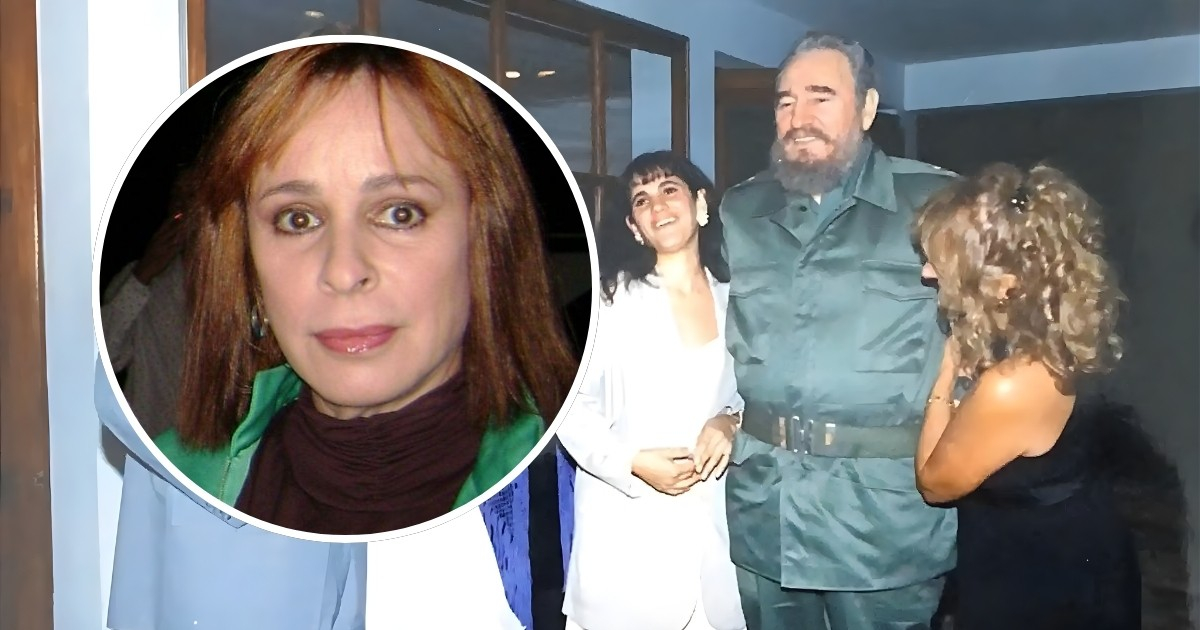
At the age of ten, Alina Fernández Revuelta learned that the man ruling Cuba was actually her biological father, a revelation that turned her life into a silent struggle, which she ultimately broke free from by fleeing the country under a false identity.
Alina is the result of an extramarital affair between Fidel Castro and Havana socialite Natalia Revuelta—both of whom were married to other people in the 1950s. For years, Alina believed her father was cardiologist Orlando Fernández Ferrer. The truth, disclosed by her mother, was not just an emotional burden: her stepfather and sister had already left Cuba, leaving her to feel the weight of betrayal within her own family. She recalled this in an exclusive interview with The Epoch Times published recently.
Her political awakening began even before this family secret came to light. At just nine or ten years old, Alina was sent to participate in what was called "voluntary work." "I went to tell my mother that I didn't want to go," she remembered. Her mother insisted, "No, you have to go." This is when Alina realized that in Cuba, "voluntary" meant mandatory. She quickly understood the deceit she was living under.
The Turning Point: Mariel Exodus
The definitive turning point came in 1980 during the Mariel Boatlift. Between April and October of that year, around 125,000 people fled Cuba. The regime organized mobs to assault, humiliate, and, in some cases, even kill those leaving. "People were encouraged to beat, shout at, and humiliate those who wanted to leave. Seeing such official treatment was a very hard turning point for me. It shattered me," she stated.
Becoming a Public Dissenter
By the late 1980s, Alina became a public dissenter. This was an added burden during the Special Period, marked by widespread shortages and hardships, including power outages, food scarcity, and closed schools. "I was on the dissenting side, so it was a double burden for her as a teenager," she explained. "Some say it's worse now, but the 1990s were terrible."
In 1993, at 37, Alina escaped Havana using a Spanish tourist's passport. She flew to Madrid, secured political asylum at the U.S. Embassy, and arrived in Atlanta on December 21 of that year. Her 16-year-old daughter was left behind. A few days later, the Reverend Jesse Jackson visited Cuba and, through what Alina described as "divine intervention," secured her daughter's exit from the country. They reunited in the United States shortly thereafter.
Life in Exile and a New Voice
From Miami, Alina has spent over thirty years in exile, living modestly like many other Cuban expatriates. She has no contact with her family on the island, including her uncle Raúl Castro. "One of the greatest Cuban tragedies is how this madness divided families in the most dramatic way. If you didn't think the same, you became the enemy. It's terrible. It has been that way since the beginning," she stated.
Now nearing seventy, Alina breaks her media silence, spurred by the severe crisis Cuba faces and the premiere of the documentary Revolution's Daughter on April 10 at the Miami Film Festival, in which she serves as executive producer. "I've been silent for many, many years," she admitted. "I felt like I had already said everything I had to say."
However, she warns that change from within Cuba is unlikely in the short term; the communist system is deeply entrenched and power remains centralized. "For me, the time for regime change has been since the late 1980s," she said. "When Fidel Castro died, we all thought his regime was over, because it was a very personalist, paternalistic, narcissistic government. But it survived."
Frequently Asked Questions about Alina Fernández Revuelta and Her Life
Who is Alina Fernández Revuelta?
Alina Fernández Revuelta is the daughter of Fidel Castro and Natalia Revuelta. She grew up in Cuba and later became a public dissenter against the regime, eventually fleeing to the United States.
How did Alina escape Cuba?
In 1993, Alina escaped from Cuba using a Spanish tourist's passport. She traveled to Madrid, obtained political asylum at the U.S. Embassy, and then arrived in Atlanta.
What was the Mariel Boatlift?
The Mariel Boatlift was a mass emigration of Cubans who departed from Cuba's Mariel Harbor for the United States between April and October 1980. Approximately 125,000 Cubans were part of this exodus.