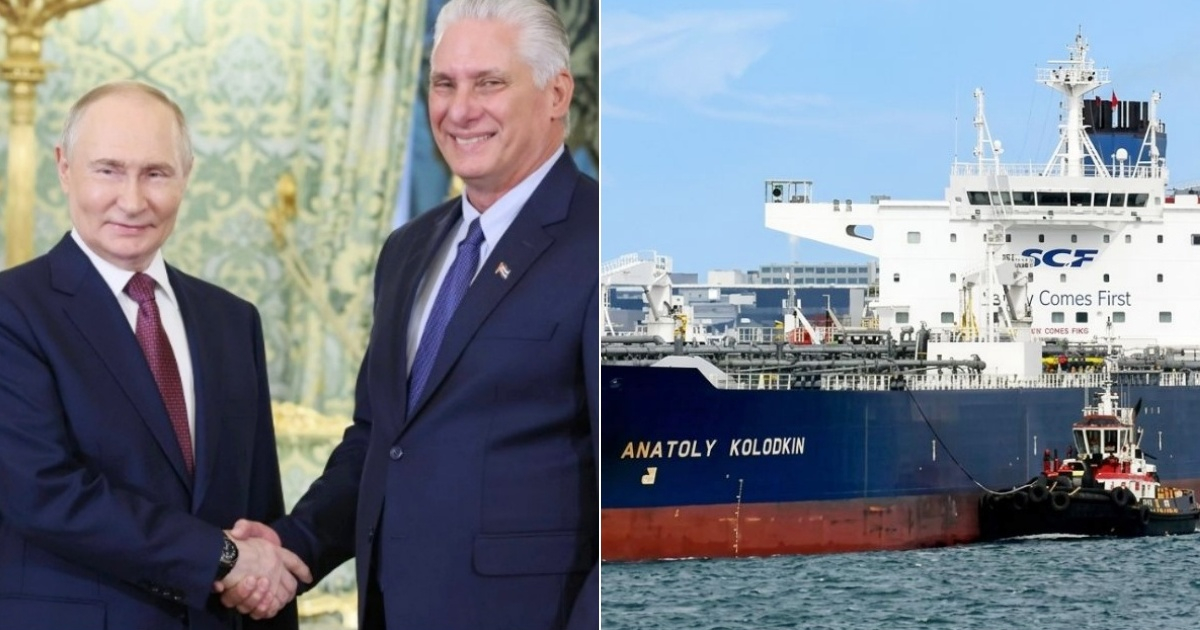
The Russian government has declared that they are preparing a second shipment of oil to Cuba amidst the island's severe energy crisis, boasting that one of their vessels successfully "broke the blockade."
Russia's Energy Minister, Serguéi Tsivilev, made this statement during the Energoprom-2026 forum following discussions with Cuban representatives in St. Petersburg.
He emphasized the exceptional nature of the operation and expressed Russia's commitment to maintaining the supply. "Cuba is under a complete blockade, completely isolated. Where did the oil shipment come from? A Russian vessel broke the blockade. A second vessel is being loaded right now, and we won't leave the Cubans in a bind," he asserted, as reported by TASS and other Russian media outlets.
The Implications of a Second Oil Shipment
Despite the lack of specifics on quantity or exact timing, the second tanker is reportedly being loaded as part of a strategic energy support initiative for Havana amidst a critical shortage.
This announcement comes just days after the Russian tanker, Anatoly Kolodkin, delivered around 100,000 tons of crude—approximately 730,000 barrels—to Cuba, marking the island's first oil shipment in nearly three months.
Moscow labeled this initial delivery as "humanitarian aid," portraying it as a decisive move against the energy constraints facing Cuba.
Contrasting Perspectives: Russia vs. the United States
While Russia claims to have circumvented a "total blockade," recent statements from Washington offered a nuanced perspective. Following the first shipment, the White House clarified that the supply was allowed for humanitarian purposes and did not signify a shift in U.S. policy toward Cuba. Future authorizations, they stressed, would be evaluated on a "case-by-case" basis.
Dmitry Peskov, the Kremlin's spokesperson, confirmed that the oil shipment was discussed with American partners in advance, suggesting it was not a unilateral breach of sanctions but rather an operation permitted under certain conditions.
Former President Donald Trump downplayed the significance of the shipment, stating, "I don't care […] they have a bad regime, bad leadership, and whether or not they get a ship of oil, it doesn't matter."
Challenges in Cuban Energy Supply
Cuba requires about 100,000 barrels of oil per day to meet its demands, but it only produces approximately 40,000, leading to a severe deficit following the halt in shipments from Venezuela, its traditional energy ally.
Though Russian oil offers some relief, experts warn of its limited impact. Energy analyst Jorge Piñón noted that the crude would primarily be used for liquefied gas for hospitals and a reduced amount of fuel for the public.
Cuban economist Omar Everleny deemed the shipment insufficient to resolve the structural crisis. In a public message, Cuban leader Miguel Díaz-Canel acknowledged the temporary relief provided by the Russian shipment but admitted it was "not enough" given the crisis's scale.
Debate and Criticism Over U.S. Policy
The case has reignited discussions about U.S. policy towards Cuba. On one hand, Washington maintains economic pressure and sanctions, yet permits occasional fuel shipments for humanitarian reasons.
Political analyst Andy Gómez criticized this contradiction, highlighting the lack of a coherent strategy. "I don't see an end to this situation. I don't see a point. I don't see a strategic policy," he told Univision.
Dissident and former political prisoner Jose Daniel Ferrer also expressed skepticism about the message sent by accepting Russian aid.
Despite Moscow's triumphant rhetoric, the oil shipment—and the second one in preparation—barely covers a few days of consumption on the island. Experts agree that Cuba would need between $8 billion and $10 billion in investments to modernize its energy infrastructure and sustainably overcome the crisis.
Meanwhile, the nation continues to rely on temporary solutions in a landscape marked by sanctions, scarcity, and geopolitical tensions. The new Russian shipment, far from resolving the issue, underscores the fragility of Cuba's energy system and its increasing dependence on external decisions to avert collapse.
Understanding the Energy Crisis in Cuba
What is the current energy demand in Cuba?
Cuba requires approximately 100,000 barrels of oil per day to meet its energy demands.
How has the halt in Venezuelan shipments affected Cuba?
The cessation of oil shipments from Venezuela, a key energy ally, has led to a severe energy deficit in Cuba.
What are the implications of Russian oil shipments to Cuba?
While Russian oil shipments provide temporary relief, they are not sufficient to address the broader and more complex energy crisis in Cuba.