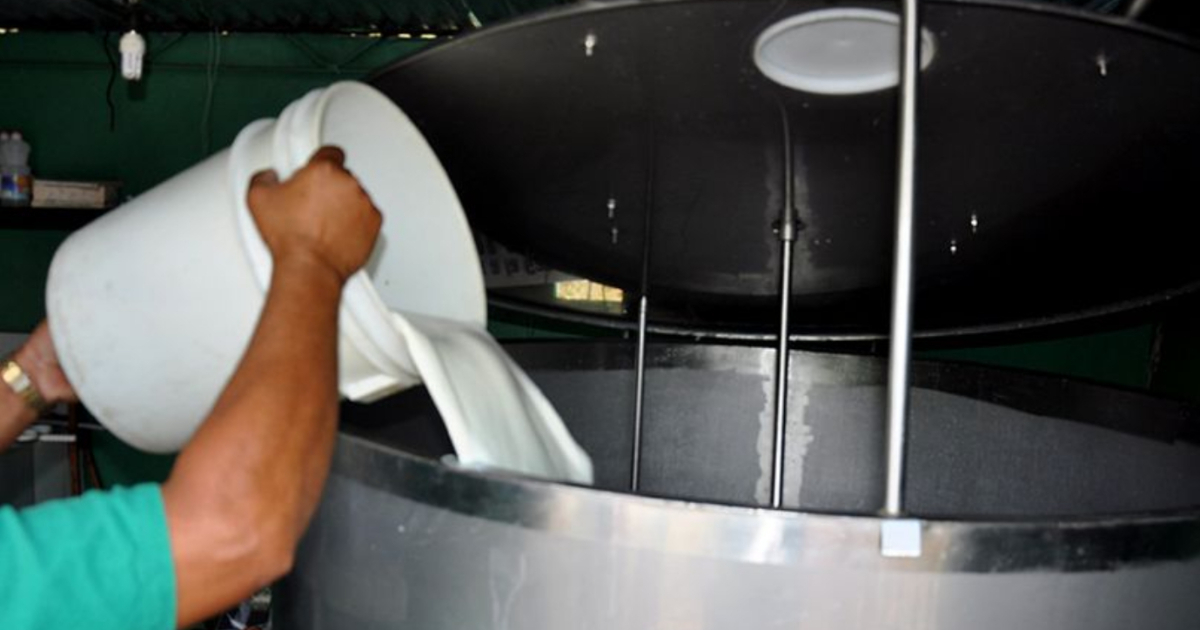
A citizen complaint has exposed significant irregularities in the milk distribution intended for children in the province of Las Tunas, according to an official report on the Facebook profile of Periódico 26.
In response to the complaint, a joint operation was conducted involving the Provincial Inspection Directorate, the Technical Investigative Department (DTI), and economic specialists, who verified issues with the product's quality.
At La Loma's Store No. 1, an analysis of 392 liters of milk revealed a density of 16.5 g/mL, which is significantly below the required standard of 30 g/mL, indicating possible adulteration. Furthermore, 202 liters were found in excess, suggesting irregular management of the product.
Consequently, five fines of 10,000 pesos each were imposed on those involved for violations related to the food's quality, as per Decree 30. A formal complaint was also filed against the legal representative present in the distribution vehicle.
The authorities stated that the milk was returned to the Dairy Company for re-pasteurization before being redistributed to the child population.
Public Outrage Over Milk Quality
Following the report, numerous users voiced their dissatisfaction on social media, emphasizing that this issue is not an isolated incident.
"This has been happening for 30 years (put that date because that's how far back I remember). Water has been added to yogurt and milk, and after 30 years, these problems still aren't fixed," one user commented.
Others questioned the severity of the penalties: "A 10,000 peso fine, that's what they earned that day; they are being too lenient with these matters."
Some pointed out that the situation is common in other areas of the country: "It's not just in Las Tunas. In Vázquez, they could come and find that more than 50% is water. This is widespread."
Several comments agreed that the product's quality has been poor for a long time: "It's water that they're giving to our children."
Some citizens called for harsher measures: "This is a grave crime, affecting children's nutrition, and they only get a 10,000 peso fine."
There were also calls for broader oversight: "The operation should be nationwide; milk is being watered down daily all over the country."
The reactions highlight widespread discontent among the population, particularly among parents who rely on this supply for their children's nutrition, against a backdrop of scarcity and economic hardship on the island.
Common Concerns About Milk Quality in Cuba
What were the findings of the milk quality investigation in Las Tunas?
The investigation found that the milk had a density far below the required standard, indicating possible adulteration, and discovered excess quantities suggesting irregular management.
How did the public react to the milk scandal in Cuba?
The public expressed outrage on social media, with many noting that milk dilution has been a longstanding issue and criticizing the lenient penalties imposed.
What actions were taken against those involved in the milk distribution scandal?
Five fines of 10,000 pesos were issued for quality violations, and a formal complaint was filed against the legal representative in the distribution vehicle.