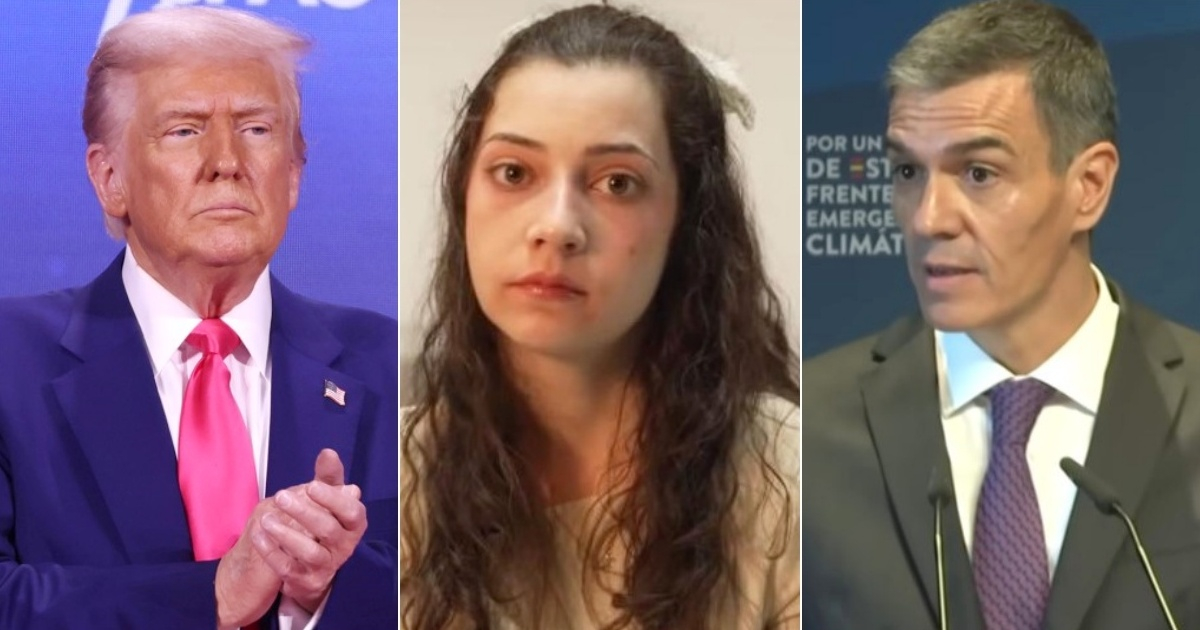
The euthanasia case of a young Spanish woman, Noelia Castillo, aged 25, has escalated into an international dispute. The Trump administration has reportedly demanded a formal inquiry into the matter while sharply criticizing Spain for alleged "human rights failures."
The New York Post exclusively reported that the U.S. State Department has instructed its Embassy in Madrid to investigate the circumstances surrounding Castillo's life and death. Castillo, a victim of repeated sexual assaults, chose euthanasia last week under Spanish law.
A leaked diplomatic cable, cited by the newspaper, reveals that Washington seeks to clarify the actions of Spanish authorities in response to the rape allegations, as well as the process that permitted Castillo’s assisted suicide.
"We are deeply concerned by allegations that Ms. Castillo was repeatedly sexually assaulted under state care and that no perpetrators have been brought to justice," the document states.
The cable further questions the euthanasia procedure, noting, "We are aware of reports suggesting Ms. Castillo showed hesitation about undergoing euthanasia in her final hours, but these indications were ignored."
For the Trump administration, the case "raises serious concerns about the application of Spain's euthanasia law, particularly in cases involving psychiatric disorders and non-terminal suffering."
Additionally, the State Department highlights a migration component in the attacks on Castillo. "We are investigating allegations that the sexual assault against Ms. Castillo was committed by individuals with migration backgrounds," the cable states, adding that "mass illegal migration is a human rights concern."
Washington considers that Spanish migration policies could pose "a significant threat to the rights and freedoms of Spanish citizens, as well as to regional and global security."
The order demands U.S. officials convey these concerns to the Spanish Government by April 3, and gather information on the alleged assailants, their migration status, and any legal obstacles that prevented their prosecution.
Spanish Government's Firm Response
Spain's response was swift. Health Minister Mónica García sharply rebuked Washington's criticisms through a social media post.
"Thousands die in the U.S. each year without health insurance, while Trump supports and executes human rights violations between Gaza and Iran. He should stop pushing his ultra-agenda by interfering everywhere," she wrote.
The minister defended Spain's healthcare system and legal framework, emphasizing the guarantees of the process. "Spain is a serious country with a robust healthcare system and a legal framework that protects and cares for everyone, including those who choose to seek help to die with dignity within the law, evaluated by clinical committees and endorsed by the courts," she added.
The Spanish government maintains that Castillo's case met all legal requirements, was reviewed by independent bodies, and validated by various judicial instances.
As of the article's closing, Spanish President Pedro Sánchez had not commented on the incident.
A Case Defined by Suffering and Legal Battles
Noelia Castillo passed away in Sant Pere de Ribes (Barcelona) after a lengthy legal process exceeding a year and a half. Her case shocked Spanish public opinion, intertwining multiple factors: a history of multiple sexual assaults, a suicide attempt leaving her paralyzed, and a resolute decision to pursue euthanasia.
She formally requested the procedure in April 2024 after suffering an irreversible spinal injury causing chronic pain, dependency, and loss of quality of life. Her request received approval from the Catalonia Guarantee and Evaluation Commission in July of that year.
Her father launched a legal battle to prevent it, exhausting all possible judicial avenues, from Spanish courts to the European Court of Human Rights, which ultimately refused to halt the euthanasia.
Courts repeatedly concluded that there was no "lack of capacity" in the young woman, and that her decision remained steadfast throughout the proceedings.
Washington's Scrutiny of the Spanish System
U.S. officials cited by the New York Post and agencies like EFE have expressed doubts about the functioning of Spain's protection system for vulnerable individuals and the application of euthanasia in non-terminal or psychiatric cases.
They have also raised concerns that Castillo may have had second thoughts shortly before the procedure, a claim not supported by Spanish judicial resolutions.
The case has reignited international debate on assisted suicide and Spain's euthanasia law, effective since 2021, which allows individuals to seek help to die in contexts of "severe, chronic, and incapacitating suffering."
New Tensions Between Washington and Madrid
The controversy surrounding Noelia Castillo's euthanasia adds to a growing deterioration in U.S.-Spain relations in recent weeks, marked by political differences, cross-criticisms, and international disagreements.
The State Department's statements, which include criticisms of human rights and Spanish migration policies, have been perceived in Madrid as direct interference in internal affairs.
Minister García's unusually harsh tone toward the Trump administration reflects the diplomatic "bad vibes" beginning to take shape in the public discourse of both governments.
Amidst this political clash, Castillo's case continues to generate global debate over the boundaries of euthanasia, victim protection, and the state's role in deeply personal decisions.
Euthanasia and Human Rights Concerns: Key Questions Answered
What prompted the Trump administration to investigate Noelia Castillo's euthanasia case?
The Trump administration was prompted to investigate Castillo's case due to concerns about alleged human rights violations and the circumstances surrounding her euthanasia, particularly regarding Spain's handling of sexual assault allegations and the assisted suicide process.
How did the Spanish government respond to the U.S. investigation request?
The Spanish government, through Health Minister Mónica García, responded sharply, defending Spain's healthcare and legal systems while criticizing the U.S. for interfering in Spanish affairs and highlighting issues within the U.S. health system.
What impact has Noelia Castillo's case had on international debates about euthanasia?
Castillo's case has reignited international debate on the ethics and legality of assisted suicide, particularly focusing on Spain's euthanasia law and its application in cases of severe suffering, psychiatric disorders, and non-terminal conditions.