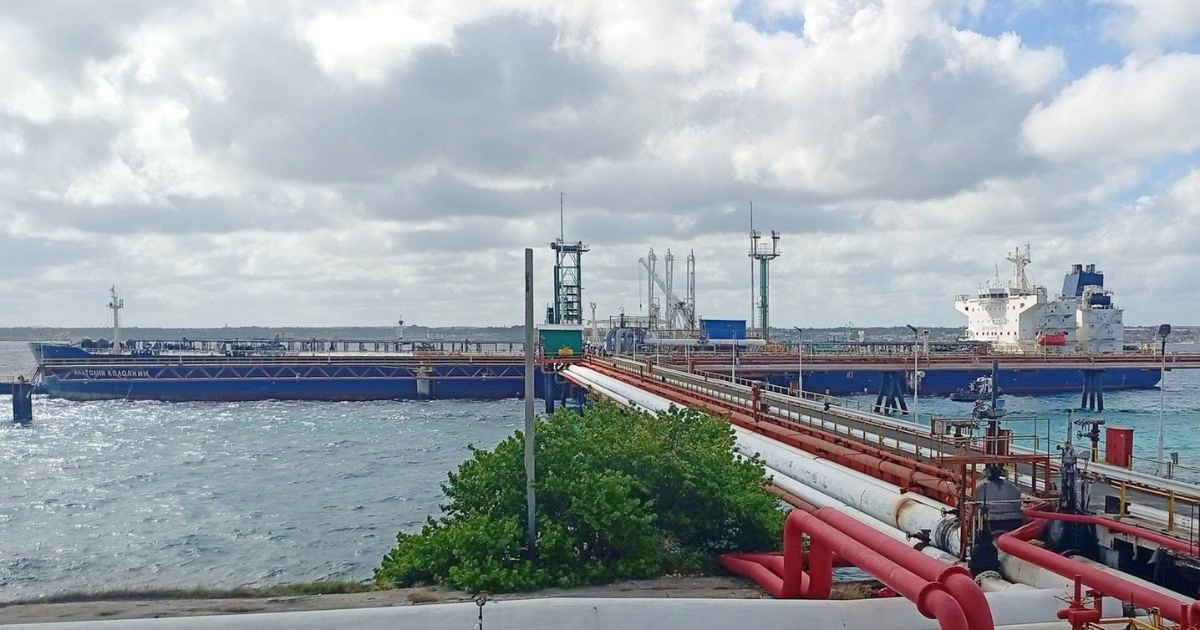
The arrival of the Russian oil tanker Anatoly Kolodkin in Cuba, carrying approximately 730,000 barrels of crude and permitted by the United States amid the island's energy crisis, has reignited debate over Havana's political trajectory and Washington's strategy.
In this context, Cuban-American political analyst Andy Gómez stated that he does not foresee a swift resolution to the country's situation, nor a coherent policy from Donald Trump's administration.
During an interview with Univision journalist Javier Díaz, Gómez was unequivocal in his assessment of the current scenario:
"I am telling you, I don't see an end to this situation yet. I don't find it logical. I don't see a strategic policy."
Washington's Inconsistent Approach
The analyst openly questioned Washington's official narrative, even in relation to statements by Secretary of State Marco Rubio:
"No, no, wait, wait, I'm telling you that maybe we know much more about what's happening than what they are doing."
According to him, there is a disconnect within the U.S. government itself regarding how to handle the Cuban situation:
"I think there's a significant difference between what the White House wants to do, and what Secretary Rubio, who knows Latin America and Cuba very well, understands should be done."
No Significant Political Change in Cuba
One of Gómez's key points is that, despite contradictory signals—such as allowing Russian oil while maintaining economic pressure—there are no real signs of political change on the island.
When asked if the situation might persist due to a lack of clear definitions, he replied: "I think they talk about changing, but as we've seen from Cuba's side, they clarified that there will be no regime change."
The analyst cited recent statements by Cuban Deputy Foreign Minister Carlos Fernández de Cossío to bolster his argument, in which the deputy minister claimed that as long as Raúl Castro is alive, there will be no regime change in Cuba.
Russian Oil Shipment Raises More Questions
Furthermore, the arrival of the Russian ship—owned by a company sanctioned by the United States, the European Union, and the United Kingdom—has sparked questions about the coherence of U.S. policy towards Cuba.
Trump himself justified the decision on humanitarian grounds, amidst power outages and fuel shortages on the island, which has been without regular supplies for months.
However, for Gómez, the message being sent is contradictory.
"The question we need to ask ourselves is, first they said there was a blockade of oil to Cuba, that nobody could send oil to Cuba, then they said they were allowing Venezuela to send to the private sector, and now they let a Russian ship enter Cuba, so I think the answer is clear," he questioned. The analyst did not delve deeper into that "answer," but implicitly criticized what he considers an erratic policy.
Understanding the Impact of Russian Oil on Cuba's Crisis
Why is the arrival of Russian oil significant for Cuba?
The arrival of Russian oil is significant because it provides much-needed energy resources to Cuba amid a severe energy crisis, while also highlighting the complexities and contradictions in U.S. foreign policy towards the island.
What are the criticisms of U.S. policy towards Cuba?
Critics, like Andy Gómez, argue that U.S. policy towards Cuba is inconsistent and lacks coherence, as evidenced by the allowance of the Russian oil shipment despite previous sanctions and blockades.