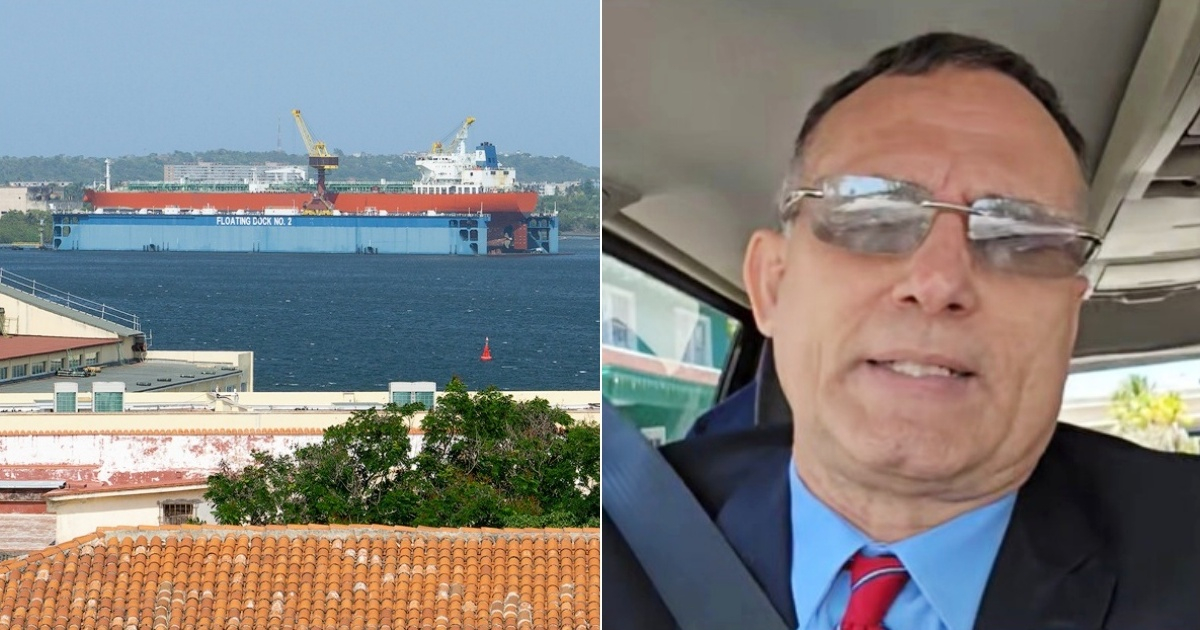
Cuban exile and former political prisoner, José Daniel Ferrer, has expressed strong disapproval over Cuba's choice to permit the docking of a sanctioned Russian oil tanker. He argues that this decision, amidst the current U.S.-led energy pressure strategy, could have serious political repercussions.
In a brief Facebook post on Monday, Ferrer emphasized that while Cuba's regime is crippled with or without oil, allowing the arrival of the vessel sends potentially harmful geopolitical signals.
“The Castro-communist regime is undeniably on the brink, regardless of its oil supply,” Ferrer stated.
However, he immediately tempered this by highlighting, “Permitting a sanctioned Russian supertanker was not a wise decision.”
International Implications of Cuba's Decision
Ferrer warned about how this action might be perceived globally. “Certain gestures can be interpreted by the adversaries of the United States as showing weakness in Trump and strength in Putin and the Castros,” he concluded.
These comments came after the sanctioned Russian tanker, Anatoly Kolodkin, arrived in Cuba carrying over 700,000 barrels of crude oil. This marks the first significant shipment of its kind in more than three months.
White House's Perspective on the Russian Tanker
On March 30, White House spokesperson Karoline Leavitt defended the Trump administration's decision to allow the Russian tanker access to Cuba, citing "humanitarian reasons."
During a press briefing, she clarified that there has been no substantial change in the sanctions policy and warned that Washington reserves the right to seize vessels violating these sanctions.
When asked why the administration permitted Russia to supply oil to Cuba but not other nations, Leavitt responded, “It was a decision made on a case-by-case basis for humanitarian or other reasons, but there has been no firm change in our sanctions policy.”
In response to whether this signaled a permanent "green light" for Russia, the spokesperson was emphatic: “No, that is not what I said. It is assessed case by case.”
Diverging Views from Washington
While Ferrer critiques the decision from a political and symbolic standpoint, sources close to the State Department have presented a starkly different interpretation.
Journalist Eric Martin, in a social media post, argued that this operation does not undermine U.S. strategy but rather reinforces it.
“Trump allowing the Russian tanker to reach Cuba does NOT refute the U.S. quarantine,” he wrote, adding: “It CONFIRMS it.”
According to Martin, the crucial aspect is not the oil's origin but who controls its entry.
“The only oil reaching Cuba is what the U.S. authorizes,” he noted.
The reporter linked this event to a broader strategic approach he previously outlined: “As I predicted a month ago: The plan is to make the U.S. the new protector state of Cuba…”
A Conditional Move
Information disclosed by Martin suggests that the U.S. allowed the shipment following a concession from the Cuban regime concerning the U.S. embassy in Havana.
Reportedly, the Cuban government permitted fuel imports for the diplomatic compound, which the journalist described as “an important action” showing “Havana is cooperating, albeit slightly.”
While this account remains unconfirmed officially, it aligns with the selective pressure logic that has characterized the White House's recent policy towards the island.
Background: Sustained Pressure Without Immediate Collapse
The arrival of Russian oil comes amid a severe energy crisis in Cuba, marked by prolonged blackouts and fuel shortages. Experts caution that the received volume would last only about two weeks.
Donald Trump himself confirmed the authorization for the shipment with a pragmatic yet politically charged statement: “If a country wants to send some oil to Cuba, I have no problem with that.”
Nonetheless, he reiterated his critical stance towards the Cuban government: “Cuba is finished. They have a bad regime… very bad and corrupt leadership.”
Rather than providing structural relief, this incident appears part of a broader strategy: restricting the Cuban state's access to energy resources while maintaining the ability to authorize supplies under specific conditions.
Since January, Washington has heightened this pressure through a form of “quarantine” on oil destined for the government, while allowing certain relaxations for the emerging private sector.
In this battle of interpretations, it's evident that the island's energy crisis remains a critical element of political pressure, and each move - including the arrival of a sanctioned vessel - plays a role in a much larger geopolitical chess game, reshaping the relationships between Cuba, the U.S., and their allies or foes.
Key Questions About the Russian Oil Tanker in Cuba
Why did Cuba allow the Russian tanker to dock?
Cuba permitted the docking of the Russian tanker amid an ongoing energy crisis, despite potential geopolitical consequences and sanctions.
What was the White House's stance on the situation?
The White House, through spokesperson Karoline Leavitt, cited "humanitarian reasons" for allowing the tanker while maintaining that there has been no substantive change in sanctions policy.
How does this event fit into U.S. strategy towards Cuba?
This event is part of a larger strategy to restrict the Cuban government's energy access while allowing supply authorizations under specific conditions, reinforcing U.S. control over such transactions.