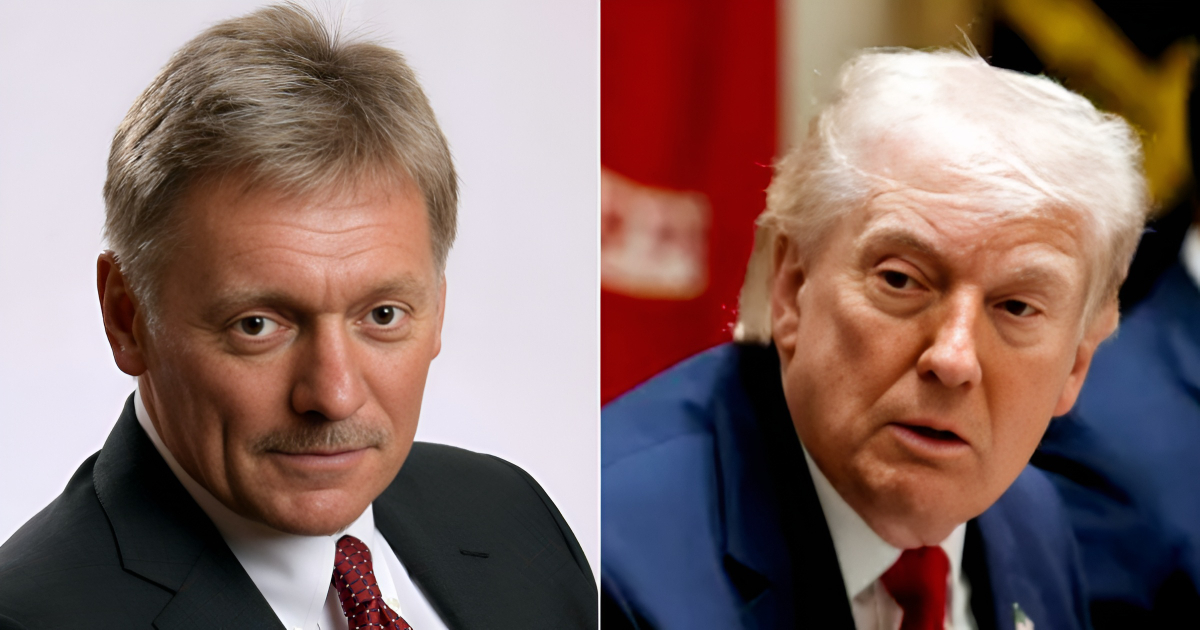
This Monday, the Kremlin acknowledged that the delivery of Russian oil to Cuba was not a unilateral decision. Instead, it was part of a previously discussed arrangement with the United States, occurring during a severe energy crisis impacting the island.
Dmitri Peskov, the Russian presidential spokesperson, confirmed that Moscow had engaged with Washington about the possibility of making "humanitarian" crude oil shipments prior to the arrival of the tanker Anatoli Kolodkin, which delivered approximately 100,000 tons—or nearly 730,000 barrels—of oil to Cuba.
"This subject was discussed beforehand during our interactions with American counterparts," Peskov stated, as reported by TASS, affirming that the Trump administration not only permitted the shipment but was also fully informed of the operation.
This official admission strengthens the notion that the current flow of oil to Cuba is influenced by decisions made in Washington. According to the Kremlin, the United States does not oppose periodic humanitarian deliveries by Russia or other nations.
This development arises as Cuba faces intense energy challenges, requiring about 100,000 barrels daily to maintain its electrical grid and economy. The recent shipment only covers around a week of consumption amid ongoing blackouts and an electric shortfall exceeding 2,000 megawatts.
Concurrently, Russia is encountering escalating obstacles in exporting its oil. Ukraine has intensified strikes on crucial ports like Primorsk—the departure point of the Anatoli Kolodkin—and Ust-Luga, disrupting the infrastructure critical to its international sales.
In this scenario, sending oil to Cuba highlights a delicate geopolitical balance: while Washington allows certain supplies to prevent a total collapse on the island, it also sustains pressure on the Cuban regime and Russia's export capabilities.
Beyond being a simple humanitarian gesture, this arrangement underscores how Cuba's energy crisis increasingly hinges on external decisions within a global landscape defined by conflict and strategic rivalry.
Key Aspects of the Cuba Oil Shipment Agreement
What was the role of the United States in the oil shipment to Cuba?
The United States discussed and agreed with Russia on the humanitarian oil shipment to Cuba, permitting the delivery despite its political stance on the Cuban regime.
How does the oil shipment impact Cuba's energy crisis?
The oil shipment provides temporary relief, covering about a week of Cuba's energy needs, but it does not solve the ongoing energy shortages and blackouts across the island.
What challenges does Russia face in exporting oil?
Russia is struggling with increasing difficulties in oil exports due to Ukrainian attacks on key ports like Primorsk and Ust-Luga, affecting its international sales infrastructure.