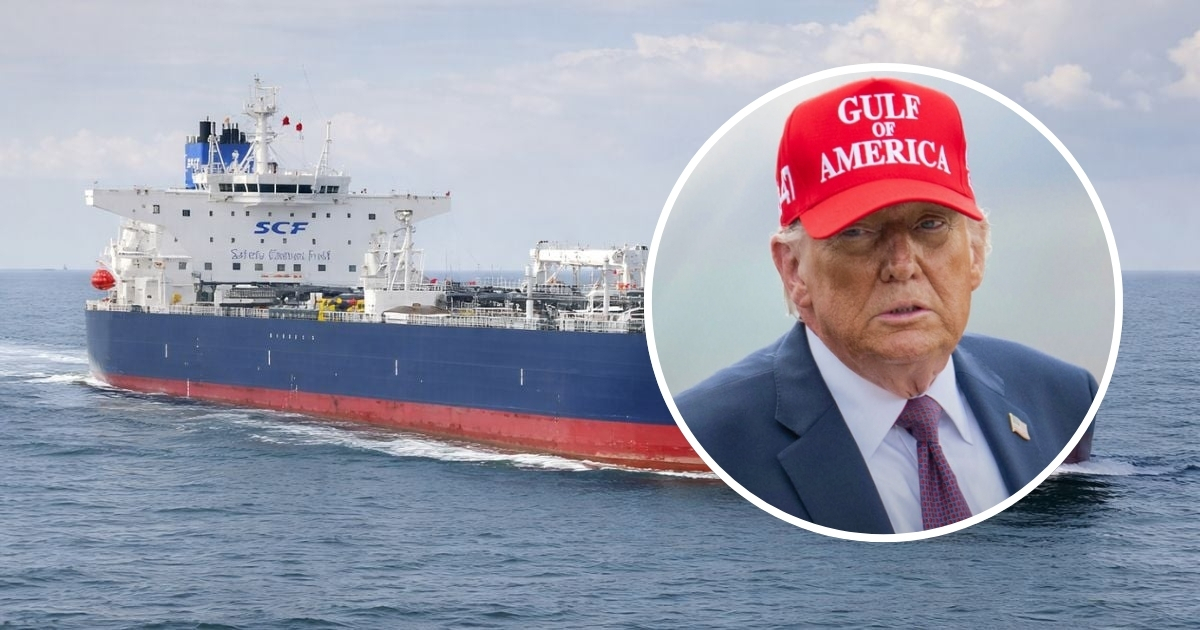
On Monday, President Donald Trump declared that the Cuban regime's days are numbered, regardless of any temporary energy relief. "Cuba is done. They have terrible leadership, very bad and corrupt, and whether they get a shipment of oil or not, it won’t matter," he stated aboard Air Force One.
Addressing reporters, Trump was even more forthright: "Cuba will be next. It’s a disaster, a failed state. It will collapse very soon, and we will be there to help, to support our great Cuban Americans," he added, noting that many of them witnessed their families suffer under Castro.
These remarks come as the Russian tanker Anatoly Kolodkin, sanctioned by the United States, the European Union, and the United Kingdom, docked at the port of Matanzas with approximately 730,000 barrels of crude oil, marking the first major fuel shipment to Cuba in over three months.
Trump sanctioned the docking as a "humanitarian exception," stating, "If a country wants to send some oil to Cuba, I have no problem with that, whether it’s Russia or anyone else." The contradiction within Díaz-Canel’s regime is stark: while blaming the U.S. "blockade" for all its woes, it relies on a sanctioned Russian vessel to keep a fraction of the country powered.
The relief, however, will be short-lived. Experts estimate that the shipment will cover only one to two weeks of supply and does not address decades of infrastructure neglect. Cuba produces just 40,000 barrels daily while needing 110,000, with reserves standing at merely 15 to 20 days as of February and March.
Energy Crisis Deepens in Cuba
The energy crisis afflicting the Cuban population is the worst in decades. The shortfall in electricity generation reached 2,040 megawatts on March 14, with a demand of 3,180 megawatts against an availability of only 1,185. Power outages affect 64% of the country, with some areas experiencing over 30 hours of daily blackouts. A nationwide blackout occurred on March 16, with the government admitting it did not know the cause.
The collapse has structural roots long ignored by the Castro regime. Cuban thermoelectric plants, built in the 1950s and 1960s, were never modernized. Dependence on subsidized Venezuelan oil — about $63.8 billion between 1999 and January 2026 — allowed the dictatorship to indefinitely postpone necessary reforms. When Nicolás Maduro was captured on January 3, cutting off the supply of 25,000 to 35,000 barrels daily, the system collapsed.
Secretary of State Marco Rubio was blunt last Thursday from Paris: Cuba lacks oil and fuel because the regime wants it for free, not because of Washington's sanctions. "Cuba’s economy must change, and it won’t unless its government system changes. It’s that simple," he asserted.
Humanitarian Concerns and Public Unrest
In response to the humanitarian collapse, the UN launched a $94.1 million emergency plan last Thursday to ensure fuel is provided exclusively to critical services: health, water, food, and education. So far, only $26 million of the $94.1 million requested has been secured. Francisco Pichón, the UN Resident Coordinator in Cuba, warned: "We fear a rapid deterioration, with potential loss of life."
Meanwhile, since March 6, massive pot-banging protests have rocked neighborhoods in Havana — including outside the Communist Party Central Committee — and provinces like Santiago de Cuba and Ciego de Ávila, with chants of "down with the dictatorship." The economy has shrunk by 23% since 2019, and The Economist Intelligence Unit forecasts a 7.2% contraction by 2026.
Even with the Russian tanker now in Matanzas, Trump reiterated that the regime's fate is sealed: "Cuba will be next," he repeated Monday, making it clear that no oil shipment will alter the verdict.
Understanding Cuba's Oil and Energy Crisis
What is causing Cuba's energy crisis?
Cuba's energy crisis is primarily due to outdated infrastructure, dependence on subsidized oil from Venezuela, and insufficient domestic oil production. The capture of Nicolás Maduro in January cut off a significant supply of oil, leading to a collapse in the energy system.
How is the international community responding to the crisis in Cuba?
The United Nations has launched a $94.1 million emergency plan to provide fuel for essential services in Cuba. However, only a portion of the requested funds has been secured so far, highlighting the challenges in addressing the humanitarian needs.
What role does the U.S. play in Cuba's current situation?
The United States has been a vocal critic of the Cuban regime, with President Trump highlighting its corruption and failure. U.S. sanctions have targeted Cuban officials and entities, and there is a call for systemic governmental changes to address the economic collapse.