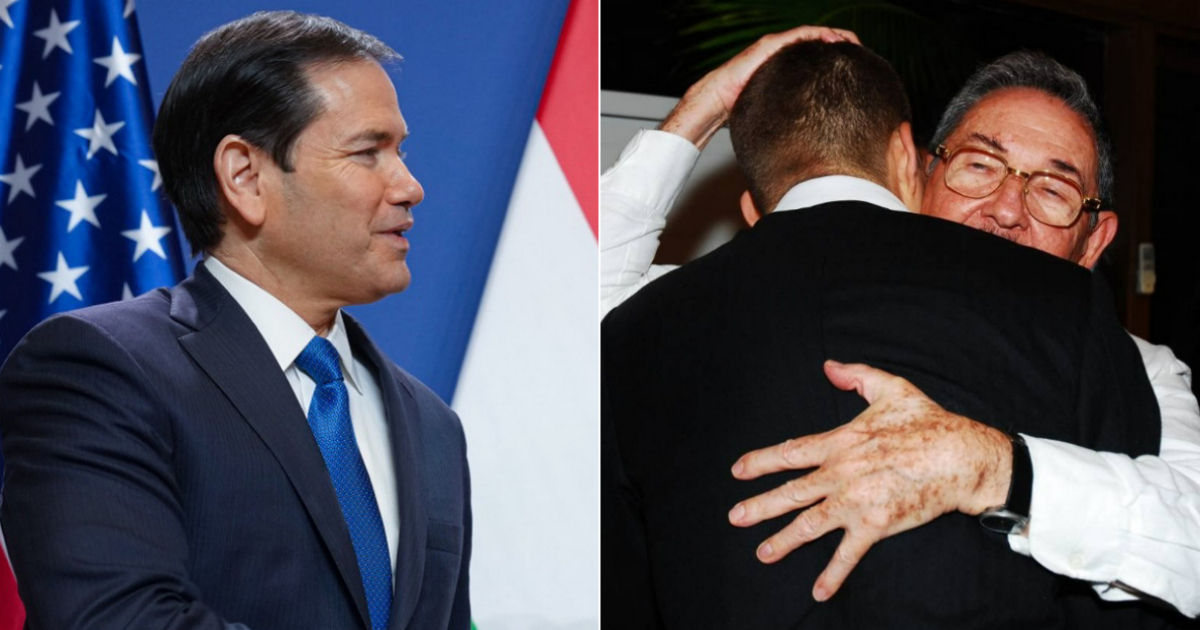
Recent disclosures of clandestine talks between Havana and the Trump administration have once again thrust the Castro family into the epicenter of Cuban power, challenging the fragile official narrative that seeks to legitimize Miguel Díaz-Canel as the face of these diplomatic discussions.
Amidst a severe economic downturn characterized by fuel shortages, production failures, and deteriorating humanitarian conditions, the heirs of the Castro regime emerge as pivotal players in a strategy aimed at safeguarding political control at any cost, amid speculation about a supposed civil transition to democracy.
Although Díaz-Canel holds the presidential title, it was he who confirmed that Raúl Castro, at 94, is spearheading the negotiations with Washington, still revered as the “historic leader of the revolution.”
This development underscores that true power in Cuba remains concentrated within the military and familial elite established since 1959, with the economic conglomerate GAESA as the backbone, as reported by The New York Times.
Nevertheless, Secretary of State Marco Rubio has warned about the credibility of media leaks regarding these contacts, stating that “much of what is published in the media is unreliable” and emphasizing that only he and President Trump are aware of the real content and scope of ongoing negotiations with the Cuban regime.
The Rising Roles of the Castro Family
In this evolving scenario, several family members have taken on more prominent roles. Raúl Guillermo Rodríguez Castro, grandson of the former leader, has transitioned from a low-profile figure in power circles to acting as a liaison in discussions with U.S. officials. His recent appearance on state television confirms a calculated repositioning.
Meanwhile, Alejandro Castro Espín, Raúl's son and a historical figure in intelligence, has also resumed a significant role in the negotiations. His experience in rapprochement with the United States during the Obama era positions him as a key operator in this moment of political redefinition.
However, the most notable face of this strategy is Óscar Pérez-Oliva Fraga, Deputy Prime Minister and Minister of Foreign Trade, who has announced the possibility of exiled Cubans investing in the island. This measure, unthinkable for decades, hints at a controlled economic opening that seeks financial relief without relinquishing political power.
Potential Shifts and Skepticism
Some analysts speculate whether Pérez-Oliva could emerge as a figure akin to Delcy Rodríguez in Venezuela: a more pragmatic leader capable of engaging with Washington without dismantling the regime's structure. His technical profile and surname—devoid of the direct “Castro” weight—could make him more palatable in a potential power restructuring.
However, this apparent renewal breeds skepticism. Far from signifying a break, many view it as an adaptation of the system: a shift from a “revolutionary oligarchy” to a “capitalist oligarchy,” where the same elites maintain control, now with market mechanisms.
For the Cuban people, battered by years of scarcity and lack of freedoms, the risk is evident: that economic changes serve only to perpetuate the ruling class's hold on power, without a genuine transformation of the political system.
Meanwhile, pressure from Washington persists to enforce more profound reforms, in a standoff where the island's future hangs in the balance.
Key Questions about Cuba's Political Landscape
What is the current economic situation in Cuba?
Cuba is experiencing a severe economic crisis, marked by fuel shortages, production failures, and deteriorating humanitarian conditions.
Who is leading the negotiations with the United States?
Raúl Castro, despite being 94 years old, is leading the talks with the United States, highlighting his continued influence in Cuban politics.
What role does Óscar Pérez-Oliva Fraga play in the current Cuban government?
Óscar Pérez-Oliva Fraga, serving as Deputy Prime Minister and Minister of Foreign Trade, has announced initiatives allowing exiled Cubans to invest in the island, indicating a potential shift towards economic openness.