The ongoing fuel crisis in Cuba continues to spark tensions and citizen complaints.
Recently, a reader reached out to CiberCuba's editorial team, reporting alleged misconduct at the Línea and E gas station in Havana's Vedado neighborhood. According to the reader, certain individuals are consistently prioritized amid long waiting lines.
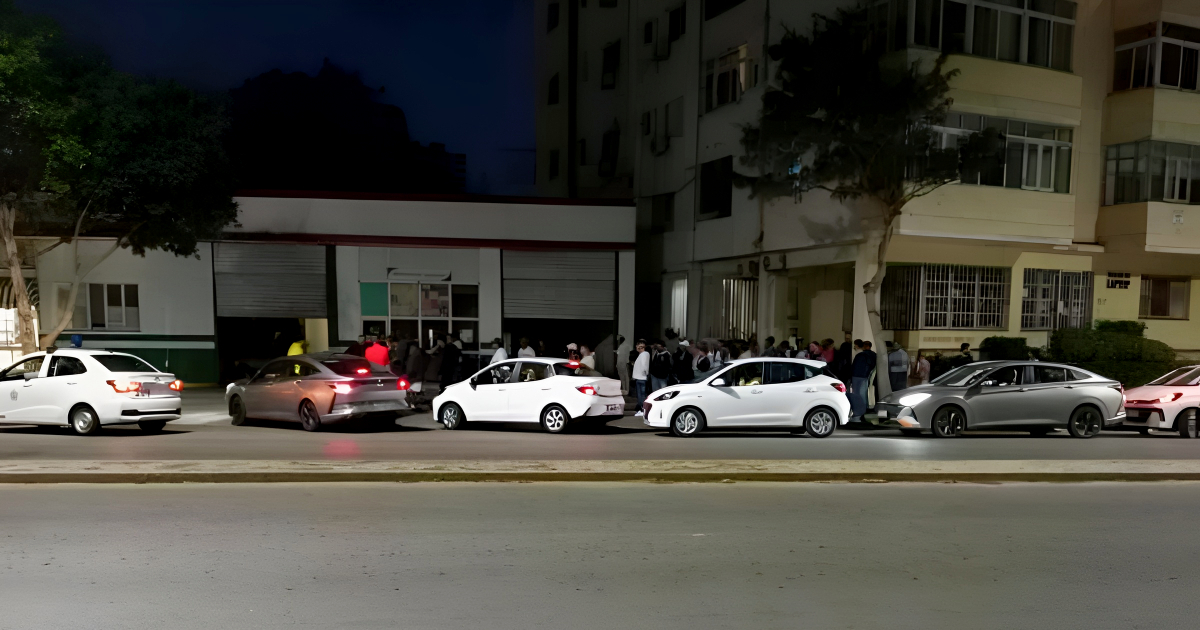
"I need to report something because this is getting out of hand," wrote the concerned citizen, who also provided several nighttime photos depicting extensive queues of vehicles waiting to refuel at this central gas station.
The situation reportedly occurs daily: "Every day, the same people are prioritized. Those of us who wait in line overnight are unable to refuel," the individual claimed.
The person further alleged that some vehicles manage to refuel multiple times, while others endure hours—or even the entire night—without success.
"The same cars go through three or four times," the reader pointed out, suggesting a potential favoritism or corruption scheme in the fuel management at this specific location in Havana. The reader also made a direct appeal: "To the relevant authorities, please, do something."
The photos taken at the Línea and E gas station show long lines of cars, a common sight in Havana and other provinces as the nation grapples with an energy crisis that has severely cut fuel supplies.
In this climate, waits exceeding 12 hours, informal queuing systems, and reports of resale or preferential treatment have been routine in recent months. The scarcity has also fueled the black market, where a liter of fuel can exceed 1,000 CUP, far above official prices.
The lack of transparency in distribution compounds the problem. There is currently no stable public list of gas stations designated for different client types, including small and medium enterprises (SMEs).
Although some private companies began importing fuel in February 2026, they do not sell it through their own networks. Instead, it is managed by state entities like CIMEX and CUPET and distributed via regular gas stations.
Practically speaking, access to fuel hinges on current availability, agreements with state entities, and allocations that are not always clear or public.
Some stations may prioritize certain customers or types of fuel, feeding perceptions of mismanagement, inequality, and possible misconduct akin to the allegations at hand.
Despite some governmental measures—such as allowing SMEs to import fuel through state intermediaries—citizens and experts agree that distribution, control, and transparency issues persist, impacting both the public and the private sector.
As of now, there is no official word on investigations or penalties related to these types of complaints. Meanwhile, users continue to face long waits and uncertainty in accessing an ever-scarcer resource on the island.
Understanding Cuba's Fuel Crisis and Corruption Allegations
What are the main complaints about the Línea and E gas station?
The primary allegations are about favoritism and corruption, with specific individuals allegedly receiving priority fuel access while others wait in long lines without success.
How has the fuel crisis impacted Cuba?
The crisis has led to extended wait times, the emergence of informal queue systems, and a booming black market where fuel prices can soar, exacerbating public frustration and inequality.
What measures has the Cuban government taken to address the fuel shortage?
The government has allowed small and medium enterprises (SMEs) to import fuel via state intermediaries. However, issues with distribution, control, and transparency remain unresolved.