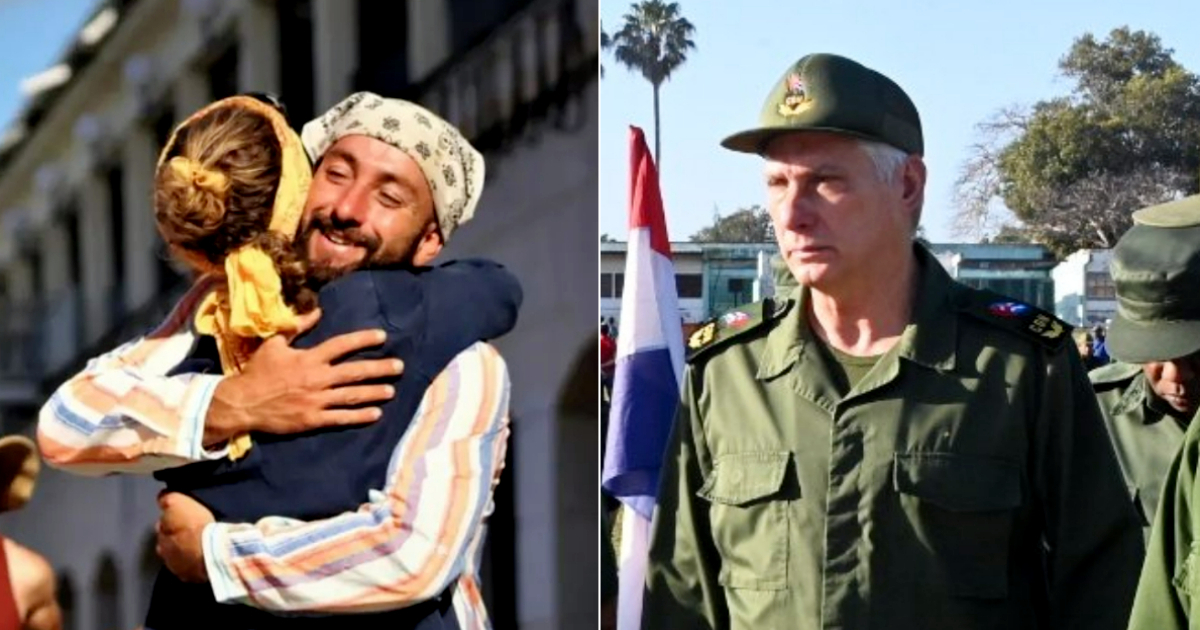
The recent arrival of the lost sailing vessels from the "Nuestra América" convoy in Havana has been showcased as a significant gesture of solidarity, rich in symbolic value.
"Finally in Cuba [...] with their cargo of necessary resources and, above all, their cargo of love in defense of just causes," proclaimed Cuba's leader Miguel Díaz-Canel on social media this past Saturday.
Díaz-Canel, who also serves as the first secretary of the Communist Party, highlighted the involvement of "a three-year-old girl as the youngest crew member of this expedition," promoting it as a sign of international support and asserting that "Cuba is not alone."
Nevertheless, beyond the epic narrative, this episode raises uncomfortable questions regarding its actual usefulness, the risks undertaken, and the considerable cost incurred during the maritime rescue operation.
The Limited Reach of Small Vessels
Let's address the basics: how much aid can two small catamarans truly carry? Despite claims of transporting tons of supplies as part of the convoy, the individual capacity of these vessels is restricted.
In practical terms, their effect on Cuba's deep-seated crisis is, at best, minimal. What stands out more is the media value of the mission.
An Ill-Fated Journey
The symbolic value took a dramatic turn when both boats vanished in the Caribbean for days, prompting a search and rescue mission led by Mexico's Navy.
For at least 48 hours, aircraft, ships, and international coordination were employed to find the crew members. This was not without a price.
It begs the question: who will bear the cost of this operation? Will Mexican taxpayers foot the bill for a privately organized initiative of questionable necessity?
The Cost of Rescue Operations
Though official figures are unavailable, reasonable estimates suggest that such rescue missions can cost tens or even hundreds of thousands of dollars, depending on their duration and the resources used.
In essence, a complex and costly intervention—likely more expensive than the "aid" delivered—was required to support an initiative that could have been organized far more safely and efficiently.
Was This Really Necessary?
This leads to a critical point: was it necessary? Humanitarian aid logistics are not insurmountable problems. Established channels—be they maritime, commercial, or even institutional—exist to transport large volumes of resources without risking lives or necessitating emergency operations.
However, in this instance, a high-visibility and politically charged approach was chosen, one that carried significant risk. The loss of communication for several days not only endangered the crew but also exposed the operation's fragility.
Particularly alarming was the presence of a three-year-old child on board.
Her participation in such a venture, which ended up requiring international rescue, raises serious concerns about the organizers' judgment and responsibility. This is not a minor detail or an anecdotal element; it's a line that should never have been crossed.
Ultimately, the saga of the "Nuestra América" convoy seems to have been as much—if not more—about political theater than a genuine response to Cuba's crisis.
Plenty of symbolism, extensive visibility... yet far too many risks for such a negligible real impact.
Key Questions on the Impact of the Sailing Convoy
What was the actual impact of the "Nuestra América" convoy on Cuba's crisis?
The practical impact of the convoy on Cuba's structural crisis was minimal, as the small catamarans could only carry limited supplies. The operation's main effect was media visibility rather than substantial aid.
Who will cover the cost of the search and rescue operation?
It is unclear who will pay for the search and rescue mission. There are concerns that Mexican taxpayers may end up covering the costs of this privately organized initiative.
Why was a three-year-old child included in the expedition?
The inclusion of a three-year-old child in such a risky expedition raises serious questions about the judgment and responsibility of the organizers, as it unnecessarily put the child in harm's way.
Could the aid have been delivered through safer channels?
Yes, humanitarian aid can be transported through established maritime, commercial, and institutional channels that do not require risky ventures or emergency operations.