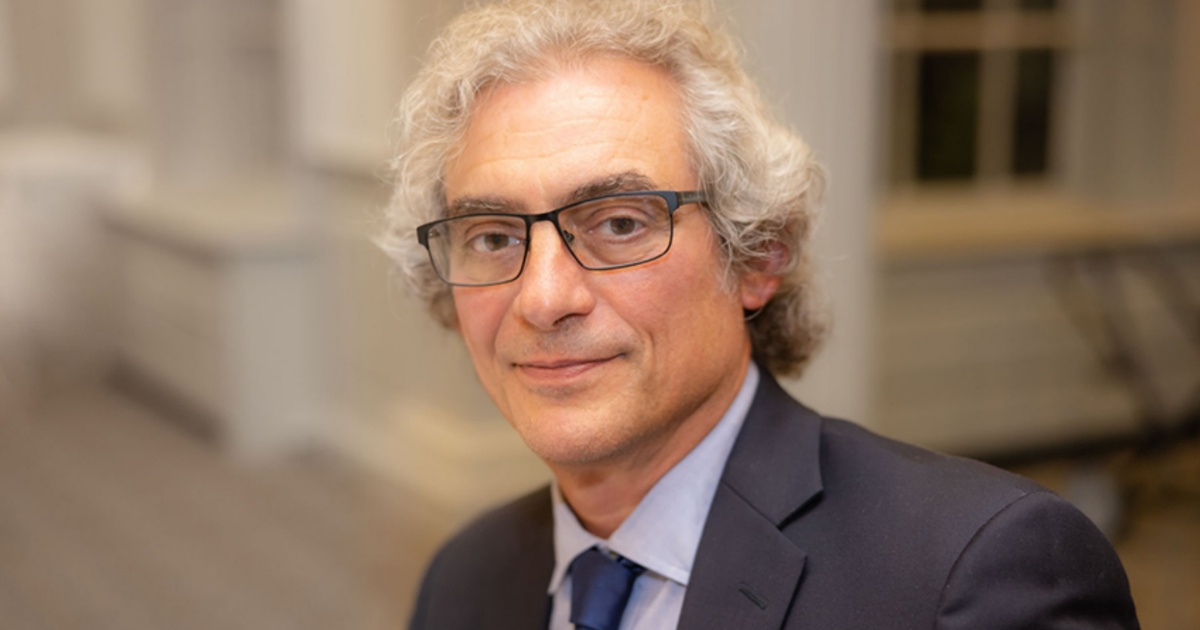
In a revealing interview, historian Alejandro de la Fuente, a Harvard professor specializing in Afro-Latin American studies and head of the Cuba Program at the Rockefeller Center for Latin American Studies, offered a scathing critique of the Cuban regime's handling of historical opportunities. He described their governance as an "unforgivable incompetence," highlighting the island's current collapse.
Speaking to El País, De la Fuente, who authored "Una nación para todos," emphasized that his criticism targets the regime's inability to govern, rather than its ideology. "The regime's unforgivable incompetence lies here—and notice, I'm not speaking of ideology, but of incompetence," he stated.
Missed Opportunities in Diplomatic Relations
The visit of Barack Obama to Havana in March 2016 stood out as a prime example of missed opportunities, according to De la Fuente. He characterized it as a monumental chance that was squandered.
"Obama arrived with an agenda of openness. He was an immensely popular figure in Cuba. Havana underwent a significant transformation during those months," De la Fuente noted. However, Fidel Castro's publication of "El hermano Obama" reinstated anti-imperialist rhetoric, and officials like Foreign Minister Bruno Rodríguez and Raúl Castro framed the visit as an attack on Cuban values and labeled the U.S. as "the enemy."
Structural Challenges in Cuban Institutions
De la Fuente attributes this to structural issues within Cuban institutions: "The Cuban institutional framework reacts with fear because it doesn't know how to engage with the United States outside a confrontational paradigm."
He further mentioned that the Trump Administration's approach acts as an Obama 2.0 but with gunboats. Nonetheless, he argued that the U.S. cannot be reduced to its extractive nature alone. “That logic doesn't hold in Cuba. There's not much to extract. But beyond that, the U.S. cannot be defined solely by this context. Obama is also part of U.S. history. There are financial and commercial interests that align with what many Cubans desire. It doesn't have to be the most extractive version," he explained.
The Roots of the Current Collapse
Regarding the origins of the current collapse, De la Fuente was clear: "The collapse didn't begin with Trump's executive order in January. That order exacerbates an ongoing process. My impression is that the collapse started around 2020 or 2021."
He identified the July 11, 2021 protests and Díaz-Canel's response as a pivotal moment: "The famous phrase—'the combat order is given'—came at a time that could have been used to spark a national dialogue. That was a lost opportunity."
Venezuelan Subsidy and Institutional Failures
De la Fuente also discussed the impact of the Venezuelan subsidy: "It bought a quarter-century of time. If one were to summarize Fidel Castro's political genius, it would be in securing a new subsidy, replacing Soviet support with that of Hugo Chávez."
He was critical of Trump's maximum pressure policy, saying, "When you talk about pressuring Cuba, what you mean is pressuring Cubans." However, he was unequivocal about where historical responsibility lies: "If we were to understand the agency in this tragedy, it's not in Washington. It's in Havana. Those who failed and let opportunities slip away are in Havana."
In conclusion, De la Fuente praised the emerging private sector within Cuba, expressing great faith in the entrepreneurial spirit of Cubans. "Cubans abroad support those on the island; those on the island manage businesses for those outside. Cubans have been reconstructing networks that are not very visible, growing in the shadows of power. There are businesspeople advocating for fair wages for their employees. A young, dynamic business community committed to a national project where independence and prosperity are not at odds. What they lack are institutional spaces," he added.
Understanding Cuba's Political and Economic Challenges
What did Alejandro de la Fuente criticize about the Cuban regime?
De la Fuente criticized the Cuban regime for its "unforgivable incompetence" in governance, particularly highlighting missed historical opportunities and ineffective management.
Why was Obama's visit to Cuba in 2016 significant?
Obama's visit was significant as it represented a chance for diplomatic openness and transformation in Havana, which was ultimately squandered by the regime's reactionary stance.
How did Alejandro de la Fuente view the role of the Venezuelan subsidy?
De la Fuente saw the Venezuelan subsidy as a crucial support that extended Cuba's economic viability for 25 years, emphasizing Fidel Castro's political acumen in securing this aid.