Speculation about a potential leadership change in Cuba is gaining traction, with rumors suggesting that a member of the Castro family might replace Miguel Díaz-Canel as the island's president.
An Associated Press (AP) report indicates that experts and analysts believe the current leader, originally appointed by Raúl Castro, might not complete his term due to the worsening economic and energy crisis plaguing the nation.
Since assuming the presidency in 2018, Díaz-Canel has been perceived as a figurehead lacking real authority, with power remaining firmly entrenched in the military apparatus led by Raúl Castro, who is still seen as the dominant force in Cuba.
Potential Castro Heirs Emerge
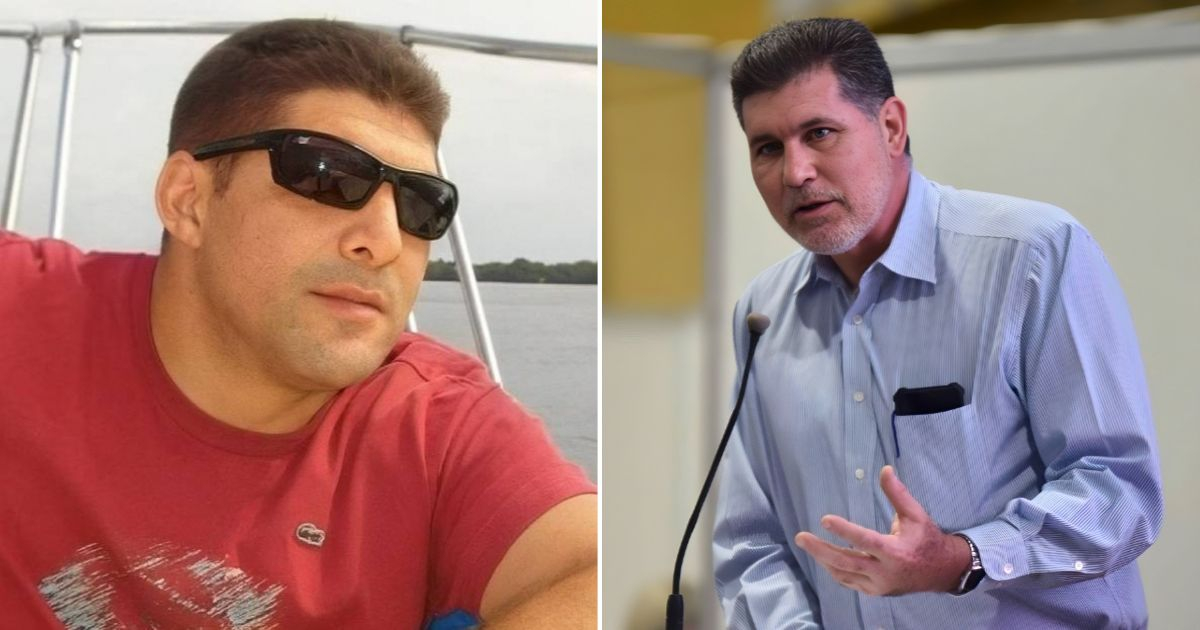
In this context, two individuals linked to the Castro family have emerged as potential successors: Oscar Pérez-Oliva Fraga and Raúl Guillermo Rodríguez Castro.
Pérez-Oliva, a grandnephew of Raúl Castro, has quickly risen through the government ranks. Currently serving as Deputy Prime Minister and heading the Ministry of Foreign Trade, he holds a strategic position within the state apparatus. Analysts describe him as having a technical background with economic management experience, making him a feasible transitional figure within the system, albeit without suggesting deep structural reforms.
Influence of Raúl Guillermo Rodríguez Castro
Meanwhile, Raúl Guillermo Rodríguez Castro, known as "El Cangrejo" and a grandson of Raúl Castro, has also been mentioned amid the speculation. Although he has not held formal government positions, he has been closely associated with the power circle, including security roles near his grandfather. His recent appearances in government-related spaces and interactions with U.S. officials have drawn attention, though experts argue that his surname might hinder his projection as a transitional figure due to external pressures.
Specialists cited by AP agree that regardless of who assumes the presidency, the true control of the country will remain with the military establishment and Raúl Castro, who, at 90, continues to be a pivotal figure within the system. "The real power lies with the military," analysts warn, noting that formal leadership of the Communist Party does not necessarily equate to effective decision-making authority.
Rising Social Discontent
The report also highlights growing social unrest within the island, where food shortages, power outages, and deteriorating living conditions have reached critical levels. In this climate, Díaz-Canel's position is seen as increasingly weakened and unpopular, especially following the crackdown on the July 2021 protests and the worsening crisis during his tenure.
Despite the speculation, the regime has dismissed any possibility of externally driven change. Cuban authorities have insisted that their political system and its leaders are not subject to negotiation with other countries.
Nonetheless, the current scenario raises questions about a possible internal power restructuring, where, for the first time in decades, a struggle among different figures within the regime for control of the country might not be ruled out.
Recently, a report by The New York Times stated that the Trump Administration was attempting to remove Cuban leader Miguel Díaz-Canel as a condition for significant progress in talks with Havana. According to this report, U.S. officials allegedly told Cuban negotiators that Díaz-Canel had to step down, leaving the execution of this step to the Cuban side.
However, U.S. Secretary of State Marco Rubio refuted the report, calling it "fake news" on his X account and harshly criticizing media outlets that, he claimed, rely on unreliable sources. Meanwhile, The New York Times publicly defended the accuracy of its report, asserting that Rubio did not present any factual rebuttal to its content.
The Cuban regime reaffirmed its stance that it will not negotiate any changes to its political system or the removal of leaders like Miguel Díaz-Canel with the United States.
Understanding the Potential Leadership Change in Cuba
Why is there speculation about a leadership change in Cuba?
Speculation has arisen due to the worsening economic and energy crisis in Cuba, leading experts to believe that Miguel Díaz-Canel might not complete his term.
Who are the potential successors to Díaz-Canel?
Oscar Pérez-Oliva Fraga and Raúl Guillermo Rodríguez Castro, both linked to the Castro family, are considered as potential successors.
What role does Raúl Castro play in the current Cuban power structure?
Raúl Castro remains a dominant figure, with true control of Cuba staying within the military establishment, despite any formal leadership changes.