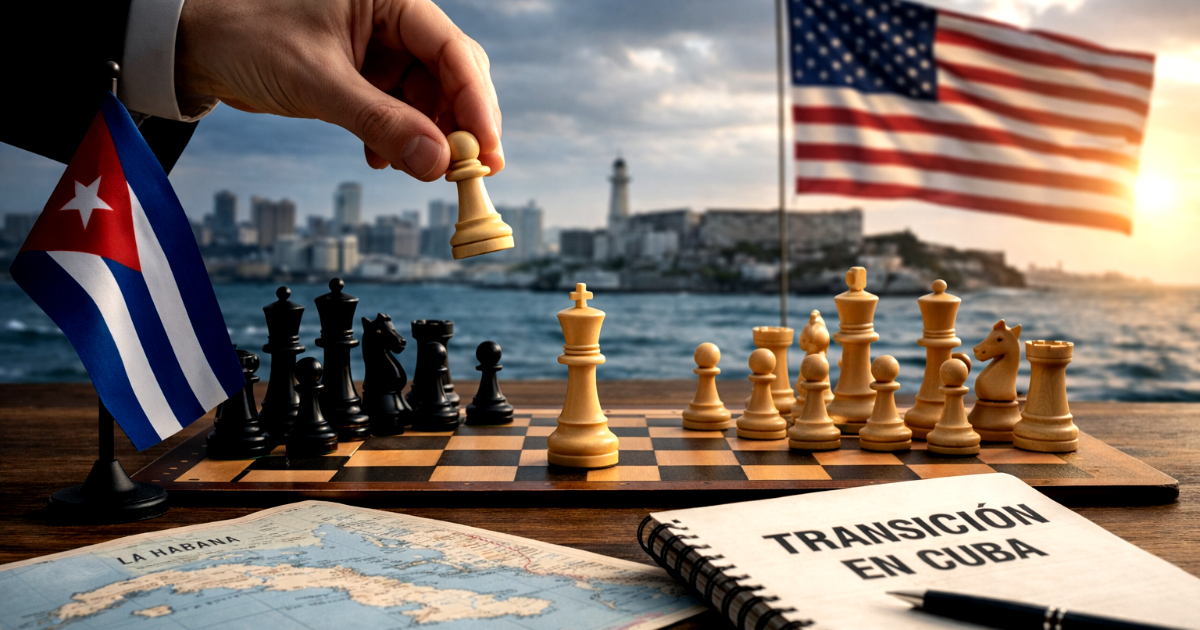
The administration of President Donald Trump is not only ramping up pressure on Cuba's communist regime but is also reportedly exploring potential leadership scenarios for a future transition, according to an article in The Atlantic.
The publication highlights that officials in Washington are contemplating the involvement of Cuban-American Republican donors as possible key players in a potential transitional phase on the island.
While no specific names have been disclosed, the report suggests that preliminary discussions are underway concerning individuals who might assume roles in an eventual shift in Cuba's political landscape.
Rather than being a definitive decision, these are internal evaluations within a broader framework characterized by ongoing negotiations, economic pressure, and Cuba's profound crisis.
Long-Term Strategic Planning
In this context, the report indicates that some factions within the U.S. administration are not only focused on instigating immediate changes but are also considering how to manage the aftermath of such changes.
This strategic shift adds a new layer to the current analysis. Previously, attention had been primarily on talks between the two governments and possible U.S. demands, such as economic reforms or compensation for confiscated properties.
Challenges to Dialogue
However, the notion of identifying candidates for a future phase suggests a more comprehensive plan, albeit one fraught with uncertainties. The Atlantic's report emphasizes that any progression is heavily dependent on political decisions yet to be made and the evolution of ongoing contacts.
Meanwhile, the Cuban government has consistently stated its unwillingness to negotiate fundamental aspects like its political system or internal control, thereby limiting the scope of any dialogue.
Within this framework, the so-called "exile factor" emerges as an additional variable in a complex scenario where external pressure, internal crisis, and preliminary discussions about Cuba's political future converge.
Understanding U.S. Plans for Cuba's Transition
What is the U.S. administration's current strategy towards Cuba?
The U.S. administration is increasing pressure on the Cuban regime and exploring potential leadership scenarios for a future transition, including involving Cuban-American Republican donors.
Are specific individuals being considered for Cuba's potential transition?
While specific names have not been revealed, discussions are reportedly taking place regarding profiles that might play roles in a future political shift in Cuba.
How does Cuba's government view negotiations with the U.S.?
Cuba's government has repeatedly stated that it is not open to negotiating key aspects such as its political system or internal control, which limits the potential for dialogue.