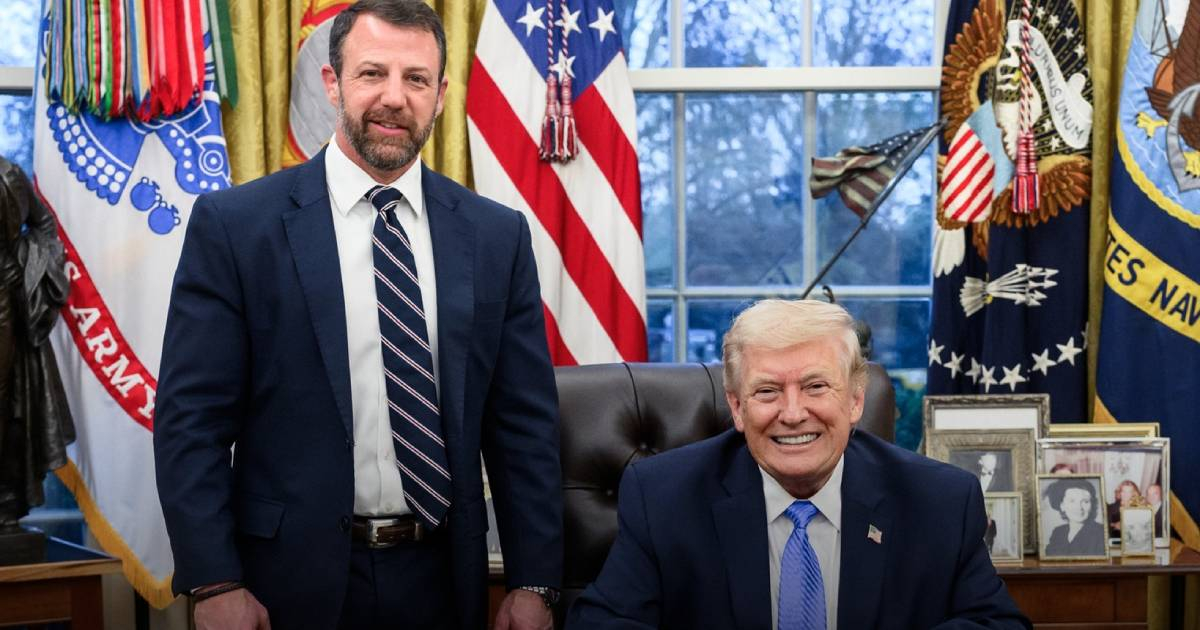
During the swearing-in ceremony of the new Secretary of Homeland Security, Markwayne Mullin, President Donald Trump issued a stark warning regarding immigration: deportations will escalate and occur without delay for migrants with criminal records.
Amid an unprecedented internal crisis at the Department of Homeland Security (DHS), Trump used the event at the White House to intensify his rhetoric and set the agenda for his newly appointed official.
"Any illegal migrant with a criminal background must be deported immediately," declared the President, emphasizing his administration's continuation of what he described as "record efforts" to remove individuals deemed dangerous.
This announcement comes at a particularly sensitive time. Mullin steps into the role while the DHS remains unfunded since February, with thousands of employees working unpaid, airports overwhelmed, and the immigration system under significant political and operational strain.
Trump reiterated that the priority will be to expel those who present a threat. He claimed that his government has already been deporting at "record levels," though he acknowledged there is "much more to do."
The President also linked the immigration issue to national security, asserting that during the previous administration, criminals, gang members, and individuals from prisons or psychiatric institutions entered the country, a narrative central to his political discourse.
In this context, he introduced Mullin as the man charged with reinforcing this hardline stance. Trump described him as a key ally in efforts to secure the border, combat immigration-related crime, and curb drug trafficking.
In contrast, the new secretary sought to project a more institutional tone after taking the oath. He stated that his mission would be to "protect everyone equally," regardless of political affiliations, and pledged to work tirelessly alongside DHS employees, many of whom have not received pay for weeks.
However, the disparity between their messages highlights the situation he faces: on one side, an operational crisis impacting hundreds of thousands of workers and travelers; on the other, political pressure to further tighten immigration measures.
For migrants—including thousands of Cubans awaiting processes or in irregular situations—Trump's words do not go unnoticed. The focus on immediate deportations, especially for those with criminal records, adds a new layer of uncertainty in an already overloaded and ever-changing system.
The direction Mullin takes in the coming weeks will be crucial. Yet, the presidential message has made it clear that, at least from the White House, the priority remains a more aggressive immigration policy with less room for delay.
Understanding Trump's New Immigration Policy
What is President Trump's new immigration directive?
President Trump has instructed the new Secretary of Homeland Security to intensify deportations and make them immediate for migrants with criminal records.
How does the current DHS crisis affect immigration policy?
The DHS is facing an operational crisis with funding issues, unpaid employees, and a strained immigration system, which complicates the implementation of aggressive immigration policies.
What are the implications for migrants with criminal records?
Migrants with criminal records face the prospect of immediate deportation under the new directive, adding uncertainty to their status in the United States.