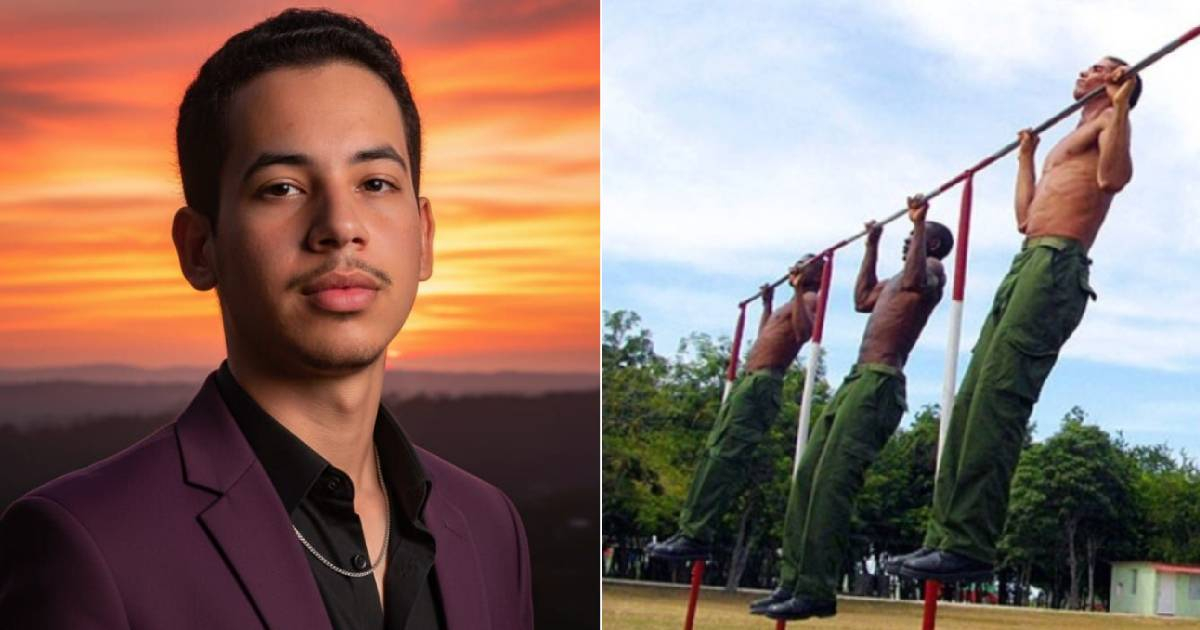
Dailier Rodríguez Tamayo, a 19-year-old from the 1ro de Enero municipality in Ciego de Ávila, tragically passed away on March 16 at military unit 10-24, located in El Cotorro, Havana, where he was fulfilling his Mandatory Military Service.
His mother, Yaimy Tamayo León, shared that her son was handed a firearm that very morning and subsequently shot himself, despite explicit medical warnings indicating he should not handle weapons or be subjected to stress. This account was reported by blogger Obdiel Torres Guevara on Facebook.
Initially, military authorities described the incident as an "accident," a narrative the family firmly disputes. Yaimy emphasizes that a doctor from the Naval Hospital had diagnosed psychological issues in her son, advising against him bearing arms or facing high-pressure situations.
Yaimy claims she directly informed the commanding officer, identified as Lieutenant Colonel Mulé, about these medical instructions. Initially, Dailier was assigned to non-combat duties, but this precaution was later disregarded.
Alarming Conditions and Neglect
Inside the unit, Dailier reportedly endured worsening conditions: grueling physical workloads, irregular meal times, sleep deprivation, and exposure to chlorine, which caused skin issues despite his known allergies.
"There were days he'd tell me, 'Mom, I didn't eat, I chose to sleep a bit instead,'" Yaimy recounted. In the early hours of March 16, Dailier attempted to call his mother, but she missed the call due to power and connectivity issues.
"I know that if I had spoken with him, my son wouldn't have taken his own life," she expressed in a social media post shared on Monday.
Opaque Institutional Response
Following Dailier's death, the family has faced a wall of institutional silence: no medical report, autopsy results, medical history, or details of any ongoing investigation have been provided.
This case fits into a troubling pattern of fatalities during Mandatory Military Service in Cuba. According to Cubalex, at least 18 or 19 young men died under similar circumstances in 2025, averaging two per month. Notable among these is the case of Antonio Alejandro Ressi Roque, who died on August 18, 2025, at unit 5050 in Calvario, Havana.
His mother, Mercedes Roque, has been tirelessly seeking answers for seven months. "It's a fixed carpet where everyone covers for one another, where blame never falls where it truly belongs," she accused.
In August 2025, Lázaro Daniel Monteros, another 19-year-old from Ciego de Ávila, died under ambiguous circumstances at El Morro, Havana, with no official statement. Later that year, Endis Leyva Nieves succumbed to injuries sustained during a military exercise at Combinado del Este.
Growing Tensions and Public Outcry
The immediate context surrounding Dailier's case is equally tense. Recently, a military recruitment office in Contramaestre, Santiago de Cuba, was set ablaze, while the Ministry of the Revolutionary Armed Forces (MINFAR) launched an aggressive promotional campaign that was widely criticized by the public.
Mercedes Roque, whose quest for justice has inspired other families, issued a direct plea: "No more mandatory military service in Cuba. Mothers, take a stand, organize marches, do not send your sons to mandatory military service."
Concerns Surrounding Mandatory Military Service in Cuba
What are the reported conditions for recruits in Cuban military service?
Recruits have reportedly faced harsh conditions including excessive physical labor, irregular meals, lack of rest, and exposure to harmful substances like chlorine, which have led to health issues.
How have families of deceased recruits responded to the military's explanations?
Families have largely rejected the military's explanations, often labeling the incidents as accidents. They accuse the military of failing to provide adequate information or accountability.
What actions have been taken by families affected by these incidents?
Affected families, like that of Mercedes Roque, are advocating for the abolition of mandatory military service in Cuba and are urging other parents to protest and take a stand against sending their children to serve.