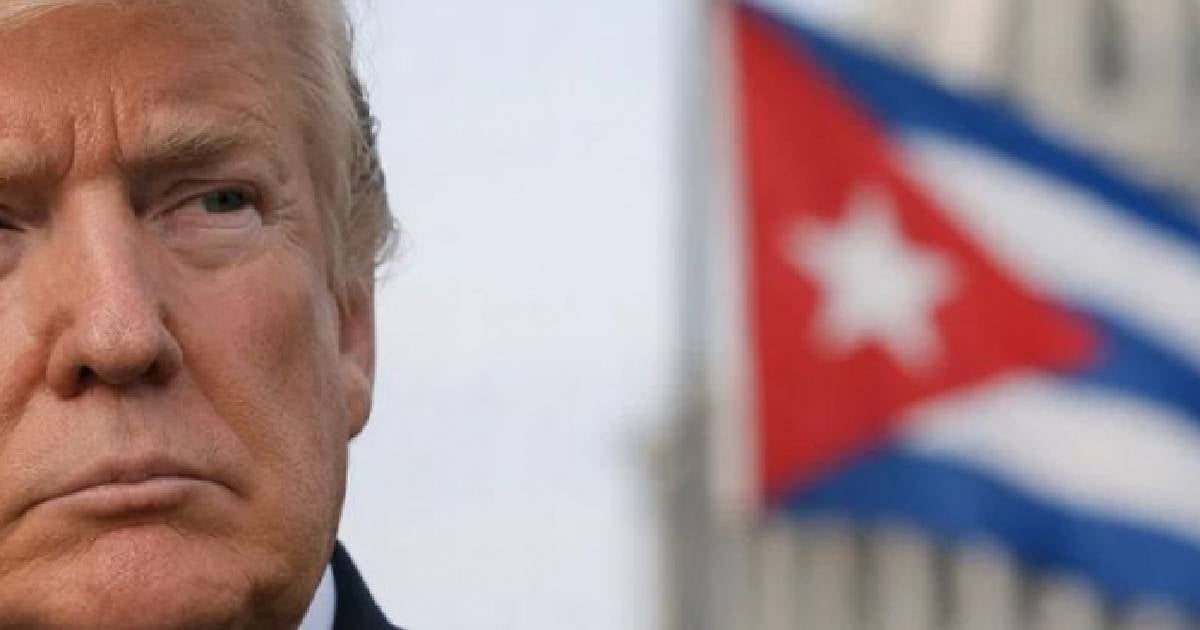
The Trump administration's approach towards Cuba goes beyond merely advocating for political change; it aims for a profound economic restructuring of the island amidst escalating tensions in the Caribbean and a more complex global landscape.
A recent report from The Atlantic highlights that Washington's strategy involves not just pressuring the Cuban regime but also opening the country to an era of investment and economic control under terms favorable to the United States. "There are billions of dollars at stake," an official told the American publication.
Amidst this scenario, Cuba's ongoing structural crisis—characterized by fuel shortages, power outages, and declining basic services—is seen not only as a political pressure point but also as an opportunity to redesign its economic model.
Redefining Cuba's Economic Landscape
The strategy aims to facilitate a transition that allows for massive capital influx, particularly in sectors such as tourism, infrastructure, and real estate development. Some analysts liken this approach to a form of "reorganization," akin to a controlled bankruptcy process, maintaining basic structures while transforming economic mechanisms to align more closely with market principles and foreign investment.
This move also possesses a significant geopolitical dimension. Controlling the energy flow to the island, including restrictions on oil supply, is part of a broader strategy to curb the influence of players like Russia and bolster the United States' standing in the Western Hemisphere.
Balancing Stability and Economic Integration
Within Trump's circle, there is interest in avoiding a chaotic collapse that could trigger a migration crisis towards Florida. Instead, the aim is for a transition combining internal stability with economic openness, potentially working with pragmatic figures within Cuba's own system.
The anticipated outcome is not necessarily a complete departure from the current model but a transformation geared towards integrating Cuba into the U.S. economic sphere, where commercial interests may weigh as heavily as political goals.
Ultimately, the success of this plan will hinge on key factors such as Havana's willingness to negotiate, the progression of the internal crisis, and Washington's global priorities, as the island once again becomes a focal point in the regional geopolitical chessboard.
Exploring the Economic and Geopolitical Dynamics of U.S.-Cuba Relations
What is the U.S. strategy towards Cuba under the Trump administration?
The strategy involves pressuring the Cuban regime while opening the country to investment and economic control under U.S.-favorable terms, aiming to integrate Cuba into the U.S. economic sphere.
How might Cuba’s current crisis be seen as an opportunity?
Cuba's structural crisis, marked by shortages and service deterioration, is viewed as a chance to redesign its economic model to allow massive capital influx and market alignment.
What are the geopolitical implications of U.S. actions towards Cuba?
The geopolitical strategy includes controlling energy flow to limit Russian influence and strengthen U.S. presence in the Western Hemisphere.