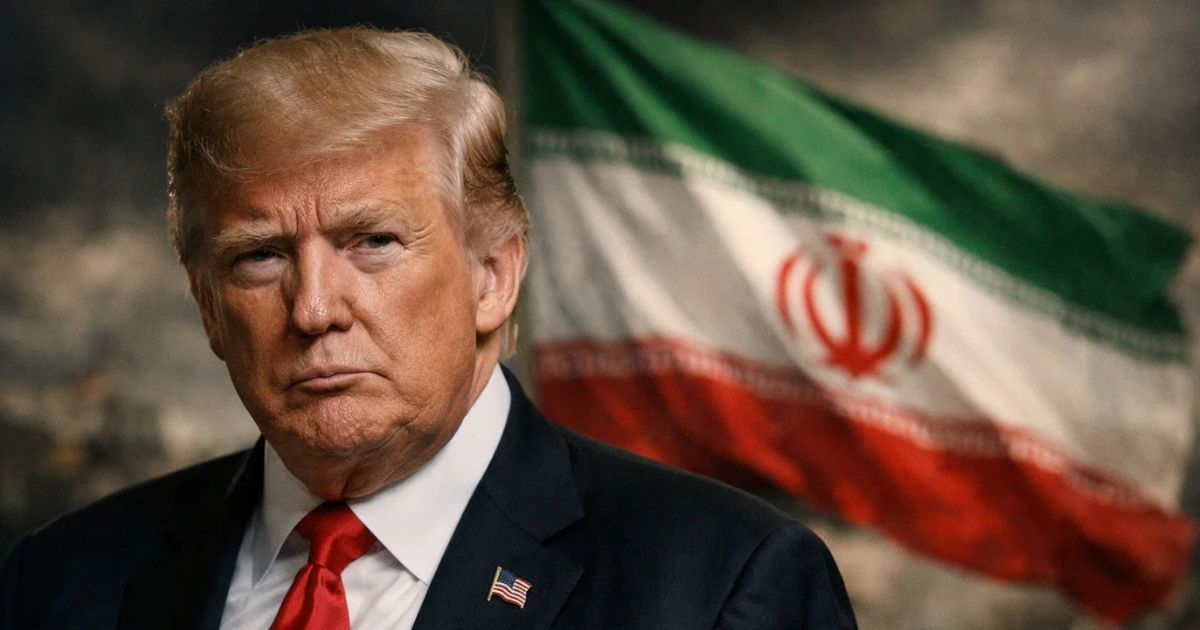
President Donald Trump of the United States announced on Monday a five-day postponement of the military ultimatum against Iran, following what he described as "very positive and productive" discussions between the two nations over the past 48 hours.
In a statement shared on his social media platform, Truth, Trump revealed that he has temporarily halted any planned military actions against Iranian energy infrastructure, pending further rounds of dialogue.
The president noted that due to the "constructive, detailed, and in-depth" nature of the talks, he instructed the Department of Defense to delay "all military strikes on Iranian power plants and energy facilities for a period of five days," making this contingent upon the progress of ongoing negotiations.
Shift from Military Threats to Diplomatic Engagement
This announcement signifies a temporary shift from the stance adopted just two days earlier when Trump issued a 48-hour ultimatum to Tehran, demanding the reopening of the Strait of Hormuz, a crucial maritime route for global oil transportation.
At that time, Trump warned that failure to comply would result in targeted strikes on key Iranian electrical facilities, starting with those of highest capacity.
Tensions had escalated following a series of incidents attributed to the Iranian regime, including attacks on commercial vessels and the effective closure of the strait, through which nearly a third of the world's crude oil trade flows.
Global Pressure and Energy Risks
The U.S. ultimatum coincided with a joint declaration by 22 countries — including the United Kingdom, France, Germany, Japan, Canada, and Australia — demanding Iran immediately reopen the Strait of Hormuz and cease hostilities.
These nations strongly condemned the assaults on civilian ships and actions targeting energy infrastructure, warning of the global impact of further escalation in the region.
The situation worsened after Iranian missiles targeted the industrial city of Ras Laffan in Qatar, home to the world's largest natural gas export facility, heightening international market concerns.
Energy analysts caution that any prolonged disruption in the Strait of Hormuz could lead to a significant spike in oil prices, directly affecting economies reliant on crude imports.
Diplomatic Window Amidst Uncertainty
Trump's decision opens a diplomatic window that could temporarily ease tensions in the Middle East, though the situation remains volatile and dependent on the outcome of negotiations.
Washington has emphasized its continued pressure on Tehran, while the international community watches closely to see if this pause leads to genuine de-escalation or another confrontation.
For now, the world is closely monitoring the progress of these talks, which could significantly influence the immediate future of global energy security.
Understanding the Implications of Trump's Delay on Iran Ultimatum
What prompted Trump to delay the military ultimatum against Iran?
President Trump decided to postpone the military ultimatum following "very positive and productive" discussions with Iran over the past 48 hours.
What are the potential consequences of a prolonged disruption in the Strait of Hormuz?
A prolonged disruption could cause a significant rise in oil prices, impacting economies that rely on crude imports.
How has the international community responded to the U.S. ultimatum?
A group of 22 countries, including major economies, have issued a joint statement demanding Iran reopen the Strait of Hormuz and halt hostilities, condemning attacks on civilian ships and energy infrastructure.
What does the future hold for U.S.-Iran relations?
The future of U.S.-Iran relations remains uncertain, heavily dependent on the success of ongoing negotiations and whether this diplomatic window results in a reduction of hostilities.