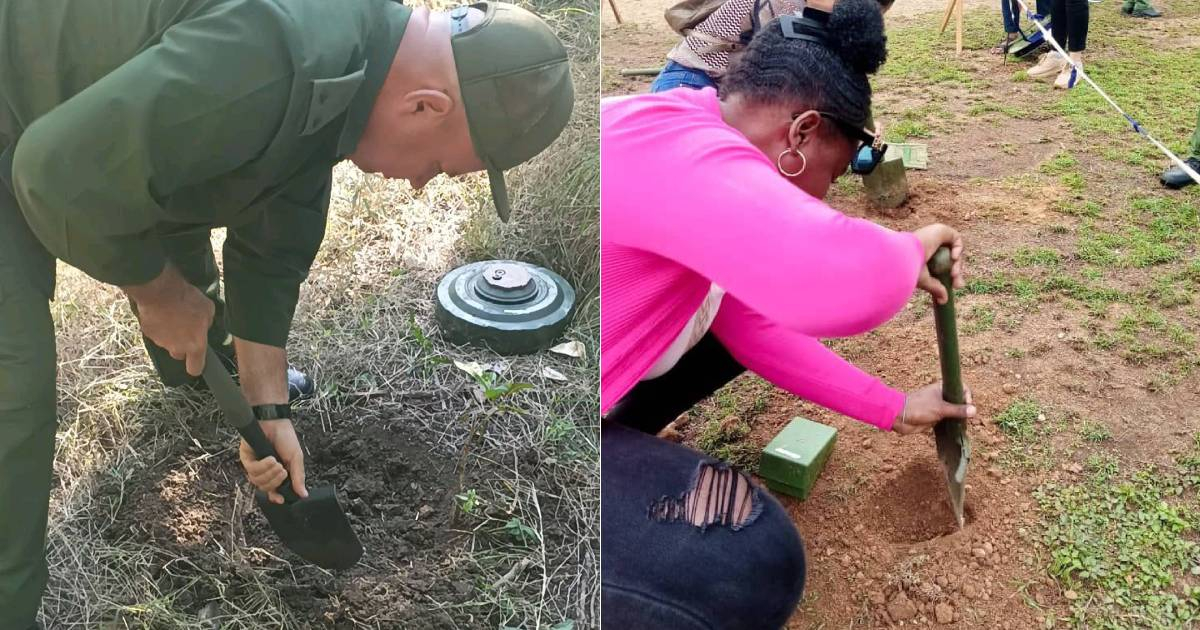
The Cuban regime's warlike rhetoric extends beyond isolated remarks. Within hours, a blatantly hostile message from the Ministry of the Revolutionary Armed Forces (MINFAR) resonated with official statements indicating that the island's military apparatus is gearing up for a potential conflict scenario.
"In this country, the enemy will not have a single square meter where they can feel safe, without the threat of flying with a mine or falling into an ambush that annihilates them," MINFAR declared on social media. This message, laden with aggression and confrontation, directly evokes a warlike situation.
The harshness of those words did not go unnoticed. What followed only intensified concerns.
Just hours later, Deputy Foreign Minister Carlos Fernández de Cossío confirmed in an interview with NBC's Meet the Press that the regime is preparing for possible military action from the United States.
"Our military is always ready and, in fact, is preparing these days for the possibility of military aggression," the official stated.
Although he tempered his remarks by stating that such a scenario is not considered likely, he emphasized that it would be "naive" not to prepare. "We see no reason for it to occur," he added, blending caution with a clear readiness to confront potential conflict.
The vice minister's words come amid heightened tension and a hardening of the official discourse. Just a day earlier, the same official had made it clear that Cuba's political system "is not up for negotiation," shutting the door on any internal changes even amid external pressures.
When questioned about possible concessions—like the release of political prisoners or openness to free press and parties—Fernández de Cossío reverted to the regime's usual narrative, deflecting attention by criticizing the U.S. system.
The stark contrast between the rhetoric and everyday reality on the island is evident to many Cubans. As the country grapples with a severe economic and social crisis, the official discourse shifts back to the logic of an external enemy and military readiness.
The combination of MINFAR's message—with explicit references to mines and ambushes—and the diplomatic confirmation of military preparation paints a troubling picture, where confrontation again takes center stage in the official narrative.
Understanding Cuba's Military Rhetoric
What did MINFAR's message imply?
MINFAR's message implied a hostile stance, suggesting that any enemy would face the threat of mines or ambushes, highlighting a potential readiness for conflict.
How did Deputy Foreign Minister Carlos Fernández de Cossío describe Cuba's military readiness?
He indicated that Cuba's military is always prepared and is currently getting ready for the possibility of U.S. military aggression, although he noted this scenario is not considered likely.