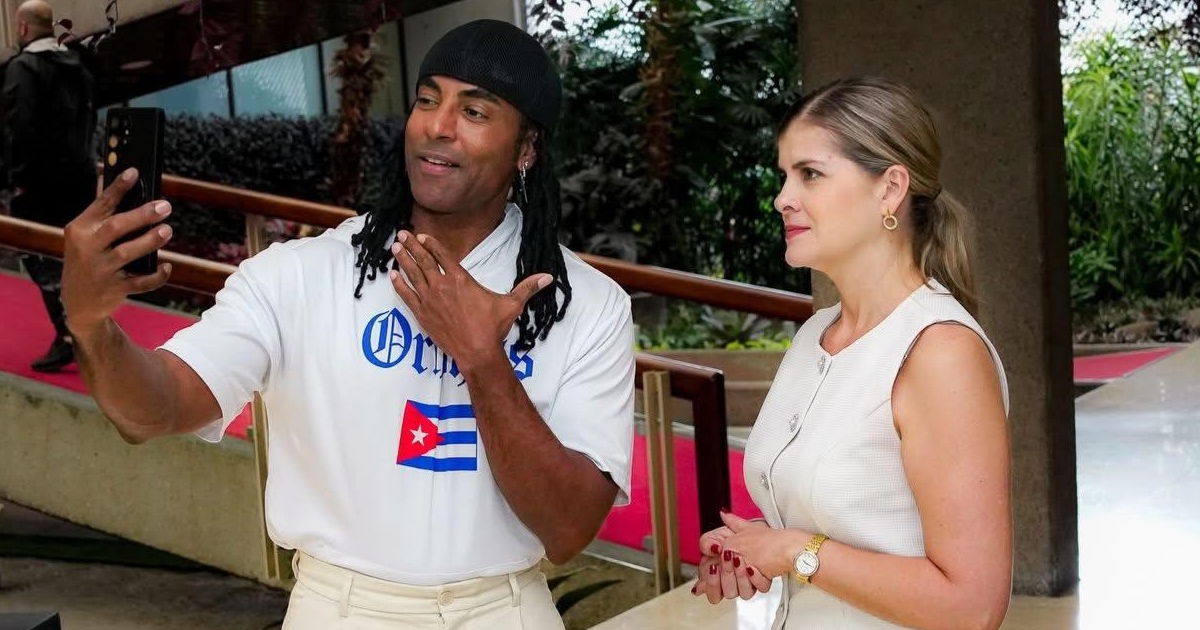
Laura Fernández Delgado, the president-elect of Costa Rica, recently held a meeting with Cuban singer Yotuel Romero, known for his role in the impactful song "Patria y Vida." This anthem has become a symbol of freedom and resistance for many Cubans both inside and outside the island.
The meeting was publicized through Fernández's official social media accounts, where she highlighted the political and cultural significance of the artist's work.
In an Instagram post, it was noted, "President-elect Laura Fernández Delgado welcomed Yotuel, the Cuban artist who voices 'Patria y Vida,' a song emblematic of courage and liberation."
The Message of Art and Resistance
Within this context, Fernández made a statement underscoring her position: "When art speaks, nations awaken. Freedom is not negotiable: it is felt, sung, and defended."
This gesture takes place amid heightened diplomatic tensions between Costa Rica and the Cuban regime.
Costa Rica's Diplomatic Stance
Fernández has supported the current Costa Rican government's decision to close its embassy in Havana this week, a move presented as a response to the ongoing deterioration of living conditions and fundamental rights on the island.
The president-elect was clear in justifying this decision: "We made this decision prioritizing the human dignity of the Cuban people. Costa Rica stands as a global example, as champions of freedom and democracy. I was part of the decision to shut down our embassy in Cuba."
The meeting with Yotuel strengthens this political stance, aligned with a critical view of the Cuban system and support for cultural expressions that expose the lack of freedoms.
Yotuel's Role in Advocacy
The artist has been one of the most visible voices in the international denunciation of the situation in Cuba, using music as a tool for protest.
This week, the closing of the Costa Rican embassy in Havana was announced by President Rodrigo Chaves alongside Foreign Minister Arnoldo André.
Both officials stated that the measure is in response to increasing concerns over human rights issues on the island, marked by escalating repression and worsening economic and social conditions.
Foreign Minister André described it as a "firm signal of concern" over restrictions on basic freedoms such as expression, association, and peaceful protest.
Furthermore, he emphasized that living conditions have steadily declined, with shortages of food, medicine, and essential services.
As part of this decision, Costa Rica also requested that the Cuban government withdraw its diplomatic staff from San José, effectively creating a de facto diplomatic break, although minimal consular functions will remain.
The Costa Rican embassy in Cuba has not had diplomatic staff since February 5, making its normal operations unfeasible.
Cuba's Political and Economic Challenges
President Chaves was even more direct in his critique of the Cuban political system, asserting that "the communist model has failed in Cuba," pointing out its historical reliance on external support for survival.
In this context, Laura Fernández Delgado's role gains special importance.
Elected in February, she will assume the presidency in May, becoming the second woman in the country's history to hold the position at the age of 39. Her political background combines a degree in Political Science with experience as Minister of Planning and the Presidency.
During her campaign, Fernández pledged a government focused on economic growth, security, and upholding the rule of law.
In that regard, she has advocated for robust measures against organized crime, including proposals for building a mega-prison inspired by the Salvadoran model and the possibility of declaring states of exception in areas affected by violence.
The meeting with Yotuel, far from being a mere cultural gesture, is part of a clear political line that prioritizes the defense of freedom and human rights, while sending a direct message about the position her administration will take regarding Cuba's situation.
Understanding Costa Rica's Diplomatic Moves
Why did Costa Rica decide to close its embassy in Cuba?
Costa Rica closed its embassy in Cuba due to the sustained deterioration of living conditions and fundamental rights on the island, and as a firm signal of concern over restrictions on basic freedoms.
What is the significance of Yotuel's meeting with Laura Fernández Delgado?
The meeting symbolizes a reinforcement of Fernández's political stance supporting freedom and human rights, and underscores her administration's critical view of the Cuban regime.
How has Costa Rica's stance affected its relationship with Cuba?
Costa Rica's decision to close its embassy and request the withdrawal of Cuban diplomatic staff has effectively led to a de facto diplomatic break, although minimal consular functions will remain.