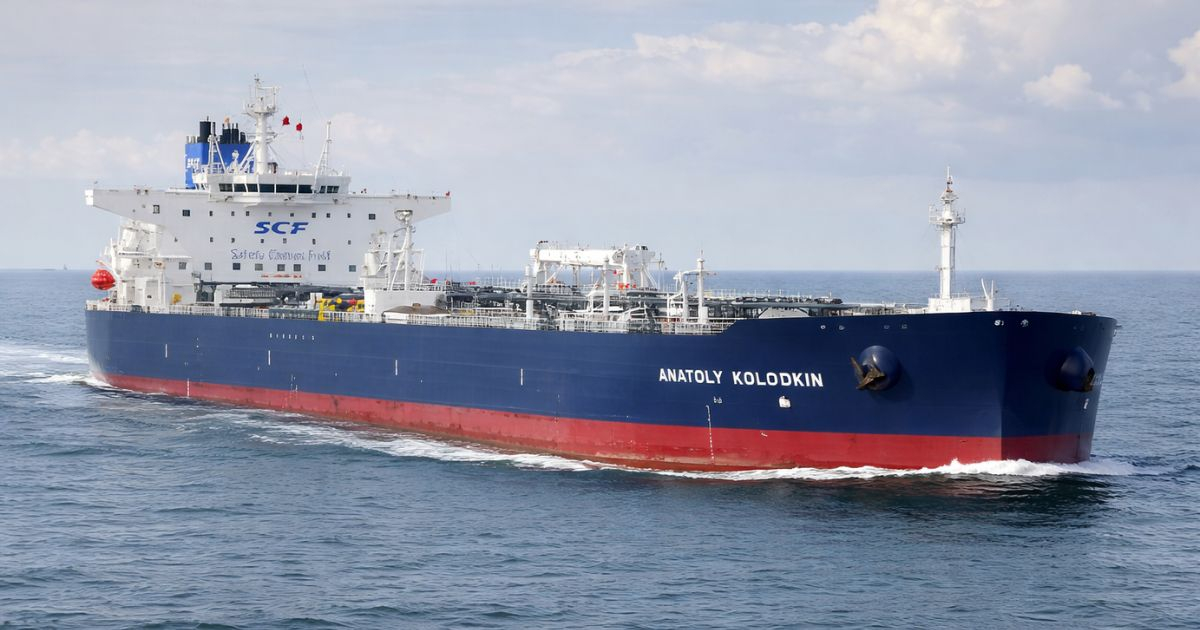
The Russian tanker Anatoly Kolodkin, targeted by sanctions from the United States, European Union, and United Kingdom, is pressing on towards Matanzas, Cuba, carrying between 700,000 and 730,000 barrels of Russian crude. This marks the first significant oil delivery to Cuba in over three months, with an expected arrival on Monday.
Owned by the state-run Russian shipping company Sovcomflot, the vessel departed from Primorsk, Russia, on March 8, misreporting its destination as "Atlantis, USA." Maritime analysis platform Kpler reveals that the shipment could sustain Cuba's oil needs for approximately a month.
The delivery comes at a time when Cuba is grappling with a severe energy crisis. In March, daily electricity deficits ranged from 1,700 to 2,040 megawatts, leading to blackouts exceeding 30 hours. As of March 16, only 1,140 MW were available against a demand of 2,347 MW. Cuban Deputy Minister Argelio Abad Vigoa described the situation as the most "complex" faced by the National Electric System.
Energy Crisis Intensifies in Cuba
Satellite imagery has shown a 50% reduction in electricity consumption, with pot-banging protests occurring since March 7, including party headquarters fires in Morón. Experts warn of an impending 'zero hour' due to the fuel shortage.
Since January 9, Cuba has not received stable fuel supplies, following the last delivery from Mexico. Mexican shipments from Pemex were halted in early 2026 amid U.S. sanctions threats. In 2025, Pemex accounted for 44% of Cuba's oil imports, valued at around $496 million.
U.S. Sanctions and Measures
The United States has adopted a firm stance. On March 12, the Treasury Department's OFAC issued a license specifically barring Cuba from receiving Russian oil, adding it to the list of restricted countries. Additionally, two U.S. Coast Guard cutters were stationed off Cuba's northeast coast, potentially to intercept the tanker.
Jorge Piñón from the University of Texas at Austin emphasized, "The U.S. has issued a directive to block oil from reaching Cuba, and these assets are ready to act." The U.S. Southern Command acknowledged tracking the Anatoly Kolodkin but downplayed its potential impact, estimating the cargo would last Cuba only about two weeks.
Potential Diplomatic Tensions
A second ship, the Sea Horse, carrying approximately 200,000 barrels of Russian diesel to Cuba, diverted to Trinidad and Tobago last Thursday, according to LSEG data cited by Reuters. This diversion is directly linked to the new OFAC license.
This incident adds to a series of similar precedents, including the Ocean Mariner tanker altering its course in February due to Coast Guard presence, and Bella-1, seized in January. The Russian tanker could test the energy blockade imposed by Washington on Cuba.
Russia expressed "deep concern" and reiterated its support for Havana: "We provide and will continue to provide Cuba with the necessary support, including material aid," stated the Russian Foreign Ministry. Meanwhile, Mexican President Claudia Sheinbaum mentioned her government is exploring options to resume energy assistance to Cuba, though without specifying timelines or conditions.
The Anatoly Kolodkin thus represents the most direct challenge yet to the energy restrictions enforced by Washington and could spark potential diplomatic tensions between the United States and Russia, with a resolution possibly unfolding in the coming hours off the Cuban coast.
Understanding the Impact of Russian Oil Deliveries to Cuba
What is the significance of the Anatoly Kolodkin's oil delivery to Cuba?
The delivery from the Anatoly Kolodkin is significant as it marks the first major oil shipment to Cuba in over three months, potentially alleviating the severe energy crisis on the island.
How has the U.S. responded to Russian oil shipments to Cuba?
The U.S. has responded by issuing sanctions and deploying Coast Guard cutters to potentially intercept tankers like the Anatoly Kolodkin, aiming to enforce its energy embargo on Cuba.
What challenges does Cuba face with its energy supply?
Cuba is currently experiencing a significant energy crisis, with electricity shortages causing extended blackouts and a reliance on dwindling fuel supplies.