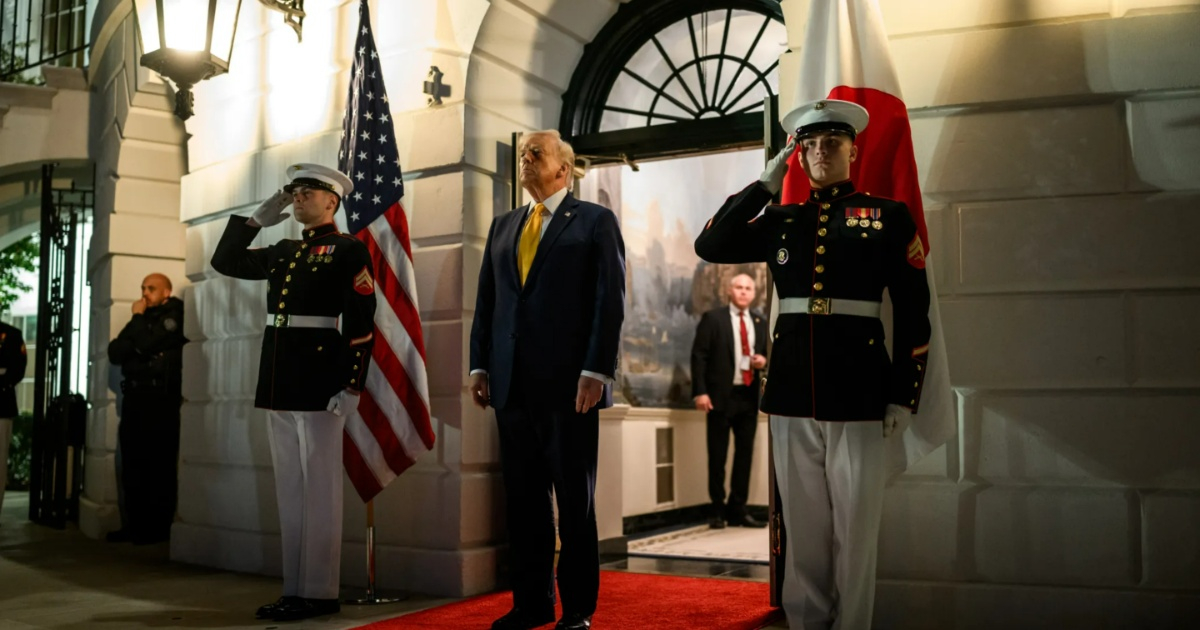
On Saturday, former U.S. President Donald Trump issued a 48-hour ultimatum to Iran, pressing for the reopening of the Strait of Hormuz.
"If Iran does not fully, without threats, reopen the Strait of Hormuz within 48 hours from this moment, the United States will strike and demolish its various power plants, starting with the largest one! Thank you for your attention to this matter. President Donald J. Trump," the Republican announced on his social media platform, Truth.
International Pressure on Iran Intensifies
Trump's ultimatum coincided with a demand from a coalition of 22 nations, also on Saturday, for the immediate reopening of the strait. This comes amid escalating tensions that threaten maritime transit and global energy supplies.
The joint statement, released by the United Arab Emirates, included backing from major nations such as the United Kingdom, France, Germany, Japan, Canada, and Australia. These countries condemned in the "strongest terms" recent attacks attributed to Tehran on unarmed commercial vessels in the Gulf and actions targeting civilian infrastructure, including oil and gas facilities.
Impact on Global Oil Markets
The strait, a crucial channel for nearly a third of the world's oil trade, was effectively closed by Iranian forces, sparking international outcry. The coalition urged Iran to halt threats, the planting of mines, drone and missile attacks, and any obstruction to commercial navigation.
In addition, they pressed Tehran to comply with UN Security Council Resolution 2817 and impose an "immediate and complete moratorium" on attacks against civilian infrastructure.
Growing Regional Tensions
Tensions escalated following Iran's missile launch against Qatar's Ras Laffan industrial city, home to the world's largest natural gas export plant. This attack signals a new phase in the conflict, raising international alarm over potential impacts on energy markets.
With the Strait of Hormuz channeling a significant portion of global oil trade, any disruption amplifies price volatility. While releasing strategic reserves and boosting production could cushion the blow, experts warn that sustained escalation might lead to a substantial global oil price increase.
The coalition of nations warned that Iranian actions would have global repercussions, particularly for the most vulnerable countries, by disrupting supply chains and destabilizing prices. In response, the International Energy Agency has authorized the coordinated release of strategic oil reserves to mitigate the impact.
The Strait of Hormuz, a vital international trade chokepoint, remains at the forefront of a crisis threatening global security and economic stability across multiple regions.
Understanding the Hormuz Crisis and Its Implications
What is the significance of the Strait of Hormuz?
The Strait of Hormuz is a crucial maritime passage that facilitates the transit of nearly a third of the world's oil trade. Its closure or threats against it can severely impact global energy supplies and economic stability.
Why did Trump issue an ultimatum to Iran?
Trump issued the ultimatum to pressure Iran into reopening the Strait of Hormuz, following increased tension and attacks on commercial vessels and infrastructure attributed to Iranian forces.
How might this situation affect global oil prices?
Disruptions in the Strait of Hormuz can lead to heightened volatility in global oil markets, potentially causing significant price increases if the situation escalates without resolution.