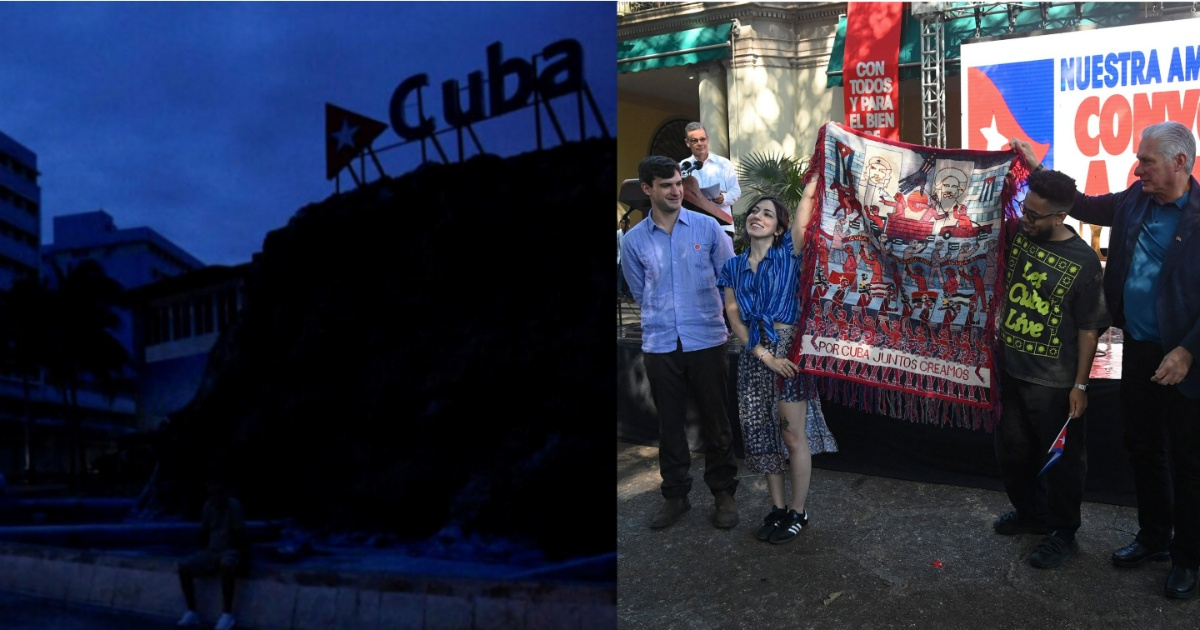
Amidst the Cuban regime's effort to lavish attention on the members of the so-called Nuestra América Convoy, the country experienced its second nationwide power outage within a week, leaving its citizens in the dark.
As Cuba grapples with an ongoing severe energy crisis, stemming from outdated thermoelectric plants, a scarcity of fuel, and frequent breakdowns resulting in daily blackouts, international left-wing political pilgrims have once again chosen Cuba as their ideological playground.
The first shipment of aid linked to this global initiative arrived in Cuba by air from Europe, marked with flags from various countries. This movement, driven by leftist organizations, activists, and political figures, aims to deliver food, medicine, and other essential goods to the island amid its current economic and energy turmoil.
Organizers have announced plans to transport over 20 tons of humanitarian aid through multiple channels—air, land, and sea—to Cuba. More groups and shipments are anticipated in the coming days, including a delegation arriving from Mexico this weekend with additional supplies.
These activists have engaged in numerous meetings over recent days with Cuban state officials and institutions, including discussions with the Cuban leader Miguel Díaz-Canel.
Journalist Yoani Sánchez voiced her discontent on social media, stating, “We are not a theme park. Take your ideological tourism elsewhere. We are suffering here.” Her statement echoes a sentiment felt by many intellectuals and citizens who criticize the political exploitation of Cuba's crisis.
Previously, musicologist and historian Rosa Marquetti condemned what she termed the “folklorization of Cuban misery” and challenged international initiatives that, in her view, transform the country's plight into a symbolic stage for ideological debates.
The criticism has grown following comments by some convoy members, such as former Spanish Vice President Pablo Iglesias, who have downplayed the severity of the internal situation or attributed the crisis solely to external factors.
The week's first widespread blackout, now increasingly common, took place on Monday. On Friday, First Deputy Minister of Energy and Mines, Argelio Jesús Abad Vigoa, acknowledged the paralysis of distributed electricity generation in Cuba due to fuel shortages, exacerbating the island's energy crisis.
Abad described the current situation as the most challenging the National Electric System (SEN) has faced so far, during a press conference held for the convoy members at Havana's International Press Center.
He explained that the country has gone three months without receiving supplies of diesel, fuel oil, gasoline, aviation turbo fuel, and liquefied petroleum gas—fuels critical for sustaining various economic sectors and power generation.
The deputy minister admitted that this predicament has rendered the distributed generation system, based on small engines and plants championed by dictator Fidel Castro (1926-2016), inoperative. This system had long been touted by the government as a key measure to bolster the SEN.
Understanding Cuba's Energy Crisis
What is causing the frequent blackouts in Cuba?
Cuba's frequent blackouts are primarily due to outdated thermoelectric plants, a shortage of fuel, and recurring technical breakdowns, all of which have led to an ongoing energy crisis.
How is the Nuestra América Convoy responding to the crisis in Cuba?
The Nuestra América Convoy has organized to send over 20 tons of humanitarian aid, including food and medicine, to Cuba to help alleviate the ongoing economic and energy crisis.
What has been the public reaction to the convoy's visit?
Public reaction has been mixed, with some citizens and intellectuals criticizing the political motives behind the visit and accusing the convoy of exploiting Cuba's crisis for ideological purposes.