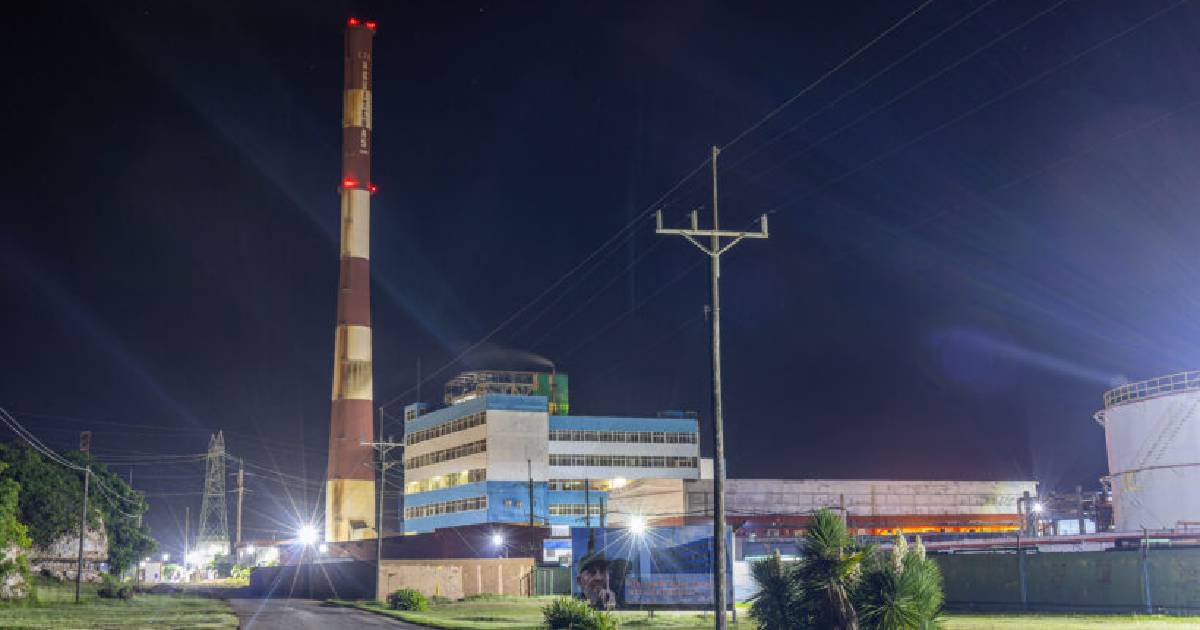
On Saturday, Cuba's Electric Union announced another widespread blackout due to a complete disconnection of the National Electric System (SEN) at 6:38 p.m.
Despite the severity of the situation, the Electric Union provided no further details, though they pledged to keep the public informed.
This marks the second total shutdown of the SEN within the same week. The ongoing energy crisis is exacerbated by outdated thermoelectric plants, fuel shortages, and frequent breakdowns, leading to daily power outages across much of the country. These challenges are compounded by the petroleum blockade enforced by the Trump Administration.
The first of these increasingly frequent nationwide blackouts occurred last Monday.
On Friday, Argelio Jesús Abad Vigoa, the First Deputy Minister of Energy and Mines, acknowledged that Cuba's distributed electricity generation is stalled due to fuel shortages, worsening the country's energy crisis.
During a press conference held at the International Press Center in Havana, Abad described the current scenario as the most challenging the SEN has faced. This statement was made in front of journalists and attendees of the so-called solidarity convoy “Our America.”
Abad revealed that the country has gone three months without receiving supplies of diesel, fuel oil, gasoline, aviation jet fuel, and liquefied petroleum gas—fuels crucial for sustaining various sectors of the economy and power generation.
The deputy minister admitted that this situation has rendered the distributed generation system inoperative. This system, consisting of engines and small power plants, was promoted by the late dictator Fidel Castro (1926-2016) and was touted by the government for years as a key alternative to bolster the SEN.
Understanding Cuba's Energy Crisis and Blackouts
What caused the recent blackout in Cuba?
The recent blackout was caused by a complete disconnection of the National Electric System (SEN), amid an ongoing energy crisis worsened by outdated infrastructure, fuel shortages, and frequent system failures.
How is the fuel shortage affecting Cuba's energy system?
The fuel shortage has critically impacted Cuba's energy system by halting distributed electricity generation, which relies on various fuels. This has intensified the energy crisis, leading to regular power outages.
What measures did Cuba previously take to address its energy issues?
Cuba had implemented a distributed generation system consisting of engines and small power plants as a strategy to strengthen the National Electric System. This initiative was initially promoted by Fidel Castro.