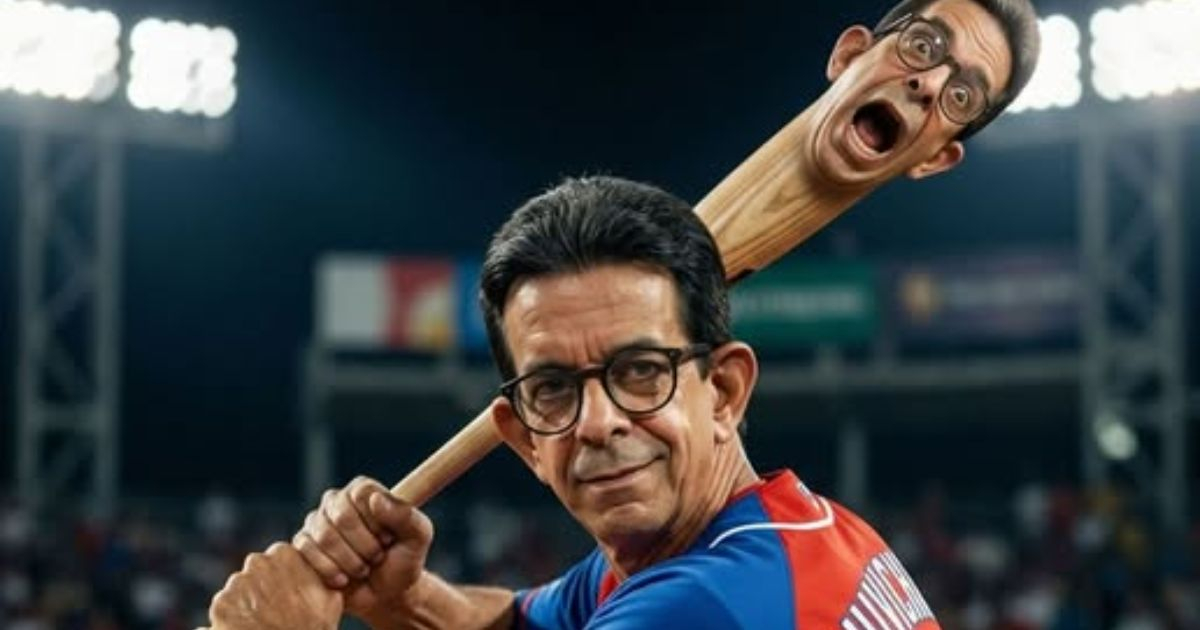
Ulises Toirac, a well-known Cuban humorist, doesn't shoot real bullets but rather fires incisive thoughts and courageous critiques, much to the discomfort of the Cuban regime.
"I don't want an AKM; I want an effective country that inspires me to defend it," Toirac declared in a recent Facebook post. In his statement, he subtly criticized the government's focus on armed defense while calling for genuine living conditions and active citizen participation as the foundation for true sovereignty.
Beloved for his comedic roles such as Chivichana in “¿Jura decir la verdad?” and Matute in Sabadazo, Toirac emphasized that true sovereignty lies with the citizens. He argued that people only interpret this sovereignty when they truly feel the nation is theirs.
Contrasting Views on Sovereignty
Toirac’s words starkly contrast the recent militaristic rhetoric, particularly following singer-songwriter Silvio Rodríguez's request for an AKM rifle "in case American soldiers land in Cuba." This request was granted by the Minister of the Revolutionary Armed Forces (FAR) in the presence of President Díaz-Canel.
Yet, for Toirac, "ideals and abstract concepts translate into bread, clothing, shelter, and dignity." He stressed that ideals should encompass freedoms, health, and well-being.
Critique of Political Practices
While advocating for Cuba's independence and sovereignty, Toirac questioned the alignment between these ideals and the country's reality. He highlighted how ongoing political decisions and the suppression of dissent have hollowed out the principles the government claims to uphold.
Toirac argued that sovereignty can only be sustained if citizens feel they are active participants in the nation's future and have a real voice in political affairs.
The AKM Controversy
The recent ceremony where Silvio Rodríguez received an AKM rifle sparked intense debates online. Reactions ranged from ridicule and mockery to staunch support, framing it as a "symbol" of official Cuban resistance and ideology.
Toirac's post also sparked numerous reactions. Many agreed that sovereignty should manifest in real well-being and opportunities, while others echoed his criticism of the conflation between the state and the nation and the lack of citizen involvement in political decisions.
Some comments supported prioritizing external threats over internal issues, reflecting a divide in public opinion.
Consistent Criticism of Government Actions
Toirac's recent comments are part of a broader pattern of his criticism, including the government's economic management and the exclusion of citizens from key political processes, such as Cuba-U.S. dialogues. He has repeatedly argued that the current crisis requires concrete changes impacting citizens' lives, rather than just ideological slogans.
In a humorous jab at the same FAR that hastily handed over an AKM to Silvio, Toirac previously suggested they use the piles of garbage in the streets to generate needed electricity. Will they ever heed his advice?
Understanding Toirac's Critique and Its Impact
What is Ulises Toirac's main critique regarding Cuban sovereignty?
Toirac criticizes the Cuban government's focus on armed defense and its disconnect from the real living conditions and participation rights of citizens, which he believes are essential for true sovereignty.
How did the public react to Toirac's Facebook post?
The post sparked various reactions, with some agreeing that sovereignty should reflect real opportunities and well-being, while others defended the prioritization of external threats over internal challenges.
What was the controversy surrounding Silvio Rodríguez and the AKM rifle?
The controversy arose from Silvio Rodríguez's request for an AKM rifle, which was granted in an official ceremony, sparking debates about whether it was a meaningful symbol of resistance or an unnecessary gesture.