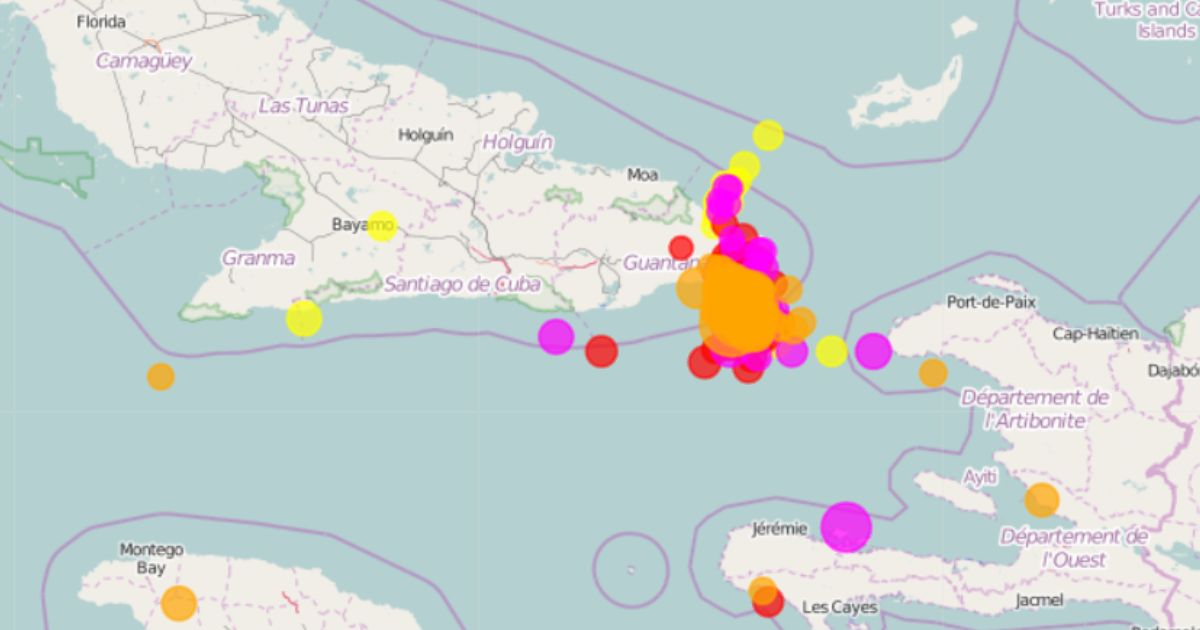
The eastern region of Cuba is on high alert due to intense seismic activity, with hundreds of aftershocks recorded in recent hours, causing damage to homes and buildings.
Dr. Enrique Diego Arango Arias, a respected scientist and head of the National Seismological Service at the National Center for Seismological Research (CENAIS), shared on Facebook this Friday that the Imías area in Guantánamo has experienced 907 aftershocks within a 24-hour period.
According to Dr. Arango Arias, several of these tremors have been felt by the local population, with reports indicating minor damage, such as cracks in the walls of residences and other structures.
The expert also highlighted the occurrence of two notable earthquakes on this date in history, one west of Moa with a magnitude of 4.3 and another southeast of Guantánamo city, both causing structural damage and rated at an intensity VI on the macroseismic scale.
The ongoing aftershocks underscore the seismic instability in this part of eastern Cuba, prompting authorities and experts to continue monitoring for potential new events that could result in further destruction.
This situation originated from a principal earthquake of magnitude 6.0, which struck southeast of Imías on March 17. It was the strongest to occur in Cuba since November 2024, preceded by foreshocks in February and March.
The Cuban News Agency explained that CENAIS specialists have indicated that this event only activated a portion of the Oriente fault, leaving much of the accumulated energy in the area unspent, thus maintaining the likelihood of ongoing seismic activity.
As a result, experts warn that aftershocks will persist, potentially causing additional harm to already weakened structures. They emphasize the importance of maintaining a sense of risk awareness and avoiding vulnerable buildings.
Understanding Seismic Activity in Eastern Cuba
What is causing the ongoing seismic activity in eastern Cuba?
The ongoing seismic activity is primarily due to a strong earthquake of magnitude 6.0 that struck southeast of Imías on March 17. This event activated a segment of the Oriente fault, but not all accumulated energy has been released, leading to persistent aftershocks.
How many aftershocks have been recorded in the Imías area?
In the Imías area of Guantánamo, 907 aftershocks have been recorded within a 24-hour timeframe, as reported by Dr. Enrique Diego Arango Arias of CENAIS.
What precautions are being advised to residents in the affected areas?
Authorities are advising residents to maintain a sense of risk awareness, stay informed about ongoing seismic activity, and avoid staying in vulnerable or damaged structures to prevent injuries or further damage from aftershocks.