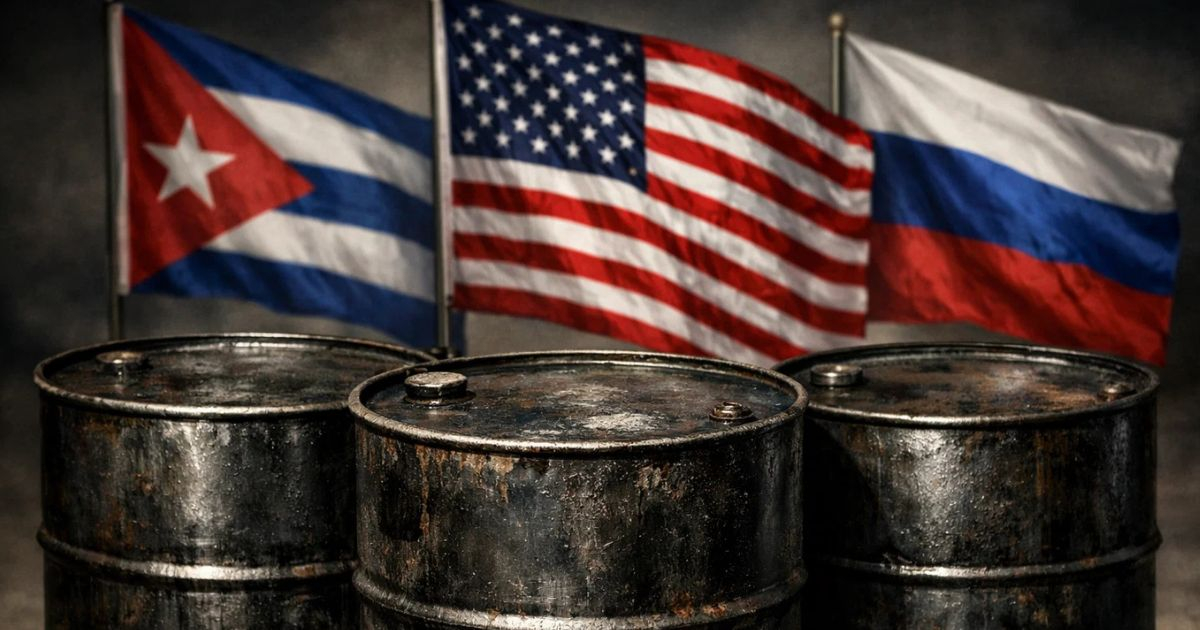
The U.S. government has imposed a ban on the delivery of Russian oil to Cuba through a new directive issued by the Office of Foreign Assets Control (OFAC). This regulation restricts transactions involving Russian-origin crude.
According to the official document from the Treasury Department, while certain transactions for the sale and delivery of Russian oil in transit are permitted, they cannot include nations like Cuba. This effectively halts any oil supply to the island.
This measure is part of Washington's policy to intensify pressure on Kremlin allies and prompt changes in regimes considered adversarial, such as Cuba's. The decision comes amid escalating economic and energy challenges within the island.
Impact on Cuba's Energy Crisis
The exclusion of Cuba takes place during a particularly critical period marked by extended blackouts, fuel shortages, and a deteriorating energy infrastructure impacting both the population and productive sectors.
Through this decision, the United States strengthens its strategy to further restrict external energy sources for the Cuban regime, narrowing its options and heightening internal pressure in an already tense scenario.
Concerns Over Russian Oil Deliveries
This move also coincides with increasing evidence of attempts to maintain an energy supply from Russia to the island. A recent example is the Sea Horse oil tanker, which is nearing the Caribbean with a cargo of Russian diesel. Despite its declared course towards Gibraltar, there are suspicions about its true destination.
Tracking data and independent analyses suggest the tanker might be heading to Cuba after loading fuel through operations designed to bypass sanctions, such as ship-to-ship transfers. Its erratic navigation patterns and potential signal manipulations have heightened alerts regarding attempts to circumvent international restrictions.
In this context, the Treasury Department's decision aims to close these loopholes, preempting operations like that of the Sea Horse and preventing the Cuban regime from receiving external energy relief during one of its most severe crises in years.
Frequently Asked Questions About U.S. Oil Restrictions on Cuba
Why has the U.S. banned Russian oil shipments to Cuba?
The U.S. ban on Russian oil shipments to Cuba is part of a broader strategy to increase pressure on Kremlin allies and encourage changes in regimes considered adversarial, including Cuba's.
How does this restriction affect Cuba?
The restriction exacerbates Cuba's existing energy crisis, marked by extended blackouts and fuel shortages, limiting the regime's external energy sources and increasing internal pressure.
What is the significance of the Sea Horse oil tanker in this context?
The Sea Horse oil tanker is suspected of heading to Cuba with Russian diesel, despite official declarations. Its movements suggest attempts to evade international sanctions, prompting further scrutiny.