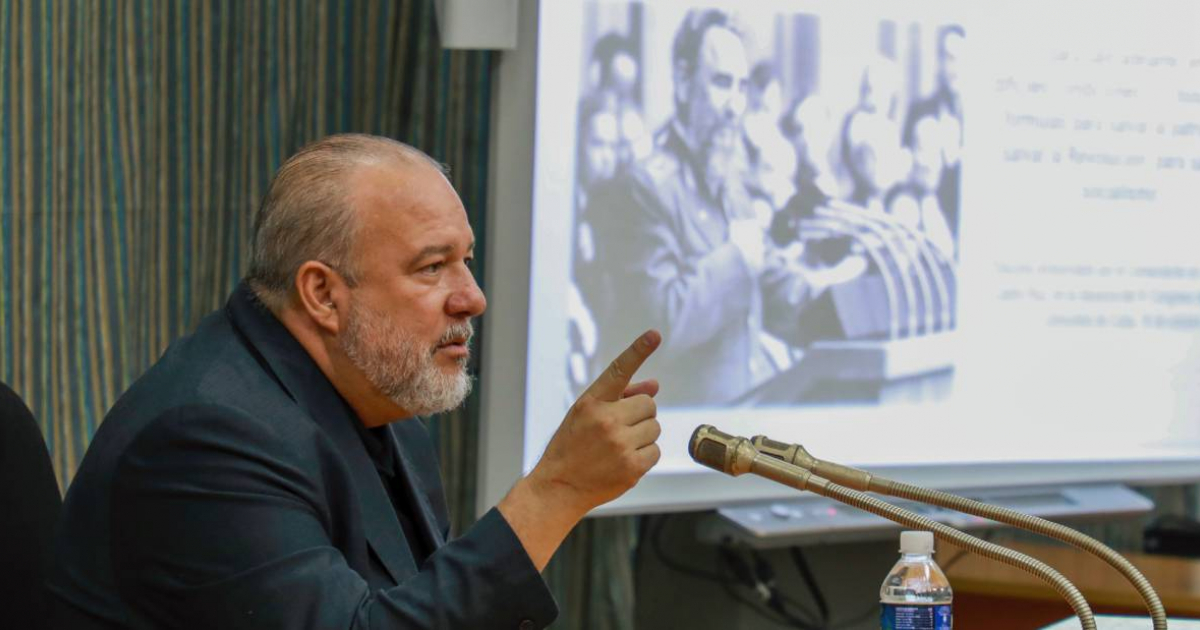
The Cuban Prime Minister, Manuel Marrero Cruz, once again resorted to ideological rhetoric as Cuba faces a severe crisis. He asserted that the government's policies remain "consistent with the humanist character of the Revolution," even as social neglect and extreme poverty increase throughout the country.
In a series of posts on the social media platform X, Marrero claimed that the government has "prioritized attention to social policies, community work, and monitoring of households and individuals in vulnerable situations," particularly focusing on elderly citizens and mothers with three or more children.
These statements sharply contrast with the daily reality faced by the population, which is grappling with shortages of food, medicine, transportation, and basic services. Many elderly individuals still lack decent housing since Hurricane Melissa struck the eastern part of the country last year.
The Illusion of Labor and Wage Protection
Marrero also defended the alleged "labor and wage protection," mentioning efforts to "enhance job relocation or changes in employment."
In reality, this translates for many Cubans into precarious jobs, inadequate salaries, and rampant inflation that erodes any income, forcing thousands to survive in the informal economy or rely on remittances.
Transportation Woes and Promises
Regarding transportation, Marrero acknowledged that the sector has had to make "several adjustments" and promised to expand electric mobility "as resources allow."
Nonetheless, the public transportation crisis remains one of the most visible issues in the country, characterized by long waits, unstable routes, and a deteriorating infrastructure that particularly affects workers and students.
Community Responsibility and Government Deflection
A significant aspect of the official narrative is the shift of responsibilities to local communities. Marrero stated that "many solutions can be found at the local level" and that individuals "can be very useful" in this context.
This narrative, however, highlights the state's inability to effectively address structural problems, burdening citizens without resources with solving a national crisis.
While the government insists that "Cuba doesn't stop and turns challenges into opportunities," the reality shows a continuous deterioration of living conditions.
The stark contrast between the rhetoric of "revolutionary humanism" and the neglect experienced by vast sectors of the population continues to shape the social agenda on the island.
Understanding Cuba's Social and Economic Challenges
What are the main issues faced by the Cuban population?
The Cuban population is dealing with severe shortages in food, medicine, transportation, and basic services, alongside widespread poverty and social neglect.
How does the Cuban government address labor and wage issues?
The government claims to protect labor and wages through job relocation and changes in employment, but in practice, many face precarious jobs and insufficient salaries.
What measures has the government taken regarding transportation?
The government has made adjustments in the transportation sector and plans to expand electric mobility, but the public transportation crisis persists with long waits and poor infrastructure.