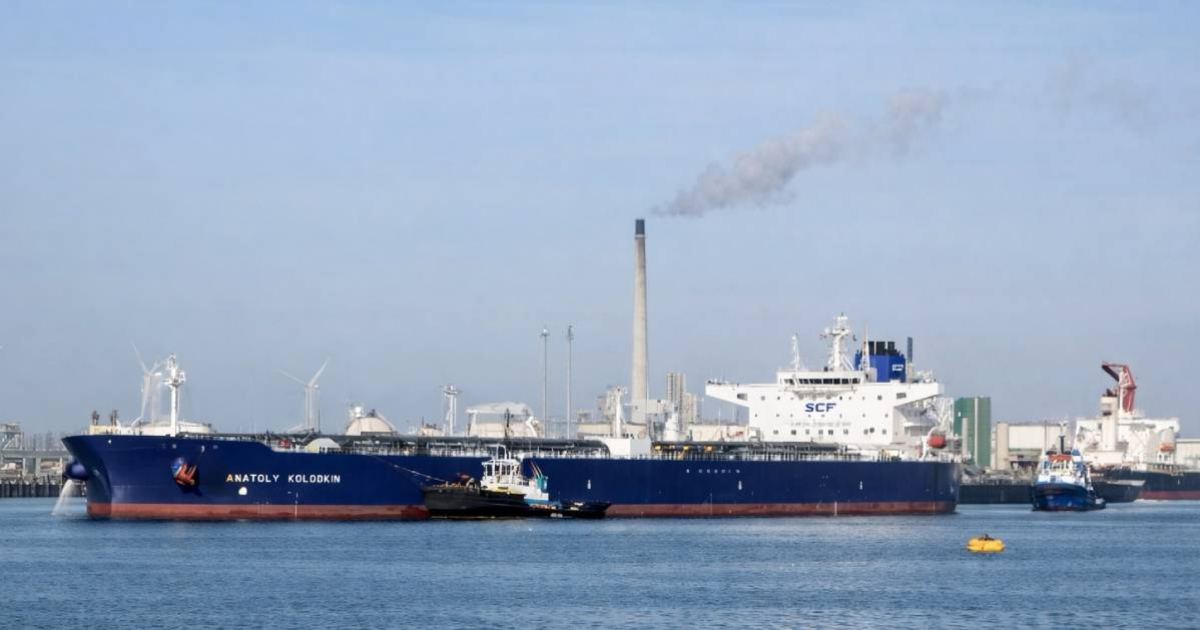
The Russian oil tanker, 'Anatoly Kolodkin', owned by the state-run shipping company Sovcomflot and under sanctions from the United States, the European Union, and the United Kingdom, is en route to the Matanzas oil terminal with a cargo of 730,000 barrels of crude. This significant energy shipment to Cuba marks the first in over two months, with an expected arrival on Monday, March 23.
Departing from Russia’s Primorsk port on March 8, the tanker was spotted in the eastern Atlantic as of Wednesday, according to data from analytics firm Kpler, reported by DW.
This shipment poses a direct geopolitical challenge to the Trump administration, which has enforced a petroleum blockade against Cuba since January 29 through executive orders, complemented by U.S. Coast Guard naval interceptions.
Another vessel, the 'Sea Horse' flying the Hong Kong flag, is also heading to the island, carrying approximately 200,000 barrels of Russian diesel—around 27,000 tons—loaded via a ship-to-ship transfer off the coast of Cyprus at the end of January.
On Wednesday, the 'Sea Horse' was located in the northwestern Caribbean, about 1,500 kilometers from Cuba. Maritime traffic trackers reported that the ship utilized signal spoofing and erratic navigation techniques to obscure its movements, a common practice among Russia’s so-called ghost fleet.
On March 14, the United States temporarily lifted some of the sanctions on Russian oil transported by sea, allowing the sale of crude and petroleum products loaded before March 12 for one month. This provides Russia with a window to deliver fuel to Cuba before the temporary allowance ends.
Unprecedented Energy Crisis in Cuba
Cuba has been without oil since January 9, following Mexico's last delivery after Nicolás Maduro was apprehended in an operation sanctioned by Trump.
Venezuela, which historically subsidized Cuba with up to 26,000 barrels daily under the Petrocaribe agreement, abruptly ceased shipments. Meanwhile, Mexico, which supplied nearly 60% of Cuba's imports, halted supplies on January 27 due to threats of tariffs from Washington.
The island experienced its sixth nationwide blackout in 18 months on March 16, with only 1,140 megawatts available against a demand of 2,347 megawatts.
Russia has been vocal in its support for the Cuban regime. On February 18, Russian Foreign Minister Sergei Lavrov condemned the oil blockade as "unacceptable" during a press conference with Cuban counterpart Bruno Rodríguez in Moscow.
Lavrov urged the U.S. government to exercise "common sense" and end the fuel embargo. The 'Anatoly Kolodkin' shipment—despite being sanctioned by three Western powers—embodies this defiance.
Nevertheless, the relief these shipments might provide is limited. Cuba's daily oil consumption is around 37,000 barrels, and experts predict that shipments of this size can only sustain the country for about 19 to 20 days, without addressing the fundamental issues of an energy system that has deteriorated under 67 years of dictatorial management.
FAQs on Cuba's Energy Crisis and Russian Oil Shipments
Why is Russia sending oil to Cuba?
Russia is sending oil to Cuba as a move to support the Cuban regime and challenge the energy blockade imposed by the United States.
How long can the Russian oil shipments sustain Cuba?
The shipments, estimated to cover between 19 and 20 days of Cuba's daily oil consumption, offer only temporary relief without addressing the underlying energy infrastructure issues.
What is the significance of the U.S. temporarily lifting some sanctions on Russian oil?
The temporary lifting allows Russia to legally transport previously loaded oil to Cuba, providing a brief window to alleviate Cuba's energy shortage before sanctions are fully reinstated.