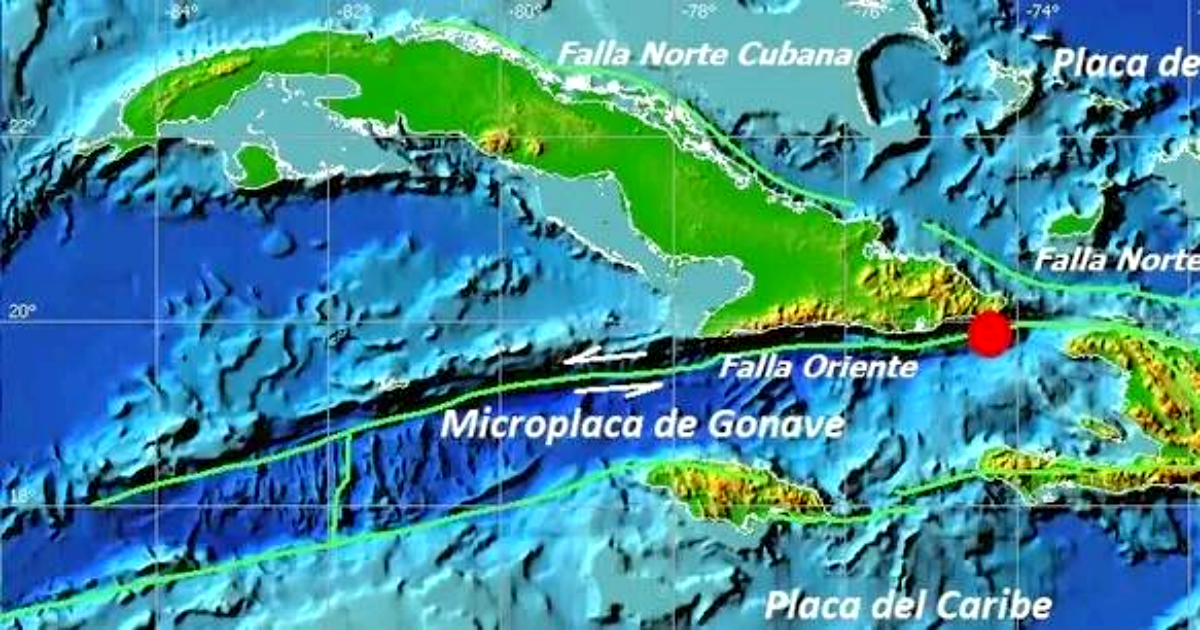
A powerful earthquake measuring 6.0 on the Richter scale struck southeast of Imías in Guantánamo province during the early hours of March 17, triggering at least 620 aftershocks within just over a day, according to reports updated as of 6:00 a.m. on March 18.
The main quake occurred at 12:28 a.m. local time and was strongly felt across various eastern Cuban provinces, including Santiago de Cuba and Granma, causing widespread alarm among residents. Many individuals evacuated their homes during the night due to the intensity of the seismic activity.
Experts highlight that this high number of aftershocks is typical following a quake of such magnitude. The greater the earthquake's intensity, the larger the rupture zone in the earth's crust, leading to an extended sequence of secondary movements as the ground adjusts.
However, specialists caution that this intense seismic activity does not diminish the risk of a more significant event occurring in the region. Instead, they emphasize the importance of maintaining a sense of urgency, particularly in the area between Santiago de Cuba and Guantánamo, one of Cuba's most seismically active regions.
The earthquake occurred along the Oriente fault, a boundary between the North American plate and the Gonave microplate, a geological setting historically prone to earthquakes. In the weeks leading up, tremors measuring 5.3 and 5.6 had already been recorded in the same area, indicating a period of heightened tectonic instability.
As of now, there have been no reports of casualties or significant material damage, though authorities continue to closely monitor the phenomenon's progression.
Understanding Seismic Activity in Eastern Cuba
Why are there so many aftershocks following the earthquake in Guantánamo?
After a major earthquake, the earth's crust undergoes adjustments, resulting in numerous aftershocks. The larger the initial quake, the more extensive these secondary movements tend to be.
Is there a risk of a larger earthquake occurring in eastern Cuba?
Yes, experts warn that the current seismic activity does not eliminate the possibility of a larger event. It is crucial to remain alert, especially in regions like Santiago de Cuba and Guantánamo, which are highly active seismically.