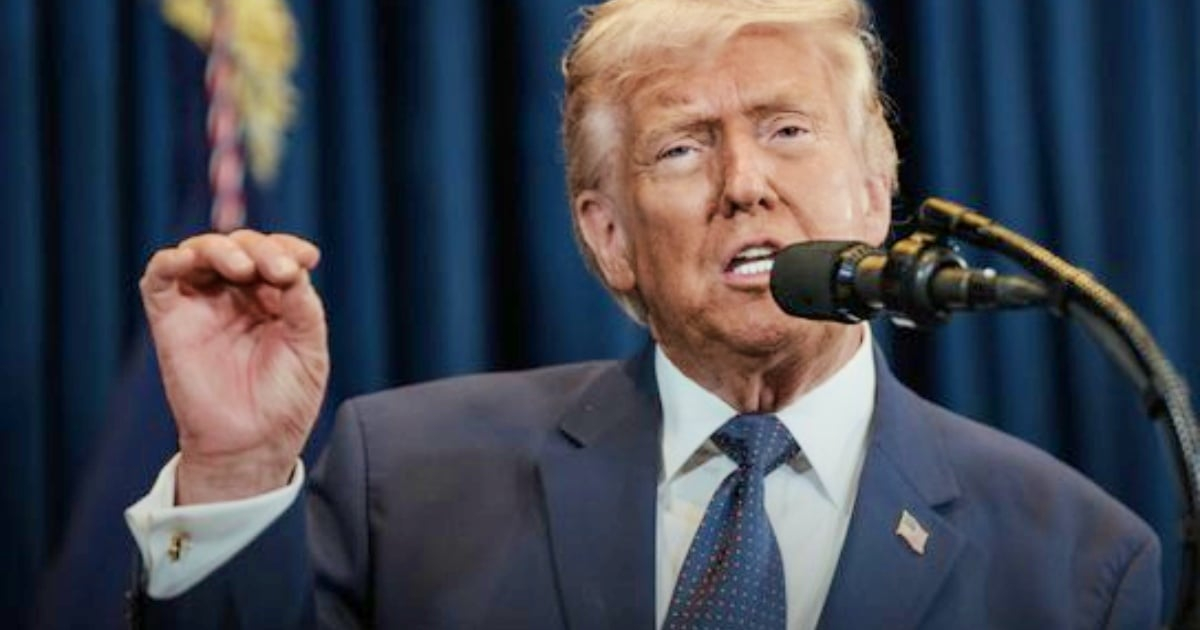
President Donald Trump of the United States has suggested that the responsibility for securing the Strait of Hormuz could be handed over to other nations that rely on this crucial route for oil and gas transport, rather than the U.S. continuing to shoulder the burden.
"I wonder what would happen if we 'finished off' what remains of the Iranian terrorist state and let the countries that actually use it, not us, take responsibility for the so-called 'strait.' It might make some of our 'allies' who aren't pulling their weight sit up and take notice, and quickly!" Trump posted on Truth Social.
According to a report by EFE, Trump emphasized that the United States doesn't need the Strait of Hormuz and hinted at the possibility of leaving its control to nations more dependent on the maritime passage, which is currently embroiled in rising tensions with Iran.
The statements come amid the ongoing conflict between Washington and Tehran, which began in late February and has directly impacted the security of the strait, a channel through which nearly 20% of the world's hydrocarbon trade flows.
Trump has also criticized NATO and allies such as Japan, Australia, and South Korea for refusing to join a military coalition proposed by Washington aimed at securing vessels and oil tankers in the area, arguing that the conflict was not initiated by them.
The president asserted that the United States doesn't require "anyone's help" and claimed that American forces have significantly weakened the Iranian military during the conflict.
In the course of this offensive, as per the conflict's context, high-ranking Iranian regime officials, including Supreme Leader Ali Khamenei, along with civilians and military personnel from both sides, have lost their lives.
Despite Washington's claim of having made decisive progress, Iran continues its attacks in the region, maintaining tension in one of the world's most critical energy corridors and increasing pressure on U.S. allies.
Trump's recent comments about the Strait of Hormuz occur in a context where the U.S. benefits greatly from rising oil prices, a point he recently highlighted amidst escalating tensions in the Middle East and the potential blockade of this key energy route.
Understanding the Impact of Trump's Stance on the Strait of Hormuz
Why is the Strait of Hormuz important?
The Strait of Hormuz is a vital maritime passage for the global energy market, with around 20% of the world's hydrocarbon trade passing through it. It connects the Persian Gulf with the Arabian Sea, serving as a critical transit route for oil-producing countries in the region.
What are the potential consequences of the U.S. withdrawing from the Strait of Hormuz?
If the U.S. were to withdraw from securing the Strait of Hormuz, it could lead to increased instability in the region, potentially disrupting global oil supply and causing prices to rise. This might also pressure other nations to step up their security efforts in the area.
How does the conflict between the U.S. and Iran affect global oil markets?
The conflict between the U.S. and Iran heightens tensions in the region, leading to fears of potential disruptions in oil supply from the Middle East. Such geopolitical uncertainties often result in volatile oil prices and can impact global economic stability.